
HVAC
Central Air Conditioning Installation in Los Angeles: A Homeowner’s Buying Guide
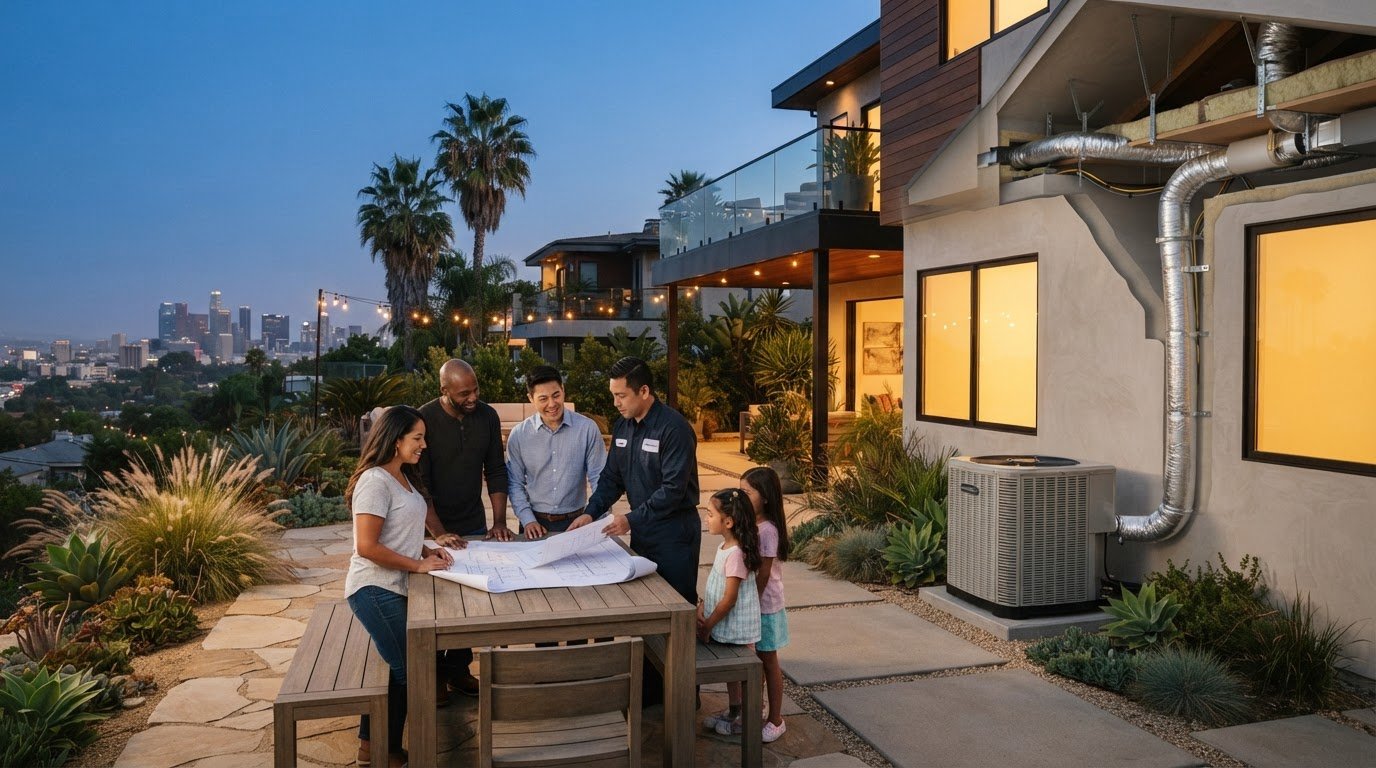
The right central air conditioning installation in Los Angeles starts with your home, not a particular piece of equipment. System size, ductwork, room layout, and the way different parts of the house gain heat all shape the result. Before comparing equipment, identify the comfort problems you want to solve and the conditions the system needs to handle.
It’s reasonable to wonder how installation will affect your routine, whether every room will feel comfortable, and what a new system may mean for energy use. A replacement does not automatically lower monthly bills. Results depend on how you use the system, the weather, insulation, utility rates, and the equipment being replaced.
This guide explains which home and equipment factors matter, what to expect as installation is planned, and what to review when comparing service and payment arrangements. You’ll also learn how the Palmetto Comfort Plan works, including its 10- or 12-year terms and the equipment, installation, maintenance, and repairs covered by the agreement. Use these details to weigh your options and plan a practical next step.
Key Takeaways
- For central air conditioning installation Los Angeles homeowners should start with the home’s layout, insulation, windows, occupancy, and ductwork.
- Compare split and packaged systems, and look for cooling capacity suited to the home rather than relying on square footage alone.
- The Palmetto Comfort Plan is a 10- or 12-year lease with approved equipment, installation, scheduled maintenance, and covered repairs as described in the agreement.
- Plan for a sequence that includes reviewing home needs, selecting equipment, arranging installation, and learning how the system operates. Timing depends on the home and installation requirements.
- HelioCore tailors residential heating and cooling solutions to help homeowners make an informed installation decision.
Table of Contents
- Planning Central Air Conditioning Installation in Los Angeles: Start With Your Home
- Choosing a Central AC System for a Los Angeles Home
- Central AC Installation Options: What the Palmetto Comfort Plan Covers
- What to Expect Before and During Central AC Installation in Los Angeles
- Start Your Central Air Conditioning Installation With HelioCore
Planning Central Air Conditioning Installation in Los Angeles: Start With Your Home
A cooling project brings practical questions along with the goal of making rooms more comfortable. Will the system cool the warm bedrooms? Can the existing ducts be used? Could a new setup change energy use? For central air conditioning installation Los Angeles homeowners can plan with fewer surprises, start by assessing how the home works today instead of choosing equipment first.
Central air conditioning moves cooled air through ductwork to multiple rooms. The principle is straightforward, but the right system depends on the home’s layout and condition. Los Angeles homes range from single-story houses to multilevel layouts and properties with additions, and their cooling needs vary accordingly. A system that suits one floor plan may not suit another.
Which home conditions matter before a central AC installation?
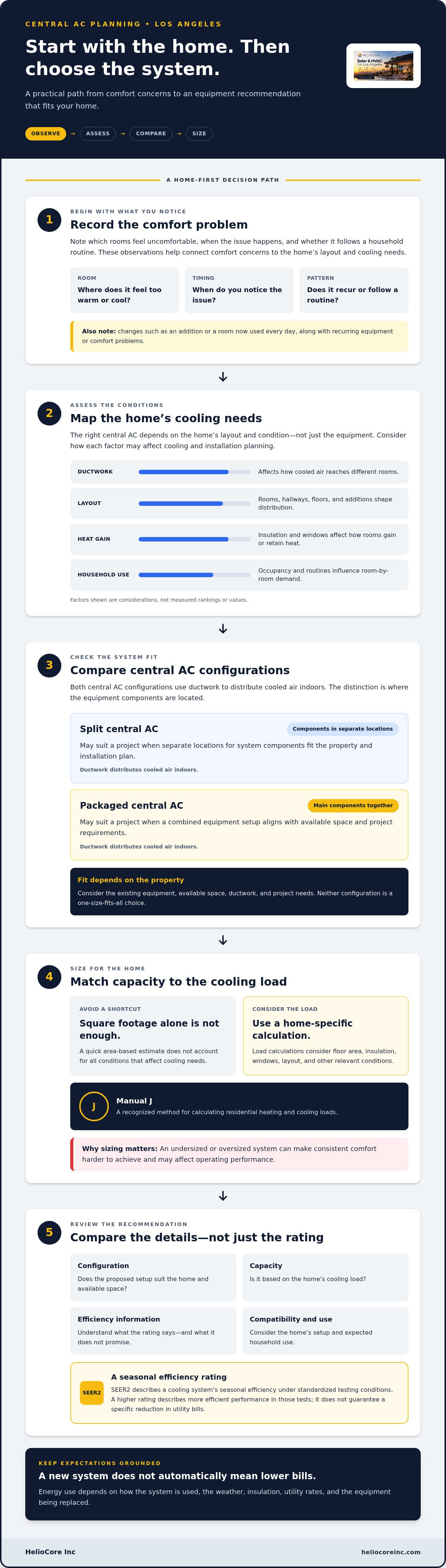
Begin with what you notice. Write down which rooms feel uncomfortable, what time of day the issue occurs, and whether it follows a household routine. A warm upstairs room in the late afternoon suggests a different pattern from a room that stays stuffy all day. These observations help relate comfort concerns to the home’s layout and cooling needs.
Then consider the house itself. Existing ductwork affects how cooled air reaches different rooms and what installation planning may involve. The number and arrangement of rooms, hallways, and additions matter, too. Insulation and windows affect how quickly rooms gain or retain heat. Occupancy and routines also shape demand: a room used throughout the day may need more attention than an occasional-use space.
Recurring equipment problems, uneven cooling, or a system that no longer suits the home are common reasons to consider installation. Before a home assessment, keep a simple record of:
- Rooms that feel too warm or cool, and when you notice the issue.
- Changes to the home, such as an addition or a room now used every day.
- Patterns in system operation, including recurring comfort problems.
These observations won’t determine equipment size by themselves. They give the installation discussion a useful starting point and help connect the home’s conditions with realistic expectations for comfort and energy use.
Is central air the right fit for a Los Angeles home?
Central AC uses ducts to distribute cooled air to multiple rooms. It may suit a home with usable ductwork and a layout that supports this kind of distribution. A ductless system delivers heating or cooling without the same duct network, which can be relevant where extending ducts is impractical. Neither option is right for every Los Angeles property. Compare the existing setup with the rooms you want to serve. For a broader overview of system types and how they work, see Air conditioning.
Comfort and energy bills are related, but a new system doesn’t guarantee lower bills. Usage, weather, insulation, utility rates, and the equipment being replaced all affect the result. Reviewing the home first helps identify the right questions before selecting equipment, including how the system will serve the rooms, existing ducts, and daily routines.
Choosing a Central AC System for a Los Angeles Home
Once you understand your home’s needs, compare system configuration, capacity, efficiency, and installation scope. Split and packaged systems are two central AC configurations. A split system places components in separate locations, while a packaged system houses its main components together. The best fit depends on the home’s existing equipment, available space, ductwork, and project needs, not a one-size-fits-all rule.
For central air conditioning installation Los Angeles homeowners should compare the proposed system with the conditions in their own home. Use this table as a starting point for understanding the differences.
| Configuration | Ductwork needs | May suit projects where |
|---|---|---|
| Split central AC | Uses ductwork to distribute cooled air indoors. | Separate locations for system components fit the property and installation plan. |
| Packaged central AC | Uses ductwork to distribute cooled air indoors. | A combined equipment setup aligns with the home’s available space and project requirements. |
How should a central AC system be sized?
System capacity should match the home’s cooling load, not a quick estimate based on square footage alone. Load calculations consider factors such as floor area, insulation, windows, layout, and other conditions that affect cooling needs. Manual J is a recognized method for calculating residential heating and cooling loads. An undersized or oversized system can make consistent comfort harder to achieve and may affect operating performance.
What should homeowners compare in equipment recommendations?
Review the configuration, proposed capacity, efficiency information, compatibility with the home, and expected household use. SEER2 is a rating of a cooling system’s seasonal efficiency under standardized testing conditions. A higher rating describes more efficient performance in those tests, but it does not promise a specific reduction in utility bills. Actual energy use depends on the equipment being replaced, usage, weather, insulation, and utility rates.
Check the equipment specifications and understand what the recommendation includes, such as the system configuration and installation scope. If a proposal uses technical terms, get a plain-language explanation of how they apply to your home. Local permitting is another planning consideration. The Los Angeles Department of Building and Safety (LADBS) provides information about building and safety requirements in the city. Applicable requirements depend on the property’s jurisdiction.
A clear comparison focuses on fit for the home, expected comfort, operating efficiency, and scope of work. HelioCore tailors residential HVAC solutions to the home, bringing those considerations together. Explore HelioCore’s tailored HVAC solutions as you compare options.
Central AC Installation Options: What the Palmetto Comfort Plan Covers
Choosing an installation arrangement is part of planning a new cooling system. The Palmetto Comfort Plan is a lease with a 10-year or 12-year term. It combines approved equipment and installation with specified ongoing services. Review both the equipment and the agreement to decide whether the arrangement suits your household.
The plan includes approved equipment, installation, scheduled preventative maintenance, and covered repair parts and labor listed in the agreement. It excludes duct cleaning, unrelated electrical or plumbing work, and optional upgrades.
When comparing central air conditioning installation in Los Angeles, match the agreement’s scope with your household’s priorities. Review which equipment is included, what maintenance is scheduled, and which repair parts and labor are covered. Coverage applies only to the equipment and services listed in the agreement, not every repair or home improvement.
How does the Palmetto Comfort Plan compare with installation needs?
Consider your priorities across the full term, not just on installation day. If scheduled maintenance matters to you, review how the agreement describes those visits. If you have a particular equipment setup in mind, understand which approved equipment the agreement covers and how it fits your home’s cooling needs. The 10-year and 12-year terms represent different lengths of commitment, so consider which best fits your plans.
The plan is a lease, not an automatic transfer of equipment ownership. What happens at the end of the term depends on the agreement. Read the end-of-term terms alongside the coverage details so you understand the arrangement from installation through the final year.
What is outside HVAC plan coverage?
Duct cleaning, unrelated electrical or plumbing work, and optional upgrades are excluded. Covered repair parts and labor apply only as described in the agreement. Coverage for specified repairs does not mean every equipment issue, duct concern, or home improvement is included. Optional services may involve additional charges.
Before proceeding, review the agreement for covered equipment and services, the maintenance schedule, repair coverage, exclusions, and end-of-term terms. Keep a copy for reference. This helps clarify what the plan includes and where separate work may be needed.
A lease arrangement is not a promise of lower utility bills. Any change in energy use or monthly bills depends on household usage, weather, insulation, utility rates, and the equipment being replaced. The plan defines equipment and services under an agreement; it does not guarantee a particular bill outcome.
The first HVAC bill is generally sent about 30 days after installation, though timing can vary. Keep this general timing in mind as you plan. Understanding the term, coverage, and exclusions makes it easier to compare the Palmetto Comfort Plan with your installation needs.
What to Expect Before and During Central AC Installation in Los Angeles
A clear plan can make a major home project easier to manage. For central air conditioning installation in Los Angeles, the process typically moves from reviewing the home’s needs to planning equipment, scheduling installation, and reviewing how the system operates. Details vary by property, selected equipment, and installation requirements, so timing depends on the project scope rather than a fixed schedule.
Before work is scheduled, confirm which local permit requirements apply to your property. Requirements can differ among Los Angeles-area jurisdictions, so use the rules for the home’s location rather than assuming one set applies everywhere. Addressing this early helps keep the project organized.
How can homeowners prepare for installation day?
Preparation starts with useful information and clear access. Note which rooms have been uncomfortable, when the problem occurs, and which household routines affect cooling use. Clear the area around existing equipment and keep planned work areas accessible. Preparation depends on the home and installation scope, so follow the project-specific guidance for your setup.
A short checklist can help you get ready:
- Share comfort concerns. Note which rooms need attention and when they tend to feel uncomfortable.
- Make room for the work. Move items away from the existing system and planned installation areas.
- Plan around the project. Consider household access and routines, then coordinate the schedule around the installation requirements.
Keep expectations flexible. The work may depend on the home’s existing system, selected equipment, and installation requirements. Clearing access and documenting comfort concerns gives the project team practical information without assuming every home follows the same plan.
If you’re planning a central AC project, discuss your central AC installation with HelioCore and outline what your home needs.
What should homeowners review after the system is installed?
Before the project wraps up, make sure you understand the system you’ll use every day. Review the basic controls and operating guidance, and confirm that the installed equipment matches the agreed scope. Raise any questions during the walkthrough so you can begin using the system with a clear understanding of how it operates.
Keep equipment documents and the agreement somewhere easy to find. These records help you refer back to the selected equipment, included services, and instructions for your setup. A digital or paper folder makes future reference easier.
For homeowners using the Palmetto Comfort Plan, the first HVAC bill is generally sent about 30 days after installation, though timing can vary. Keep that general timing in mind as you organize installation records and household plans. Preparation, installation, and a clear review turn a complex project into manageable steps.
Start Your Central Air Conditioning Installation With HelioCore
A successful project starts with a clear picture of the home: which rooms need better cooling, how the current setup performs, and what matters most to the household. HelioCore installs central air conditioning and provides residential HVAC solutions for Los Angeles homeowners. The aim is to connect your home-specific priorities with equipment and an installation plan suited to the property.
When considering central air conditioning installation Los Angeles homeowners can weigh comfort, equipment fit, and the installation arrangement together. A useful discussion covers the rooms you use most, recurring comfort concerns, existing ductwork, household routines, and questions about the proposed equipment. Those details help shape a tailored heating and cooling solution without assuming every home has the same needs.
How does HelioCore support a Los Angeles AC project?
HelioCore handles residential central AC installation and broader HVAC installation needs. Bring your comfort concerns and installation priorities to the discussion, including which areas need attention and what you want to understand about the equipment. A home-focused conversation is a practical starting point for considering a system that fits the property and your household’s expectations.
What should homeowners understand before choosing the Comfort Plan?
The Palmetto Comfort Plan is a lease with a 10-year or 12-year term. It includes approved equipment, installation, scheduled preventative maintenance, and covered repair parts and labor, subject to the agreement. Coverage is limited to the equipment and services listed. Review exclusions and end-of-term options. Equipment ownership does not transfer automatically and depends on the agreement.
Read the agreement carefully before deciding. Review which equipment and services are covered, what work is excluded, and what choices apply when the term ends. Duct cleaning, unrelated electrical or plumbing work, and optional upgrades are excluded. Covered repair parts and labor do not mean every repair or home improvement is included. Understanding these boundaries helps you compare the arrangement with your priorities.
For qualification, Palmetto uses a soft credit check that does not affect your credit score. The plan should not be viewed as a promise of lower utility bills. Any change in energy use depends on household usage, weather, insulation, utility rates, and the equipment being replaced.
You don’t need every answer before starting. Bring questions about home comfort, equipment, and the agreement, then consider the options in light of your household’s needs. Explore HelioCore’s HVAC solutions and discuss your home’s needs.
Take the Next Step Toward Home Comfort
A cooling upgrade is an opportunity to improve daily comfort, room by room. Before moving forward, consider what you want to change and what will shape your decision: the spaces you use most, equipment that suits the home, and a service arrangement that fits your plans.
HelioCore provides residential central AC installation and HVAC solutions tailored to Los Angeles homes. If you’re considering the Palmetto Comfort Plan, weigh its 10- or 12-year term and agreement-defined coverage. A clear discussion about your home and priorities can help turn research into a practical plan for central air conditioning installation Los Angeles homeowners can approach with confidence.
Explore HelioCore HVAC solutions and take the next step toward a cooling plan that fits your home.
Frequently Asked Questions
How much does central air conditioning installation cost in Los Angeles?
There isn’t one standard amount for central air conditioning installation Los Angeles homeowners can apply to every project. The amount depends on the home, selected equipment, ductwork, and installation scope. Needs can differ between homes in Los Angeles, Inglewood, South Los Angeles, Crenshaw, Leimert Park, Baldwin Hills, Westchester, Van Nuys, North Hollywood, Reseda, Northridge, Woodland Hills, and San Pedro. Compare descriptions of the equipment and work included. Comfort Plan payments are monthly, with coverage governed by its agreement.
Will a new central AC system lower my utility bill?
A new system may change household energy use, but lower utility bills aren’t guaranteed. The result depends on how you use the system, weather, insulation, electricity rates, and the equipment being replaced. For example, a system used frequently in a home with limited insulation may affect energy use differently from one used less often in a well-insulated home. Treat any projected bill change as an estimate, not a promised amount of savings.
Does the Palmetto Comfort Plan require a credit check?
Palmetto uses a soft credit check for qualification, and it does not affect your credit score. Eligibility also considers details such as the home, equipment, and project. The plan has 10-year or 12-year terms with monthly payments. Review the agreement to understand the specific equipment, coverage, and applicable options. Having your project details and questions ready can help you assess whether the arrangement fits your plans.
When does the first Palmetto Comfort Plan bill arrive?
The first HVAC bill is generally sent about 30 days after installation, but timing can vary. Treat this as a general guide, not a guaranteed billing date. Keep the agreement and billing information together so you can refer to the plan-specific details when the first statement arrives. If you’re organizing household expenses around installation, allow for timing to vary rather than assuming a specific payment date.
Can I transfer my HVAC agreement if I sell my home?
An HVAC agreement may be transferred to a qualified buyer, subject to approval, but the transfer isn’t automatic. Equipment ownership also doesn’t automatically pass to the buyer or homeowner at the end of a lease. If you’re preparing to sell, review the agreement’s transfer process and end-of-term provisions early. The options depend on the agreement, so don’t assume a sale alone changes who holds the agreement or owns the equipment.
Does the HVAC plan cover duct cleaning or unrelated home repairs?
No. Coverage applies only to the equipment and services specified in the agreement. Scheduled preventative maintenance and covered repair parts and labor apply as described in the plan, but they don’t mean every repair or home improvement is covered. If a concern involves work beyond the listed equipment or services, review the agreement to understand what falls outside its coverage.