
HVAC
Ductless Mini Split Installers in Los Angeles: A Homeowner’s Buying Guide

What if the best mini split for your home isn’t the biggest one, but the one that fits how each room is used? When comparing ductless mini split installers los angeles homeowners need a team that can explain how the system plan relates to their rooms, comfort priorities, and existing equipment.
Before installation, it helps to sort out a few practical questions. Would a single-zone system address the main problem, or do several rooms need separate controls? What work does installation involve? Which maintenance and service terms apply afterward? The right answers depend on your home’s layout and how you use each space.
This guide explains how to compare system options, prepare for installation, and understand ongoing care and energy use. Weather, insulation, household habits, utility rates, and the equipment being replaced can all affect energy use. HelioCore installs residential ductless mini splits in Los Angeles and nearby communities. Homeowners can also review the Palmetto Comfort Plan, with 10- or 12-year terms for approved equipment, installation, scheduled preventative maintenance, and covered repair parts and labor according to the agreement. The goal is a system plan that fits your home and a clear understanding of what it includes.
Key Takeaways
- Match the system to the spaces you want to heat or cool, from one room to several rooms or broader home needs.
- Compare equipment recommendations with the installation scope and agreement terms, so you understand what the project includes.
- When comparing ductless mini split installers los angeles homeowners work with, look for a clear explanation of how the system plan fits the home’s layout and room use.
- Understand the project stages, from discussing comfort priorities through installation and a review of system operation.
- Review HelioCore’s residential HVAC options and any applicable service-plan terms before deciding what best suits your home.
Table of Contents
- When a Ductless Mini Split Makes Sense for a Los Angeles Home
- How HelioCore Matches Mini Split Options to Your Home
- What to Compare Before Choosing a Ductless Mini Split Installer
- From Home Assessment to Mini Split Installation in Los Angeles
- Choosing HelioCore for Ductless Mini Split Installation in Los Angeles
When a Ductless Mini Split Makes Sense for a Los Angeles Home
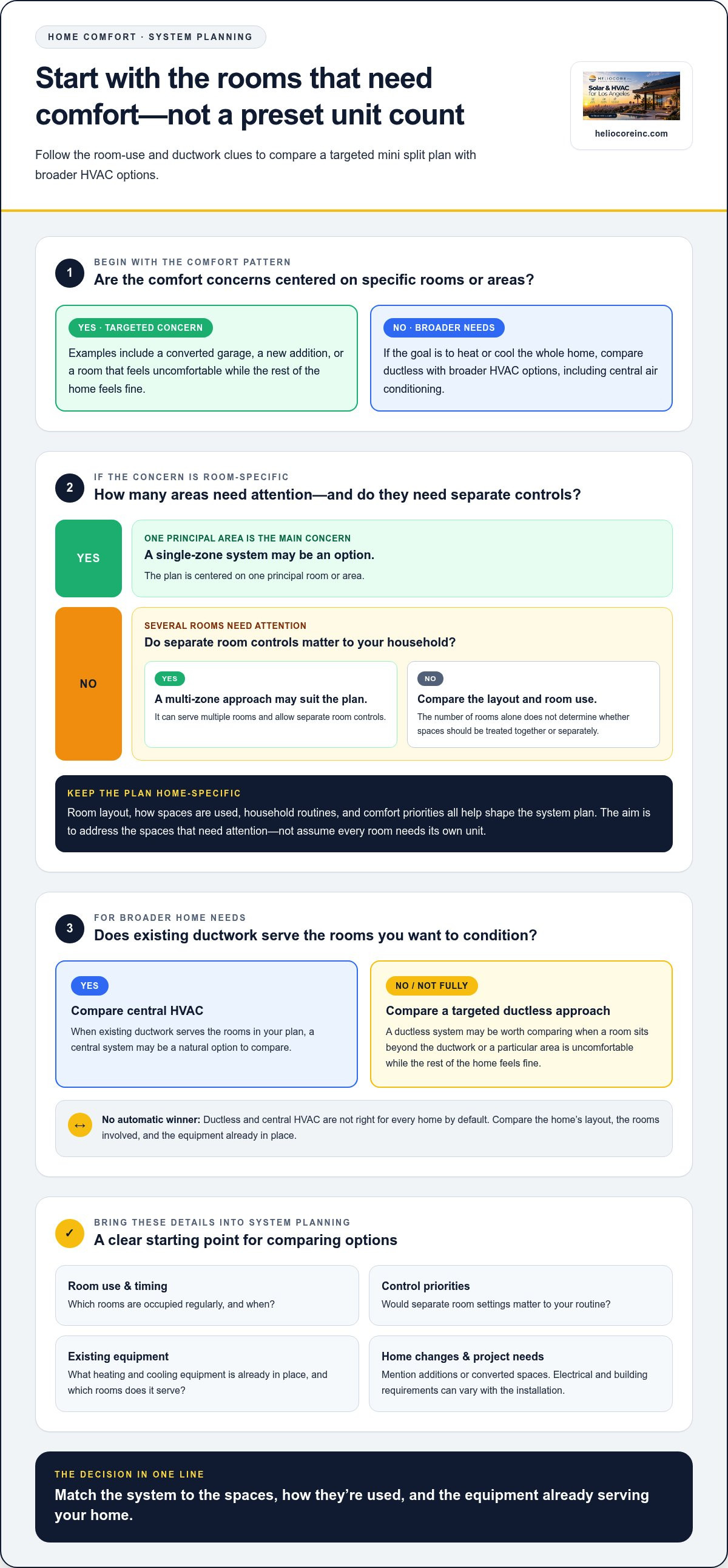
Start with the rooms that aren’t comfortable. Are you trying to improve one converted garage, cool a new addition, or address several rooms that feel different from the rest of the house? If the issue is limited to particular spaces, a ductless mini split may be worth comparing. If you want to heat or cool the whole home, compare it with broader HVAC options, including central air conditioning.
What a ductless mini split does in the home
A ductless mini split connects one or more indoor air-handling units to an outdoor unit. The indoor units deliver conditioned air to the spaces they serve without relying on central ductwork. Depending on the system design, an installation can serve one room or multiple zones.
Separate zones may be useful when household members use rooms at different times or prefer different comfort settings. For example, a homeowner might focus on a converted garage used as a workspace, while another zone serves a frequently used addition. The aim is to match the system to the spaces that need attention, not to assume every room needs its own unit. Room layout, use, and the home’s overall heating and cooling needs all matter.
When homeowners compare ductless and central HVAC
Existing ductwork is a helpful starting point. If it serves the rooms you want to condition, a central system may be a natural option to compare. If a room sits beyond the ductwork, or feels uncomfortable while the rest of the home feels fine, a ductless system may offer a more targeted approach. Neither option is automatically right for every Los Angeles home.
Think about the pattern of discomfort before choosing. Is it one room with a distinct purpose, such as a garage conversion? Is it an addition that wasn’t part of the original home layout? Or do several connected living areas need consistent heating or cooling? Your answers help clarify whether you need room-level comfort or a system designed to serve a broader area.
- Consider ductless zoning when comfort concerns center on specific rooms or areas.
- Compare central HVAC when existing ductwork and the rooms it serves are central to your plan.
- Look at the full layout when several spaces have different uses or comfort needs.
For homeowners comparing ductless mini split installers los angeles, a useful conversation starts with these details, not a one-size-fits-all recommendation. HelioCore installs residential ductless mini splits and offers other heating and cooling options for Los Angeles homeowners. Describe which rooms need attention, how they’re used, and what equipment is already in place to help shape a system plan around your home.
How HelioCore Matches Mini Split Options to Your Home
A suitable configuration starts with the spaces you want to condition, not a preset number of indoor units. HelioCore considers how each room is used, how the home is arranged, and what heating and cooling equipment is already in place. Those details help homeowners compare a focused mini split project with broader HVAC needs.
One principal room: A single-zone system may be an option when one area is the main comfort concern.
Several rooms: A multi-zone approach may suit a plan that serves multiple rooms and calls for separate room controls.
Broader home needs: If the goal extends beyond a few spaces, compare a ductless system with other residential heating and cooling options in light of the home’s layout and existing equipment.
Single-zone or multi-zone: what changes?
A single-zone system is designed around one principal area. A multi-zone plan considers multiple rooms and how each space may be controlled. The difference isn’t simply the number of rooms. It’s whether the home’s layout, household routines, and comfort priorities support treating spaces together or separately. HelioCore shapes residential HVAC projects around the home and the equipment selected for the work.
For example, a household might use one room as an office during the day and other areas mostly in the evening. Another home may need attention across several rooms with distinct uses. Think about when rooms are occupied, where comfort varies, and whether independent room control matters to your household. These details make system options easier to compare.
What HelioCore considers during system planning
Planning begins with the home itself. Consider the arrangement of the rooms, how household members use them, and the condition of existing heating and cooling equipment. Electrical and building requirements can also vary with the installation, so the proposed work should be considered in the context of the home and selected system.
Before discussing options, prepare a short list of comfort concerns. Note which rooms feel less comfortable, how each is used, and whether existing HVAC already serves it. Include recent changes to the home, such as an addition or converted space. This gives the project conversation a clear starting point and keeps equipment choices tied to practical household needs.
- Room use: Identify which spaces are occupied regularly and when.
- Control priorities: Decide whether separate room settings matter to your routine.
- Existing equipment: Describe what currently heats or cools the home and how it’s working.
Homeowners comparing ductless mini split installers los angeles can use these points to understand how a recommendation relates to their home. HelioCore tailors residential ductless mini split installations to the project and explains the proposed scope and system choice in practical terms. To discuss how your home’s layout shapes the options, explore HelioCore’s HVAC services.
What to Compare Before Choosing a Ductless Mini Split Installer
A clear installation plan should explain more than the system type. It should connect the equipment to your home, describe the work involved, and make the next steps understandable. Because installation needs vary by home, the proposed scope should reflect the actual project rather than a generic package.
As you compare ductless mini split installers los angeles homeowners can work with, focus on how each project is explained. HelioCore helps homeowners plan residential HVAC installations, with information about the equipment, work, and service-plan terms relevant to the project.
Questions a homeowner should have answered
Before moving ahead, make sure you understand what’s planned. The equipment and installation scope should be clear, along with how project stages and next steps will be communicated. These details help you follow the work from planning through installation.
- Equipment: What system and indoor units does the project describe, and which rooms are they intended to serve?
- Installation scope: What work is included in the project, and what work sits outside that scope?
- Project communication: How will installation stages and next steps be explained as the work moves forward?
- Ongoing care: How does the selected plan define scheduled maintenance and covered repairs?
These questions matter because the equipment, installation needs, and service terms are connected. A change in the home or project scope can affect the work involved. A clear explanation gives you a better basis for understanding the plan and making an informed decision.
Understanding the Palmetto Comfort Plan
The Palmetto Comfort Plan offers 10-year or 12-year terms for approved equipment. It includes installation and scheduled preventative maintenance, as well as covered repair parts and labor according to the agreement. Qualification uses a soft credit check that does not affect your credit score. The agreement defines which equipment and services are covered, so review its terms alongside the installation scope.
Coverage has limits. The plan doesn’t cover every repair or home upgrade. Duct cleaning, unrelated electrical or plumbing work, and optional upgrades are excluded. Understanding these boundaries helps distinguish included plan services from other work that may arise.
As part of planning, consider how the agreement and plan terms relate to the proposed installation. Identify the approved equipment, included services, and how covered repairs are defined. That way, you can weigh the installation and the ongoing support described in the agreement without assuming every future need will be covered.
A useful comparison leaves fewer loose ends. You should understand the equipment being installed, the work described, how project updates will be handled, and what the selected plan includes. HelioCore connects those details to your home and installation, making it easier to evaluate the scope and service terms together.
From Home Assessment to Mini Split Installation in Los Angeles
A well-organized project moves through clear stages: discuss comfort needs, consider the home, plan the equipment, complete the installation, and review how the system operates. Requirements and timing depend on the home and selected equipment, so they’re specific to each project.
- Discuss comfort needs. Identify the rooms you want to heat or cool and describe what feels uncomfortable. Explain how each space is used and whether your goal is room-level comfort or a broader change.
- Assess the home. Consider the layout, existing HVAC equipment, and the spaces the proposed system would serve. Share recent changes, such as an addition or converted area, that may affect the project.
- Plan the equipment and scope. Connect your comfort priorities with a project-specific equipment plan. Review the proposed work, installation requirements, and agreement terms before the project proceeds.
- Prepare and install. The installation sequence depends on the selected equipment and the home. Applicable local permits and code requirements should be verified for the specific project as part of planning.
- Review system operation. At handover, go over the controls, basic system use, and relevant plan documentation. Make sure you understand how to operate the equipment and where to find the agreed service details.
Preparing for a project assessment
A few notes can make the first conversation more useful. List the rooms with comfort concerns, when they’re occupied, and what you’ve noticed about their heating or cooling. Gather details about existing HVAC equipment and recent home changes. Bring questions about installation access, maintenance, and available plan terms so the discussion covers both the work and what follows.
- Describe the rooms and the times of day they’re used.
- Note existing heating and cooling equipment and any changes to the home.
- Write down questions about access, maintenance, and plan documentation.
Installation and the first steps afterward
Each installation has its own sequence. The home, selected equipment, and project requirements shape the work, so don’t assume a standard duration. HelioCore explains the project stages and next steps in relation to the planned installation. Afterward, review the controls and system operation, then keep the agreement and plan documents handy. They provide a reference for routine use and the services described in your plan.
Choosing ductless mini split installers los angeles homeowners can work with includes understanding the path from assessment through handover. To discuss your home and the steps involved, talk with HelioCore about your home.
Choosing HelioCore for Ductless Mini Split Installation in Los Angeles
Choosing a ductless system is easier when the recommendation reflects how your home works day to day. HelioCore provides residential HVAC services in Los Angeles, including ductless mini split installation. The team helps homeowners connect room-by-room comfort needs with a project plan shaped around the home, its existing equipment, and the installation scope.
That planning helps you compare the practical details: which areas the system is intended to serve, what the installation includes, and what ongoing support may apply. No single setup suits every household. A clear project discussion can help you understand how a proposed system fits your priorities before you decide.
Energy use is part of the decision, but a new system doesn’t guarantee a particular utility-bill result. Any change depends on how the system is used, weather, insulation, utility rates, and the equipment being replaced. These factors vary by home, so consider efficiency alongside comfort needs and the project plan.
What ongoing HVAC plan support can include
The Palmetto Comfort Plan offers 10-year or 12-year terms for approved equipment. It includes installation and scheduled preventative maintenance, as well as covered repair parts and labor according to the agreement. The agreement defines which equipment and services are included, giving you a specific reference for ongoing support.
The plan has limits. Duct cleaning, unrelated electrical or plumbing work, and optional upgrades are excluded. Reviewing the agreement helps you distinguish covered services from other work your home may need. The plan can provide routine maintenance and covered repairs without covering every repair or home improvement.
As you review the project, consider the installation and service terms together. Understand which equipment is approved, what maintenance is scheduled, and how covered repair parts and labor are defined. HelioCore can explain these details in relation to the proposed work, making the system choice and ongoing plan easier to evaluate.
A clear next step for Los Angeles homeowners
Start with the rooms that matter most. Describe what feels uncomfortable, when those spaces are used, and what you hope to change. From there, discuss system options, project scope, and available plan terms in the context of your home. A practical conversation can replace guesswork with a clearer picture of the work ahead.
For homeowners comparing ductless mini split installers los angeles, local guidance can make the decision more manageable. HelioCore brings system planning, installation, and service-plan details into one discussion. Explore HVAC options with HelioCore and talk through the comfort needs you want to address.
Take the Next Step Toward a Better-Fitting Comfort Plan
Before choosing a system, picture how you want your home to feel during the routines that matter most. Which rooms should feel more comfortable? How do household needs change through the day or across the seasons? Those answers can turn a broad search for ductless mini split installers los angeles into a focused conversation about your home.
Think beyond the equipment, too. Consider how you want the project explained, what details you need before proceeding, and what ongoing support would help you feel confident as a homeowner. A useful discussion should account for those priorities, not just the installation plan.
HelioCore helps Los Angeles homeowners explore residential HVAC options and plan ductless mini split projects around their needs. Bring your questions and comfort priorities to the conversation. Discuss ductless mini split options for your Los Angeles home and take a clear step toward a more comfortable home.
Frequently Asked Questions
Do ductless mini splits need ductwork?
No. A ductless mini split delivers heating or cooling through indoor units rather than a network of ducts. That can be useful for a room that isn’t served well by existing ductwork, such as a converted space or addition. The system still needs an appropriate connection between indoor and outdoor equipment. HelioCore serves homeowners in Los Angeles, Inglewood, South Los Angeles, Crenshaw, Leimert Park, Baldwin Hills, Westchester, Van Nuys, North Hollywood, Reseda, Northridge, Woodland Hills, and San Pedro.
Can a ductless mini split heat and cool a room?
Yes. Ductless mini split systems can provide heating and cooling, depending on the equipment selected for the project. This can give a homeowner one system to consider for a room that needs comfort across different seasons, such as a home office used year-round. The project plan should identify what the proposed equipment is designed to do.
Will a ductless mini split lower my Los Angeles utility bill?
It may change energy use, but lower bills aren’t guaranteed. Results depend on how you use the system, local weather, your home’s insulation, utility rates, and the equipment being replaced. Replacing older heating or cooling equipment may affect energy use differently than adding conditioning to a previously unserved room. Compare the proposed system’s role in the home, and consider comfort and energy use together.
How many indoor units does a ductless mini split need?
There isn’t one fixed number. The system may serve one principal area or several rooms, depending on the home’s layout, the spaces you want conditioned, and your comfort priorities. A room used separately from the rest of the home may call for a different plan than connected spaces with similar needs. Consider which areas the system should serve rather than assuming every room needs an indoor unit.
Does a ductless mini split work during a power outage?
A ductless mini split needs electricity to operate, so it generally stops when power to the home is interrupted. Backup power requires a battery and a compatible system. Whether battery storage can run a particular HVAC system depends on system compatibility and the electrical setup. Don’t assume a mini split will operate during an outage without a planned backup configuration.
What maintenance does a ductless mini split need?
Follow the equipment instructions for routine care, including checking and cleaning reusable filters as directed. Keep the area around the outdoor unit clear of items that could obstruct access or airflow, and pay attention to changes in operation. The Palmetto Comfort Plan includes scheduled preventative maintenance for approved equipment, according to the agreement. If performance changes or the equipment needs attention, refer to the service guidance and coverage terms in your agreement.
Does mini split installation in Los Angeles require a permit?
Yes. A new or replacement ductless mini split installation in Los Angeles requires a mechanical permit through the Los Angeles Department of Building and Safety. If the project adds new electrical circuits, an electrical sub-permit is also required. Requirements can depend on the installation scope, so permit and code details should be verified for the specific project. Homeowners comparing ductless mini split installers los angeles can include permitting responsibilities in their project discussion.