
HVAC
Heat Pump Installation in Los Angeles: A Homeowner’s Buying Guide
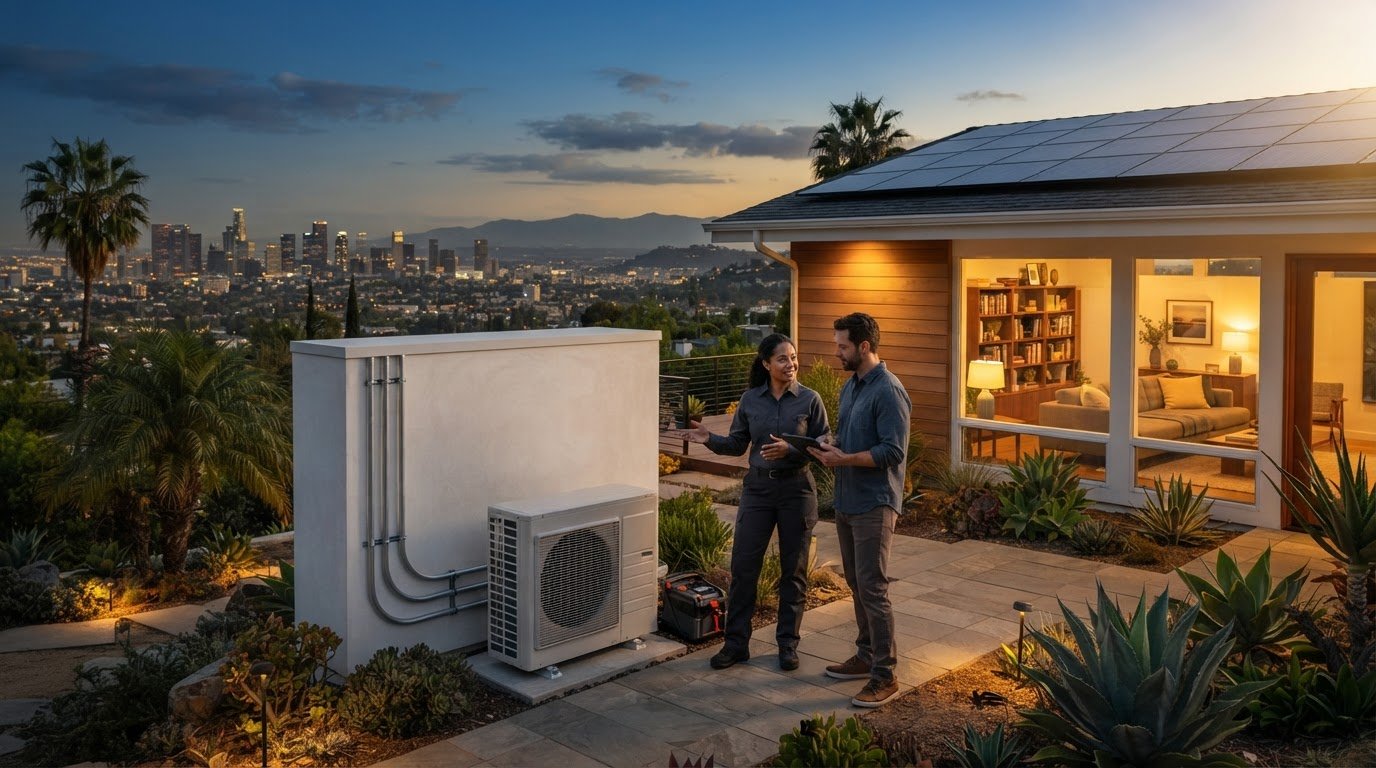
What makes a heat pump right for your Los Angeles home depends less on a model number than on your ducts, electrical service, and the rooms you use every day. A heat pump installation Los Angeles homeowners can feel confident about starts with the home itself, not a one-size-fits-all equipment list.
It’s reasonable to wonder whether your current setup will work, what might need to change, and how installation could affect your routine. A clear assessment helps you understand the project before work begins.
This guide explains how to compare ducted and ductless options, what an installer evaluates, and what to expect during installation. You’ll also learn how HelioCore Inc plans residential HVAC projects and how the 10-year and 12-year Palmetto Comfort Plan options work. Palmetto uses a soft credit check that doesn’t affect your credit score. The goal is to help you choose a setup that suits your home and comfort needs, with a clearer picture of the steps ahead.
Key Takeaways
- For heat pump installation Los Angeles homeowners should start with the home’s comfort needs, existing system, ducts, electrical capacity, and equipment locations.
- Compare central ducted, ductless mini-split, and packaged configurations based on your home’s layout and zoning needs.
- System sizing should reflect your home’s heating and cooling requirements, not just the equipment already in place.
- Expect planning, preparation, installation, system checks, and a homeowner walkthrough. The project scope and timing depend on the home and work involved.
- HelioCore’s Palmetto Comfort Plan offers 10- and 12-year terms for approved equipment, installation, scheduled maintenance, and covered repair parts and labor. Coverage is limited to items in the agreement and excludes duct cleaning, unrelated electrical or plumbing work, and optional upgrades. Palmetto uses a soft credit check that doesn’t affect your credit score.
Table of Contents
Why Los Angeles homeowners consider heat pump installation
If your heater is aging, your air conditioner is struggling, or you’re planning to replace both, you may want one coordinated approach to home comfort. Heat pump installation Los Angeles homeowners consider is more than an equipment swap. It’s a home-specific heating and cooling upgrade shaped by how the household uses each room, what equipment is already in place, and how the home is laid out.
That planning matters across Los Angeles, where homes vary in age, design, additions, and past renovations. A setup that works for one property may not suit another. The first step is to understand the home and how a heat pump could fit its existing HVAC arrangement.
What changes when a home gets a heat pump?
A heat pump can provide both heating and cooling in one HVAC system. The right setup depends on the home and its current equipment, including whether it has ducts or needs room-by-room solutions. For a broader overview of the technology and its types, see What is a heat pump? That overview explains the system; a home assessment helps identify what installation could involve.
Which Los Angeles homes may be ready for an upgrade?
Replacing separate heating and air-conditioning equipment can be a good time to consider a heat pump. Existing ducts, differences in comfort between rooms, and the age and arrangement of current equipment all inform the decision. Older homes, remodeled properties, and homes with additions can have different needs, so the layout deserves close attention.
Start with daily experience. Is one bedroom consistently warmer or cooler than the rest of the home? Are some rooms difficult to serve through the existing ductwork? Does the household use an addition or converted space differently from the main living areas? These details help clarify whether the priority is whole-home heating and cooling, more room-by-room control, or a solution tailored to a particular layout.
Then consider what’s already installed. Existing ducts may influence which system makes sense, while the current heating and cooling equipment provides context for the replacement. The home’s layout and how the household uses it can help determine whether the system should serve the full home or focus on specific areas. No single configuration is right for every property.
Keep utility expectations grounded, too. Heat pump installation doesn’t guarantee lower utility bills. Any change depends on household usage, weather, insulation, utility rates, and the equipment being replaced. Start with a clear picture of your comfort needs and current system, then compare options against those conditions rather than broad savings promises.
Assess your Los Angeles home before choosing a heat pump
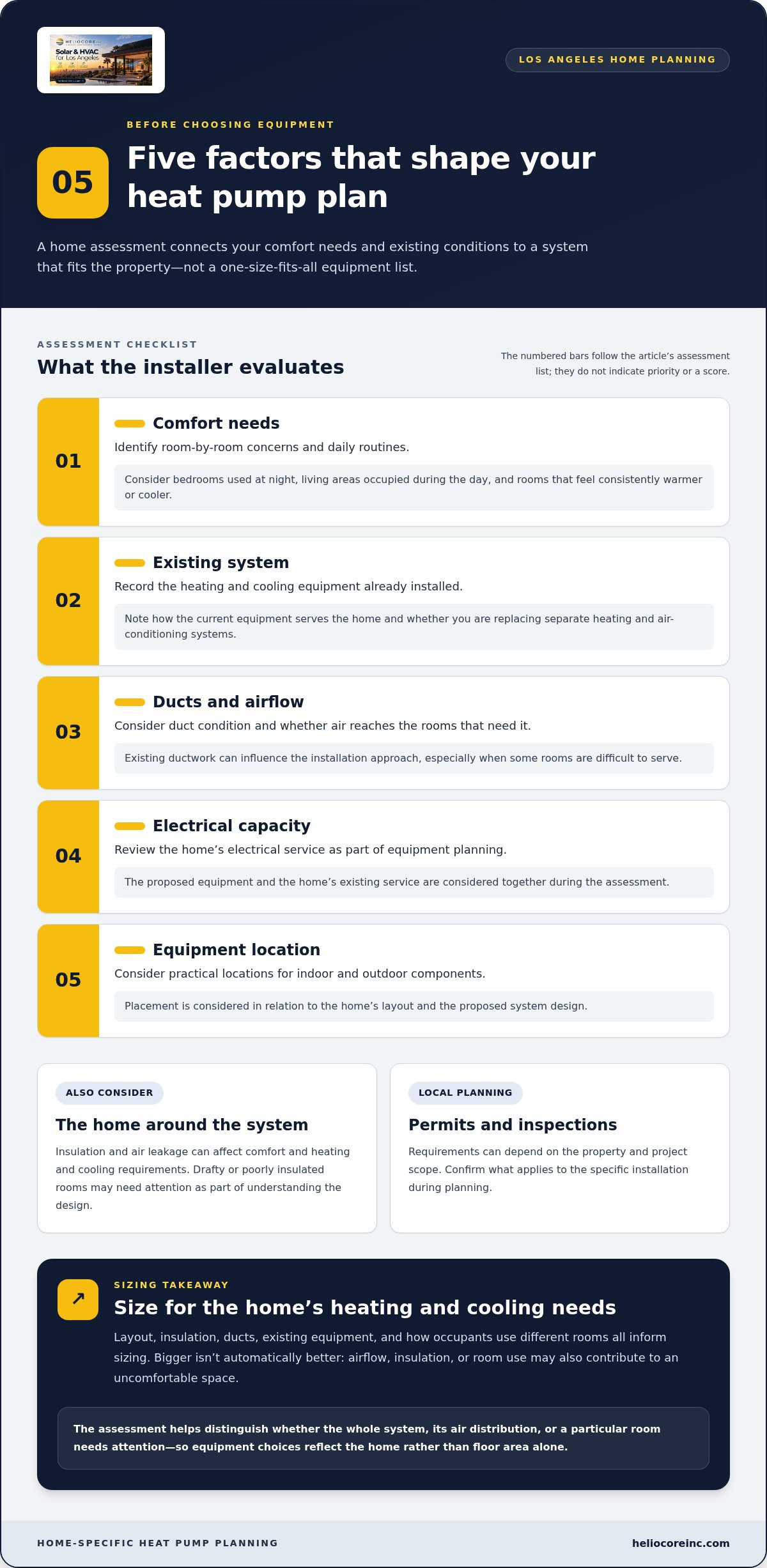
A useful assessment turns a broad equipment decision into a plan for your home. For heat pump installation Los Angeles homeowners should evaluate comfort needs, existing equipment, ductwork, electrical capacity, and potential equipment locations before choosing a system. Each factor can influence the installation approach and help clarify what the home needs from heating and cooling.
What should a heat pump home assessment examine?
Begin with how the home works today. Note which rooms household members use most, where temperatures feel uneven, and what heating and cooling equipment is installed. Then consider the physical conditions that may affect system design and placement.
- Comfort needs: Identify room-by-room concerns and routines, such as bedrooms used at night or living areas occupied during the day.
- Existing system: Record the current heating and cooling equipment and how it serves the home.
- Ducts and airflow: Consider duct condition and whether air reaches the rooms that need it. Existing ducts can shape the installation approach.
- Electrical capacity: Review the home’s electrical service as part of planning for the proposed equipment.
- Equipment location: Consider practical locations for indoor and outdoor components in relation to the home’s layout.
Insulation and air leakage matter as well. A drafty or poorly insulated room may affect comfort and the system’s heating and cooling requirements. These observations help distinguish an equipment issue from a home condition that could also influence the design. A thorough assessment connects equipment choices to how the home performs, rather than treating floor area as the only consideration.
Local permit and inspection requirements can depend on the property and project scope. Confirm the requirements for the specific installation during planning rather than relying on a general rule.
How does the assessment inform system sizing?
System sizing should reflect the home’s heating and cooling needs, not a generic rule of thumb. The assessment considers the layout, insulation, ducts, existing equipment, and how occupants use different rooms. Household schedules and specific comfort concerns help build a practical picture of demand across the home.
Bigger isn’t automatically better. A larger unit may seem like a simple fix for one uncomfortable room, but airflow, insulation, and how that room is used may also be contributing factors. The assessment helps determine whether the whole system, its distribution, or the room itself needs attention. That context supports a better-informed equipment decision.
A clear home assessment also makes the project scope easier to understand before work begins. HelioCore plans residential heat pump installations around the home’s existing HVAC arrangement and comfort needs. Explore HelioCore heat pump installation as a next step toward a home-specific project plan.
Compare heat pump configurations for Los Angeles homes
The right heat pump configuration depends on how the home is built and how you want to manage comfort across its rooms. Existing ducts, equipment access, and whether different areas need separate temperature control all shape the design. Use this comparison to understand the trade-offs before choosing a direction.
| Configuration | Ducts | Zoning and room needs | Equipment placement | May suit |
|---|---|---|---|---|
| Central ducted | Uses ducts to distribute heated or cooled air. | Can serve multiple rooms; zoning depends on the system design. | Indoor and outdoor equipment connect to the home’s ductwork. | Homes with suitable ducts and a whole-home comfort plan. |
| Ductless mini-split | Doesn’t rely on ducts to deliver air to each served area. | Can be arranged to address individual rooms or zones. | Indoor units serve selected areas and connect to outdoor equipment. | Homes where duct access is limited or room-by-room control is a priority. |
| Packaged | Typically distributes air through ducts. | Serves the areas included in the system design. | Heating and cooling components are housed together in one unit, with placement determined by the property. | Homes where the layout and available equipment location support this format. |
When does a central heat pump make sense?
A central system may fit a home that already has ductwork and needs to serve multiple rooms through a shared distribution system. The condition of those ducts and how well they deliver air to each room still matter. Keeping the current layout may be possible, but the assessment determines whether changes are needed.
Room airflow matters as much as the presence of ducts. If a bedroom is routinely uncomfortable while other rooms feel fine, the design should account for that difference rather than assume the existing distribution will work unchanged. The home’s layout, duct condition, and comfort priorities all help shape a central system plan.
When might a ductless or packaged setup suit the home?
Ductless mini-splits are worth considering when extending or relying on ductwork doesn’t suit the home’s layout, or when specific rooms need separate attention. A packaged system brings its heating and cooling components together in one unit and uses ducts to serve the home. Its fit depends on practical placement and the property’s design, not just the equipment format.
For heat pump installation Los Angeles homeowners can use these formats as starting points, not fixed recommendations. A home assessment connects the configuration to existing ducts, room priorities, and equipment placement. The final selection follows the project design, so the system is planned for the property rather than chosen from a generic checklist.
What to expect during heat pump installation in Los Angeles
A heat pump project follows a clear sequence, though the work varies by home. Equipment choice, access, existing ducts, and additional project work affect the scope and timing. A careful plan helps you understand what will happen, where work is needed, and how installation may fit around household routines.
- Planning: The project takes shape around the home, selected equipment, existing HVAC arrangement, and household priorities. Planning should also establish which local permit or inspection requirements apply to the specific project. Requirements can vary, so don’t assume a general checklist covers every property.
- Site preparation: The work areas are prepared to provide access to indoor and outdoor equipment locations. Depending on the scope, this may mean clearing a path or making relevant rooms accessible.
- Equipment installation: The existing setup is addressed as planned, and the new heat pump equipment is installed. The work varies with the configuration, ductwork, access, and other project needs.
- System checks: After installation, the system is checked as part of the handoff process. The specific checks depend on the equipment and installation.
- Homeowner orientation: The homeowner receives a walkthrough of the system controls and basic operation, with time to get familiar with how to use them.
How should homeowners prepare for installation?
Before work begins, discuss access to indoor and outdoor work areas and the rooms that may be involved. Share household schedules and any access needs during planning. This helps identify where work will happen and how it may affect daily routines. Preparation depends on the home and project scope, so there’s no single checklist for every installation.
It also helps to consider practical details early: which entrances are easiest to use, whether rooms need to remain accessible during the day, and where household members may need quiet or uninterrupted use. These details don’t determine the equipment, but they can set clearer expectations for the workday. If the project includes changes to existing ducts or addresses other home conditions, the preparation plan should reflect that scope.
What happens after the equipment is installed?
System checks help complete the installation before the homeowner walkthrough. During the walkthrough, the installer can review the controls and explain basic operation. Ask how to make everyday adjustments and where to find information you may need later. The walkthrough should help you get familiar with the new setup, while recognizing that controls and equipment vary by home.
Installation duration isn’t the same for every home. Equipment, access, existing ducts, and required project work can all affect timing. A clear project plan helps you prepare without relying on a fixed estimate that may not match your property. For a home-specific discussion of the work involved, Explore HelioCore’s HVAC installation services.
Choose HelioCore for a heat pump plan that fits your home
A heat pump project should reflect your home’s layout, existing equipment, and the rooms that matter most to your household. HelioCore installs residential heat pumps for Los Angeles homeowners and plans each HVAC project around the property. This connects the equipment decision to the practical details of installation instead of treating every home alike.
As you compare options for heat pump installation Los Angeles, consider both the project itself and how you want to manage ongoing care. HelioCore’s Palmetto Comfort Plan is available for approved HVAC equipment, with 10-year and 12-year terms. The plan includes approved equipment and installation, scheduled preventative maintenance, and covered repair parts and labor, subject to the agreement.
What does the Palmetto Comfort Plan cover?
The agreement defines the equipment and services covered, so the plan doesn’t cover every repair or home upgrade. Duct cleaning, unrelated electrical or plumbing work, and optional upgrades are excluded. Review the listed coverage to understand how the plan applies to your equipment and installation.
For qualifying homeowners, a $0-upfront option may be available, but that doesn’t mean the equipment is free. Monthly payments apply, and the specific terms depend on the agreement. Palmetto uses a soft credit check that doesn’t affect your credit score. These details can help you consider the plan alongside the installation scope and your household budget.
How can a homeowner take the next step?
Start with the details that make your home different: its layout, current heating and cooling equipment, and the rooms where comfort matters most. Sharing these priorities gives the project planning a practical starting point and helps shape a discussion about configuration, installation needs, and whether a plan for approved equipment suits your preferences.
Keep the installation scope and plan coverage distinct as you review your options. Installation covers the work required to put the system in place. Palmetto Comfort Plan coverage applies only to the equipment and services named in the agreement, including scheduled preventative maintenance and covered repair parts and labor where specified. A clear explanation of those terms helps you understand what’s included and what falls outside the agreement.
For a home-specific discussion of heat pump installation and available plan terms, Plan your Los Angeles heat pump installation with HelioCore.
Take the next step toward a home-specific comfort plan
Turn what you’ve learned about your home into a clear project conversation. Bring your priorities, questions about the existing system, and the rooms that matter most. That gives planning a practical starting point and keeps equipment decisions tied to your household, not broad promises about what a heat pump should do.
For heat pump installation Los Angeles homeowners can work with HelioCore on a residential project shaped around their property. If you’re considering the Palmetto Comfort Plan, review the agreement for the approved equipment, installation, scheduled preventative maintenance, and covered repair parts and labor. Its soft credit check doesn’t affect your credit score.
Plan your Los Angeles heat pump installation with HelioCore. A thoughtful first conversation can make the path ahead clearer and better suited to the way you live.
Frequently Asked Questions
How much does heat pump installation cost in Los Angeles?
There’s no single price for heat pump installation in Los Angeles; the total depends on the configuration, home conditions, access, and project work required. A central system using existing ducts may involve different work from a ductless setup, and duct or electrical changes can affect the scope. Homeowners in Los Angeles, Inglewood, South Los Angeles, Crenshaw, Leimert Park, Baldwin Hills, Westchester, Van Nuys, North Hollywood, Reseda, Northridge, Woodland Hills, and San Pedro should base budgeting on a home-specific project proposal.
Do I need a permit to install a heat pump in Los Angeles?
Permit and inspection needs depend on the project and current requirements for the property’s jurisdiction. Don’t assume a rule for one Los Angeles-area address applies to another. Confirm current requirements for the specific project during planning, and include any required approvals or inspections in the schedule. This clarifies administrative steps alongside equipment selection and site preparation without relying on outdated or generalized guidance.
Can a heat pump be installed in a condo or multifamily home?
A heat pump can be considered for a condo or multifamily home, but feasibility depends on the unit and building. The assessment needs to account for available indoor and outdoor equipment locations, electrical capacity, duct access, and the existing HVAC arrangement. Shared spaces or building rules may also limit possible changes, so account for property requirements before settling on a configuration.
Will a heat pump work with my existing electrical panel?
Possibly. Whether an existing panel can support a heat pump depends on its available capacity, the selected equipment’s electrical needs, and other loads in the home. An assessment can identify whether the current service appears suitable or whether electrical work should be considered in the project scope. Don’t assume a panel is adequate based only on its age or appearance. Both the equipment design and electrical review matter.
What maintenance does a heat pump need after installation?
Follow the equipment’s care instructions and maintenance schedule. Monitor or replace filters as directed and keep accessible equipment areas clear. Arrange scheduled preventative maintenance according to the system guidance or agreement. Palmetto Comfort Plan maintenance applies to approved equipment and services listed in the agreement, not every repair or unrelated home upgrade.
Can I add a heat pump to a home that already has solar panels?
A home can have solar panels and a heat pump, but existing solar production doesn’t show how much of the heat pump’s electricity use it will offset. The outcome depends on household usage, when power is used, weather, system production, rates, and the equipment being replaced. Consider energy use and solar system details together when evaluating the project. Solar doesn’t guarantee lower total energy costs or eliminate the utility bill.