
HVAC
LA Home Heating and Cooling Upgrades: A Homeowner’s Guide
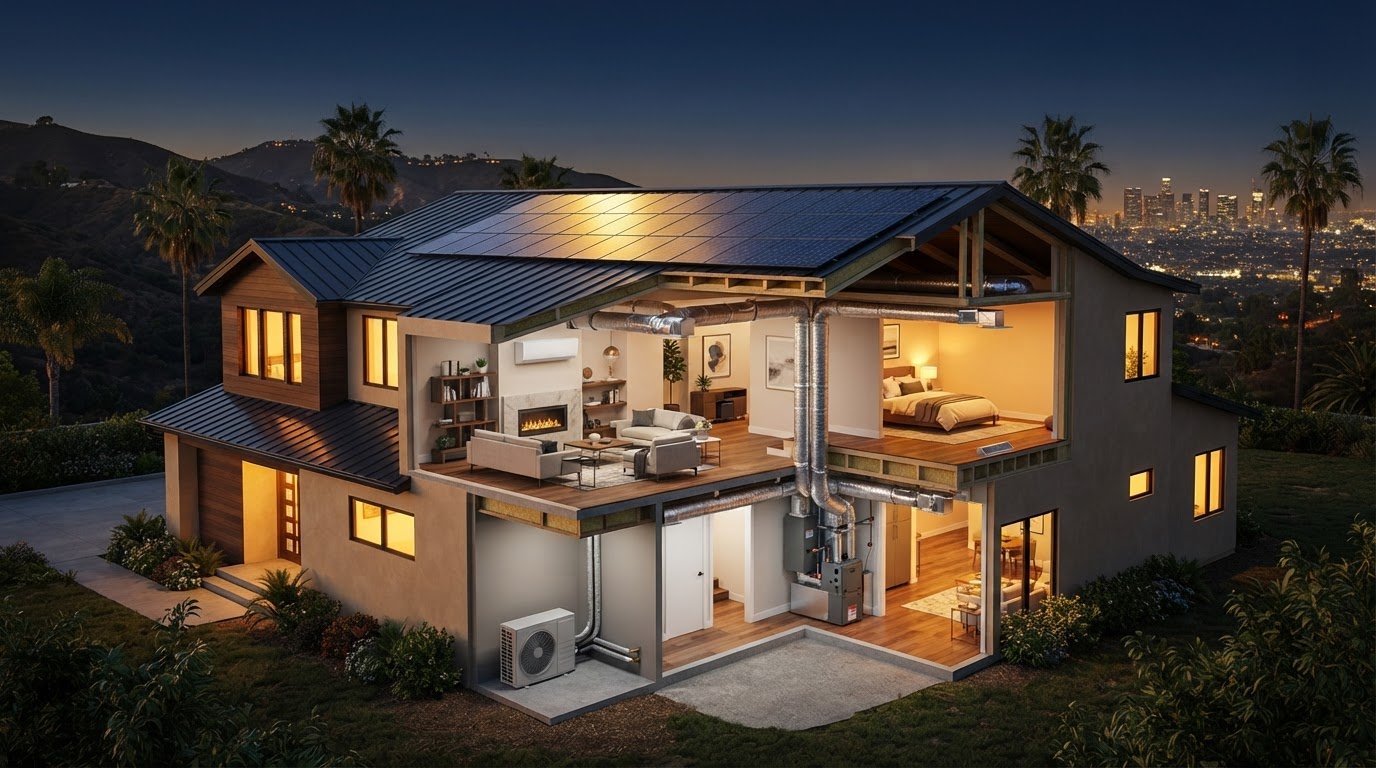
What if a new system isn’t the real answer to an uncomfortable room? Uneven temperatures can point to more than aging equipment. Ducts, insulation, room layout, and ventilation all affect how a home feels. That’s why a search for “home heating and cooling upgrades la” should lead to more than a list of new systems.
If one room is always too warm or your current equipment struggles to keep up, start by noting where and when the problem happens. The right upgrade depends on your home’s conditions, comfort priorities, and existing equipment.
This guide explains what central heating and air conditioning, heat pumps, ductless mini-splits, and ventilation improvements can address. You’ll also learn what to consider before choosing, including ductwork, room layout, and Los Angeles permitting and utility incentives. The goal is a practical next step: match the improvement to the problem so your home can feel more comfortable day to day.
Key Takeaways
- Compare central AC, heating equipment, heat pumps, and ductless mini-splits by the home situation each is suited to address.
- Consider supporting improvements, such as ventilation or ductwork, when equipment alone may not resolve a comfort issue.
- Weigh home heating and cooling upgrades la against your comfort priorities and existing setup.
- Record room-by-room temperature patterns, known equipment age, and seasonal concerns to make upgrade planning more focused.
- Explore HelioCore’s residential HVAC installation, replacement, maintenance, and repair options across Los Angeles.
Table of Contents
LA Home Heating and Cooling Upgrades: Start With the Comfort Problem
A bedroom that stays warm after sunset. A living room that never feels comfortable. A heating or cooling system that needs attention again and again. These are good reasons to review your home’s comfort, but they don’t automatically mean you need a full replacement. First, identify what happens, where it happens, and when.
Comfort depends on more than equipment. Ducts affect how air reaches different rooms. Insulation and sun exposure influence how quickly rooms warm up or cool down. Ventilation and thermostat controls also play a part. HVAC is a broad term for systems that heat, cool, and move air through a home; this overview of HVAC systems explains the components and functions behind the term.
Which signs suggest it is time to review your HVAC system?
Look for patterns rather than treating one symptom as a diagnosis. Note which rooms feel uncomfortable, the time of day, and whether the issue occurs during heating or cooling. Also record recurring system problems, noticeable changes in operation, and whether comfort varies from one day to the next. These details can help clarify whether a repair or a broader upgrade deserves consideration.
- Track where temperatures feel uneven and when the difference appears.
- Record repeated equipment problems and any maintenance you remember.
- Note whether the concern is limited to one room or affects much of the home.
A single hot room may call for a closer look at airflow or the room itself, not necessarily new equipment. A repair may address a specific fault. An upgrade is a broader decision about equipment or supporting parts of the home. The right path depends on what’s contributing to the discomfort.
Why Los Angeles homes can have different comfort needs
Conditions vary across Los Angeles. Coastal homes, central neighborhoods, and Valley-area homes can experience different outdoor temperatures and sun exposure. Even within one area, a west-facing room, a shaded bedroom, and an open living space can behave differently. Window exposure, insulation, room layout, and airflow all shape how a home feels indoors.
Whole-home comfort means the heating and cooling equipment works with the home’s ducts, insulation, layout, ventilation, and controls. A system that suits one house may not address the main concern in another. A room-by-room record can offer useful clues before you compare options.
Upgrades can support comfort or improve equipment efficiency, but lower utility bills aren’t guaranteed. Results depend on usage, weather, insulation, rates, and the equipment being replaced. Start with the comfort problem you want to solve, then consider which part of the home may be contributing. That keeps the focus on a suitable improvement, not replacement for its own sake.
How Heating and Cooling Upgrades Work Together in an LA Home
An HVAC upgrade changes heating or cooling equipment, or the systems that support it, to address a household need. That might mean improving cooling in several rooms, adding targeted comfort to one area, or addressing how air moves through the home. Match the work to the situation rather than treating every concern as an equipment problem.
Central air conditioning distributes cooled air through ductwork, while heating equipment warms the home through its own system and distribution setup. A heat pump can provide both heating and cooling. Ductless mini-splits deliver heating or cooling to specific areas without relying on the same ducted arrangement as central systems. Each option suits different homes and priorities.
What can a central AC, heating system, or heat pump upgrade address?
Central AC may suit a home with ductwork that can support whole-home cooling. Heating options include a heat pump or gas furnace, depending on the home’s existing setup and the homeowner’s needs. A heat pump moves heat to provide cooling or heating, so it can serve both purposes. It does not guarantee lower utility bills; results depend on usage, weather, insulation, rates, and the equipment being replaced.
Before settling on equipment, consider the parts it relies on. Duct leaks or restrictions can affect how air reaches rooms. Insulation influences how quickly indoor spaces gain or lose heat. Thermostat controls shape when the system runs, while ventilation helps manage air movement and freshness. A new unit may not resolve a comfort problem that stems from one of these supporting factors.
Homeowners looking for a wider view of a property’s energy performance can explore Home Energy Score California, which provides a home energy score and recommendations for potential improvements. It can inform planning alongside a review of the home’s HVAC setup and comfort needs.
When might ductless mini-splits or ventilation upgrades help?
Ductless mini-splits may be worth considering for a room or area that needs its own heating or cooling, or where the home’s layout makes a ducted approach less suitable. Ventilation improvements address a different need: bringing in and moving air through the home. They may be considered alongside equipment changes when the concern relates to airflow or indoor air quality.
Equipment selection should account for the home’s layout and existing systems. A room addition, converted space, or floor plan with distinct comfort needs may call for a different approach than an open layout served by central equipment. The phrase home heating and cooling upgrades la covers several options, but the right fit starts with the function each one serves.
For homeowners weighing these paths, HelioCore’s residential HVAC services include installation, replacement, maintenance, and repair for heating, cooling, heat pumps, ductless mini-splits, and ventilation across Los Angeles.
Compare LA Heating and Cooling Upgrade Paths Before Choosing
The best fit depends on what the home needs and how its existing systems are arranged. A comparison can narrow the options, but it can’t replace a review of the equipment, air distribution, and rooms involved. Use the table as a starting point for weighing comfort priorities, not as a diagnosis or a promise of results.
| Upgrade path | Home situation | Potential benefit | Planning consideration |
|---|---|---|---|
| Central AC | The home has ductwork suited to central cooling. | Can cool multiple rooms through a shared system. | Consider duct condition, room layout, and equipment fit. |
| Heating equipment | The home needs a heating system repair or replacement. | Provides heating through a furnace or other suitable system. | Compare with the existing setup and household needs. |
| Heat pump | The homeowner is considering one system for heating and cooling. | Can provide both functions in one equipment category. | Suitability depends on the home and existing systems. |
| Ductless mini-split | Specific rooms or a distinct layout need targeted comfort. | Provides heating or cooling to selected areas. | Consider placement and how the spaces are used. |
| Supporting improvements | Comfort concerns may involve airflow, insulation, ventilation, or controls. | Addresses parts of the home that affect system operation and comfort. | Identify the concern before selecting a supporting change. |
Which upgrade path fits your home layout and comfort goals?
Central systems may suit homes where existing ductwork and room layout support air distribution across the house. A ductless option may be worth considering for a room with different needs or a layout that doesn’t align well with a central approach. Heat pumps combine heating and cooling, but they aren’t a universal fit. Compare options against the home’s current equipment and the comfort concern you want to address.
Efficiency is one consideration alongside comfort. SEER2 is a rating of an air conditioner’s or heat pump’s cooling efficiency under standardized test conditions. A rating can help compare equipment, but it doesn’t predict an individual home’s utility bills or guarantee how comfortable each room will feel. Ducts, insulation, usage, weather, and the equipment being replaced all matter.
How do LADWP programs fit into upgrade planning?
LADWP’s Cool LA program offers cooling-related assistance, subject to current terms. Before including program support in your plans, review LADWP’s current 2026 eligibility rules, eligible equipment, and application requirements. Program details can change, and assistance should not be treated as guaranteed or assumed to apply to a particular installation. Keep the upgrade decision grounded in your home’s needs first.
For homeowners researching home heating and cooling upgrades la, start with three questions: which rooms need attention, what equipment and air distribution already exist, and whether the concern points to equipment or supporting improvements. This framework helps you compare central AC, heating equipment, heat pumps, ductless systems, and home-related changes without expecting one option to solve every comfort issue.
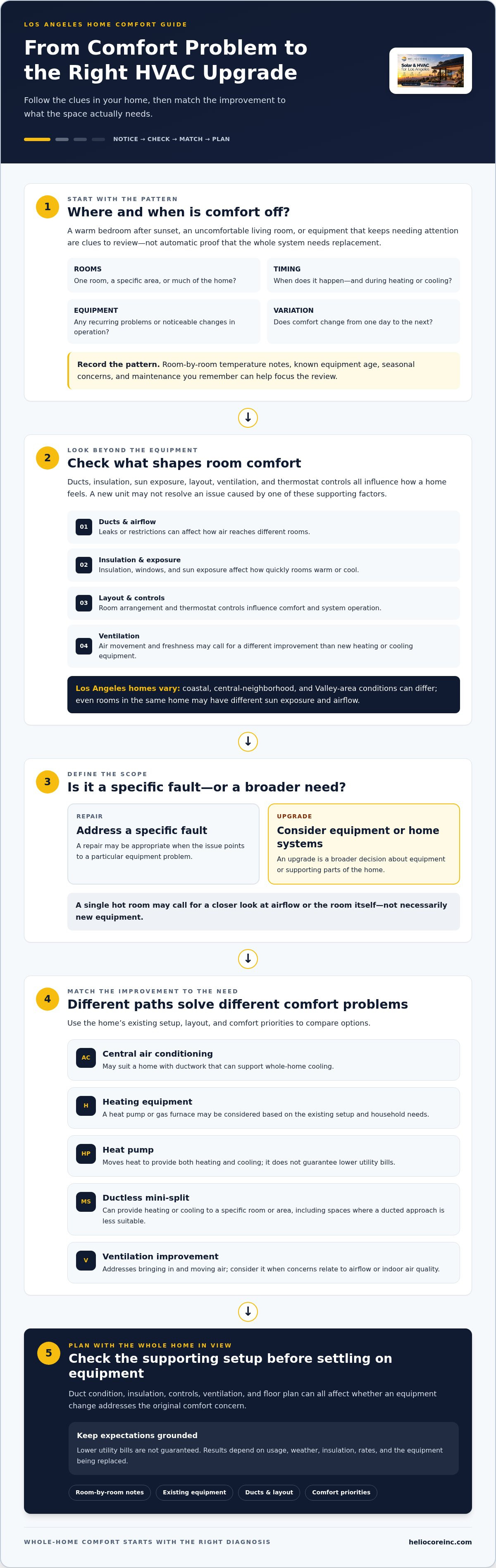
Plan a Home Heating and Cooling Upgrade in Los Angeles
A useful upgrade plan starts with clear observations, not a guess about which equipment to buy. A short record of comfort concerns can help connect what you experience at home with the work that may address it. For home heating and cooling upgrades la, keep the process practical: document, review, prioritize, then plan the next step.
- Document the comfort concerns. Note which rooms feel too warm, too cool, or different from the rest of the home. Record when the issue happens, which season brings it on, and whether it affects daily routines or particular parts of the day.
- Review what’s already in place. Write down the equipment type and its age if known. Include any recent or recurring maintenance and repair history. Note whether the home has ducts, and record concerns about airflow, insulation, ventilation, or thermostat controls.
- Prioritize the household need. Separate the most disruptive comfort issue from improvements that would be helpful but less urgent. A room-specific concern may call for a different discussion than inconsistent comfort across the whole home.
- Plan the scope around the home. Equipment selection and system sizing should account for the home’s layout, existing equipment, and air distribution. Duct condition matters too. Project scope depends on the home and selected work, so don’t assume a simple equipment swap will resolve every concern.
What information helps clarify the right upgrade priorities?
Bring together details about how the home is used as well as how it feels. A guest room used occasionally may have different priorities from a bedroom used every night. Identify the rooms that stand out, household routines that affect comfort, known equipment age, and maintenance history. Include questions about insulation, ducts, ventilation, and controls so the planning conversation covers the full system, not just the unit.
How should homeowners think about efficiency, maintenance, and bills?
Equipment efficiency is one factor in an upgrade decision. Home conditions and day-to-day use matter too. Any bill change depends on usage, weather, insulation, utility rates, and the equipment being replaced, so an upgrade shouldn’t be treated as a guaranteed way to lower bills.
Plan for ongoing care as a separate part of the decision. The Palmetto Comfort Plan is an HVAC lease available in 10-year or 12-year terms. It includes approved equipment, installation, scheduled preventative maintenance, and covered repair parts and labor, subject to its agreement. It doesn’t cover every repair or home improvement. Duct cleaning, unrelated electrical or plumbing work, and optional upgrades are excluded from plan coverage.
Once you’ve gathered your notes, HelioCore can help you consider heating, cooling, and ventilation as connected needs. Explore HelioCore’s residential HVAC services for installation, replacement, maintenance, and repair across Los Angeles.
Explore HelioCore HVAC Upgrades for Los Angeles Homes
Once you’ve identified the rooms and comfort needs that matter most, connect those priorities with the right kind of HVAC work. HelioCore serves residential homeowners across Los Angeles with installation, replacement, maintenance, and repair. Options include central air conditioning, heating, heat pumps, ductless mini-splits, and ventilation.
These services address different parts of home comfort. A central AC or heating project may suit an existing whole-home setup, while a heat pump can provide both heating and cooling. Ductless mini-splits can serve selected areas, and ventilation work relates to how air moves through the home. Reviewing these needs together keeps the focus on the comfort issue you want to address, not equipment alone.
What does the Palmetto Comfort Plan include?
The Palmetto Comfort Plan offers 10-year or 12-year terms. It includes approved equipment, installation, scheduled preventative maintenance, and covered repair parts and labor, according to the agreement. Coverage is defined by that agreement, so it shouldn’t be read as covering every repair or home improvement.
Duct cleaning, unrelated electrical or plumbing work, and optional upgrades are excluded from plan coverage. Review the plan’s scope alongside your equipment and service needs. Palmetto uses a soft credit check for qualification, and that check doesn’t affect your credit score.
What are sensible next steps for LA homeowners?
Before making a decision, summarize your comfort priorities in plain language. Include which rooms concern you, when the issue occurs, what equipment you have, and any known maintenance or repair history. Add questions about ducts, insulation, ventilation, or controls if they relate to how the home feels. This gives the project discussion a clear starting point.
Then consider which outcome matters most: addressing a recurring equipment issue, improving comfort in certain rooms, or reviewing heating, cooling, and ventilation as connected needs. The right scope depends on the home and selected work. Clear priorities make it easier to understand which options fit, what the plan includes, and what falls outside its coverage.
If you’re ready to explore a practical path for your home heating and cooling upgrades la, Explore HelioCore HVAC solutions. Start with your home’s comfort needs, then consider the services and plan options that align with them.
Make Your Next HVAC Decision With Confidence
Turn your observations into a short home comfort brief: the rooms that need attention, the patterns you’ve noticed, and the improvements you want to explore. That gives you a clearer starting point for a conversation about home heating and cooling upgrades la, without assuming a full replacement is the answer.
HelioCore supports residential HVAC needs across Los Angeles and its listed surrounding communities. Homeowners considering the Palmetto Comfort Plan can review its agreement-defined coverage, including approved equipment, installation, scheduled preventative maintenance, and covered repairs. Understanding what’s included helps you weigh the plan against your home’s priorities.
Comfort decisions don’t need to happen all at once. Start with what you’ve noticed, then take the next step when you’re ready. Explore HelioCore HVAC solutions and find a practical path forward for your home.
Frequently Asked Questions
What home heating and cooling upgrades are available in Los Angeles?
Options for home heating and cooling upgrades la include central AC, heating equipment, heat pumps, ductless mini-splits, ventilation, and supporting improvements. HelioCore provides residential HVAC installation, replacement, maintenance, and repair in Los Angeles and listed communities including Inglewood, South Los Angeles, Crenshaw, Leimert Park, Baldwin Hills, Westchester, Van Nuys, North Hollywood, Reseda, Northridge, Woodland Hills, and San Pedro. The right choice depends on existing equipment and household comfort priorities.
Is a heat pump a good option for a Los Angeles home?
A heat pump may suit a home where you want one equipment category to provide both heating and cooling, but it isn’t a universal fit. Consider how the proposed system would work with the home’s existing heating equipment, ducts, and electrical setup. Room layout and household comfort needs matter too. Compare those conditions before deciding, rather than assuming every home in Los Angeles needs the same type of system.
Can a ductless mini-split help with uneven temperatures?
Yes, a ductless mini-split may be an option for heating or cooling a particular room or area. For example, it could be considered for a converted space that has different comfort needs from the rest of the home. It won’t necessarily address an underlying issue such as insulation or airflow. Consider how the room is used and what may be contributing to the temperature difference before choosing an upgrade.
Does LADWP offer rebates for home cooling upgrades?
Yes, LADWP offers rebates for qualifying HVAC equipment and cooling-related assistance through programs such as Cool LA. Eligibility, equipment requirements, and application rules depend on current program terms. Check LADWP’s latest guidance before making a purchase based on an expected rebate, since funding and requirements can change. Rebate programs are specific to LADWP customers, so the available assistance may differ for homes served by another utility.
How do I know whether my home needs new HVAC equipment or supporting upgrades?
Look for clues that help distinguish an equipment concern from a room-specific one. For instance, note whether the system runs but one area still feels uncomfortable, or whether the concern appears across several rooms. Record what happens during heating and cooling, along with any patterns in system operation. These observations can guide a review of equipment and supporting features without treating a single symptom as proof that replacement is needed.
Will a new HVAC system lower my utility bill?
It might, but lower bills aren’t guaranteed. Utility costs after an upgrade depend on how the system is used, weather, insulation, rates, and the equipment being replaced. A more efficient system alone doesn’t determine the household’s total energy use. Treat comfort, equipment condition, and efficiency as separate considerations, and base bill expectations on the home’s circumstances rather than assuming a particular savings outcome.