
Solar
Residential Solar and Battery System: 2026 Homeowner Checklist
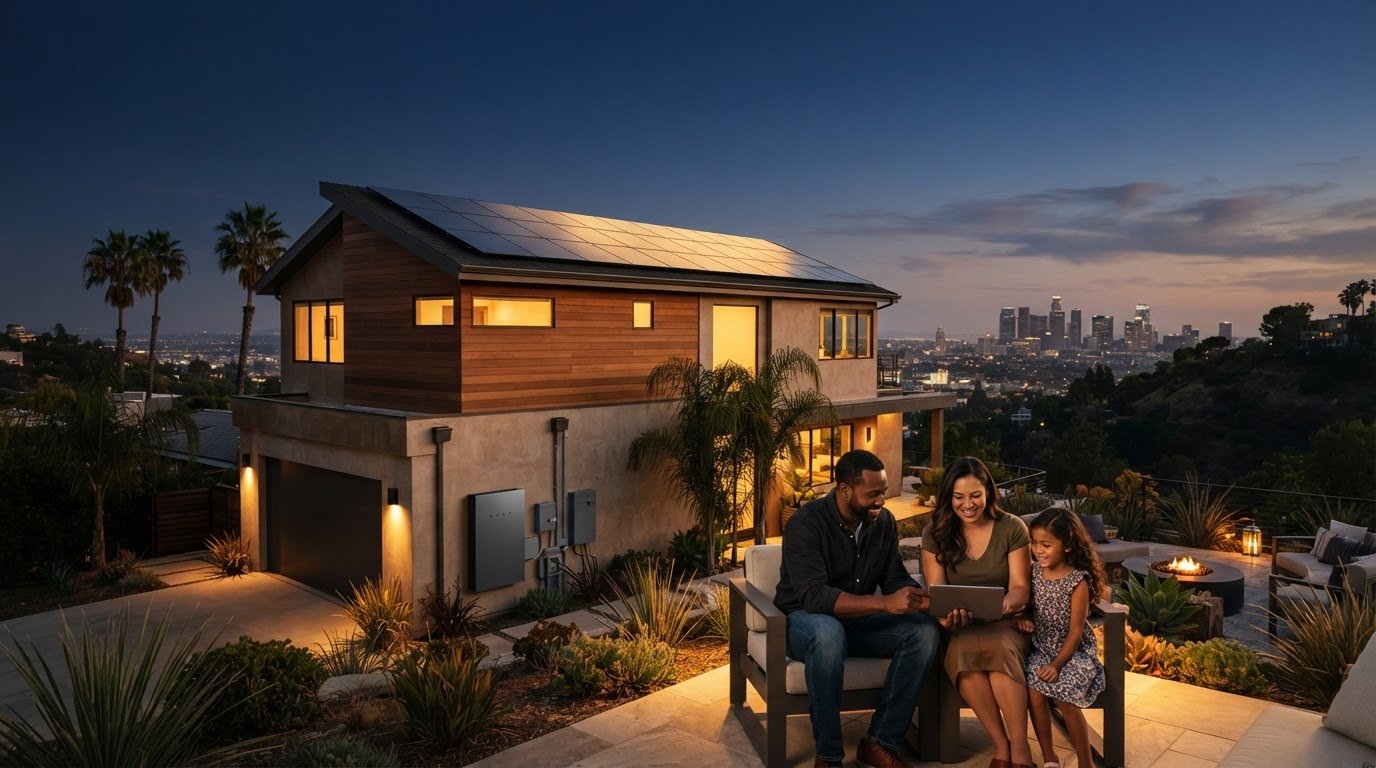
What if a sunny Los Angeles afternoon still left your home without power during an outage? Solar panels alone don’t provide backup. A residential solar and battery system needs a battery and compatible equipment, and backup doesn’t automatically mean every appliance can run or that power will last indefinitely.
Before making a major home upgrade, start with the needs that matter most to your household. Then consider how a system designed for your home could support those priorities.
This 2026 checklist explains how solar and battery equipment work together, sets realistic expectations for outages, and helps you prepare questions about compatibility and project planning. You’ll also see how HelioCore guides Los Angeles homeowners through consultation, custom engineering, permitting, installation, inspections, and utility coordination. A clear plan can make each step more manageable, from identifying priority loads to understanding the process leading to permission to operate.
Key Takeaways
- Map essential, comfort, and optional loads to clarify what matters most during an outage.
- Understand how rooftop solar, battery storage, and the utility grid interact in a residential solar and battery system.
- Gather recent electricity-use information and household details to support a more tailored system plan.
- Learn why equipment compatibility and electrical integration matter when planning backup power.
- See how HelioCore coordinates residential projects from consultation and custom engineering through permitting, installation, inspections, and utility coordination.
Table of Contents
- Why plan a residential solar and battery system around your home’s outage needs?
- How solar panels, a Tesla Powerwall, and the utility grid work together
- Compare backup priorities before choosing a residential solar and battery system
- Use this Los Angeles solar-and-battery readiness checklist
- How HelioCore helps plan a compatible solar and battery system
Why plan a residential solar and battery system around your home’s outage needs?
During an outage, the practical goal is often to keep a few important household needs available, not necessarily to power every room and appliance. Refrigeration, basic lighting, phone charging, or selected medical or work equipment may matter most. Naming those priorities gives system planning a clear purpose.
A residential solar and battery system combines panels that generate electricity with a battery that stores energy, but backup depends on compatible equipment designed to supply power when the grid is unavailable. Solar panels alone don’t keep a home powered during an outage. A battery also doesn’t automatically mean every household load can run.
What does a residential solar and battery system do?
Rooftop solar panels convert sunlight into electricity. The How Solar Panels Work overview explains the basic process. In everyday operation, solar electricity may serve household use, while a battery stores energy for later. During an outage, compatible components and electrical integration must be configured to provide backup. The energy used on a typical day isn’t automatically the energy available during an outage.
What should Los Angeles homeowners decide before planning?
Start with your household’s routines and the needs you’d want to support if grid power stopped. Consider who is usually home, whether work or caregiving depends on electricity, and which needs take priority. For homes in the LADWP service area, the plan should reflect the home’s utility connection and intended use, rather than a generic backup assumption.
Write down a short list before discussing system design:
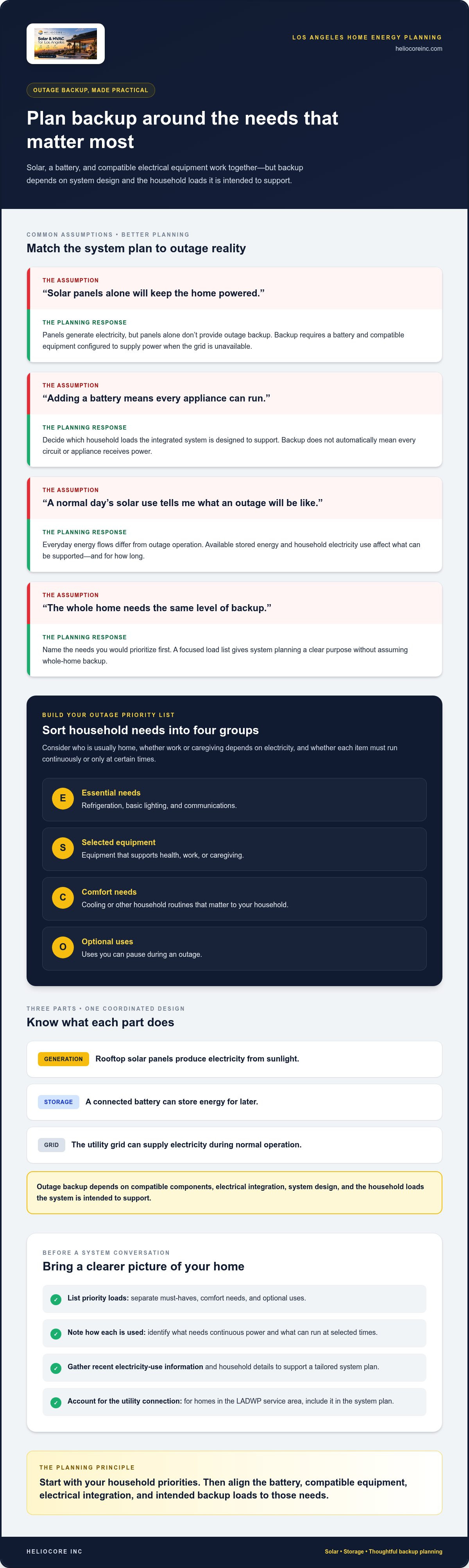
- Essential needs, such as refrigeration, basic lighting, and communications.
- Selected equipment that supports health, work, or caregiving.
- Comfort needs, such as cooling, that may be important in your household.
- Optional uses you can pause during an outage.
Then consider how you’d use each item. Does it need to run continuously or only at certain times? Would you prioritize keeping food cold and phones charged, or maintaining another household routine? These choices help distinguish must-haves from preferences and make conversations about backup more practical.
Actual backup depends on system design, the household loads connected to it, and operating conditions. Available stored energy and household electricity use affect what can be supported and for how long. A careful plan aligns equipment and electrical integration with your priorities, without assuming whole-home backup.
How solar panels, a Tesla Powerwall, and the utility grid work together
Think of the system as connected parts with different roles. Rooftop solar generates electricity, and the home uses power for everyday needs. A battery can store energy for later, while the utility grid remains another source of electricity during normal operation. How these parts interact depends on system design and electrical integration.
For outage backup, a battery must work with compatible solar and electrical equipment configured to support backup. Panels alone aren’t a substitute for a backup system, and a battery doesn’t mean every circuit or appliance will receive power. The design needs to account for how the equipment works together and which household loads it is intended to support.
What happens to solar power during normal operation?
During normal operation, rooftop panels generate electricity that can serve household use. Depending on the system design, a connected battery can store energy for later. The home can also draw electricity from the utility grid as needed. These everyday energy flows differ from outage operation, so normal solar production alone doesn’t show what will be available if grid power stops.
What changes when the grid goes down?
A grid outage changes the conditions the system must operate under. Don’t treat rooftop solar alone as backup power. A battery and compatible system configuration are needed to provide backup, with the result shaped by system design and the household loads it supports. HelioCore installs Tesla Powerwall battery storage for residential homeowners. You can review Tesla Powerwall Features for manufacturer information about the battery.
As you consider the setup, separate three questions:
- Generation: How does the rooftop solar system produce electricity for household use?
- Storage: Is a compatible battery part of the design to store energy for later?
- Backup: Which household loads is the integrated system designed to support during an outage?
This distinction helps prevent a common misunderstanding: a home may use solar electricity every day and still lack backup capability when the grid is down. Having panels and a battery in the same home isn’t enough on its own. The components must be electrically integrated to operate as intended, and the planned loads must fit the design. The right setup depends on the home and its priorities.
For a Los Angeles homeowner connected to LADWP, the utility connection is part of the system plan. Planning should account for the home’s electrical setup, the solar and battery equipment being paired, and the intended backup loads. HelioCore manages electrical integration and utility coordination as part of residential solar and battery system projects.
To connect equipment choices to your home’s needs, explore HelioCore’s solar and battery planning.
Compare backup priorities before choosing a residential solar and battery system
A battery doesn’t automatically back up every household need. The useful questions are what you want to keep available and how you expect to use it if an outage interrupts normal routines. Sort household loads by importance before discussing system design. That gives the planning conversation a clear starting point instead of relying on assumptions about what a battery can support.
Which household loads belong on an outage-priority list?
Consider what supports health, basic household function, comfort, or convenience. Refrigeration may help protect food. Selected lights can make it easier to move through the home. Internet equipment may matter for work or communication, while medical-device needs may require special attention. These are planning examples, not a promise that a particular appliance will run on a particular system.
Use the table to record your priorities. “Expected use” means how often or how long you’d want to use a load during an outage. “Outage importance” helps distinguish a must-have from something you can pause.
| Load category | Examples to consider | Priority | Expected use | Outage importance |
|---|---|---|---|---|
| Essential | Refrigeration, selected lighting, communications equipment, medical-device needs | High, medium, or low | Continuous, scheduled, or occasional | What would happen if this were unavailable? |
| Comfort | Cooling, heating, or other equipment that supports comfort at home | High, medium, or low | Which rooms, times, or conditions matter? | Can you adjust or limit use? |
| Optional | Convenience devices, entertainment, or other nonessential uses | High, medium, or low | Could use be brief or paused? | Is this a preference rather than a need? |
How should homeowners think about battery coverage?
Backup duration isn’t just a matter of naming appliances. It depends on system design, available stored energy, and household use. The same home may draw power differently depending on who is there, which equipment is running, and how often priority loads are used. Describe routines as well as devices.
For example, note whether someone works from home, when cooling matters most, or whether communications equipment needs to stay available throughout an outage. Explain which loads could be used less or turned off. This gives project planning a more realistic picture of your priorities and helps align system design with the coverage you want, without assuming whole-home backup.
Los Angeles homeowners served by LADWP can use this priority list to prepare for a project discussion about residential battery storage and backup planning. Start with what matters, how you’d use it, and what you could do without. Clear priorities are a better guide than assumptions about what a battery can support.
Use this Los Angeles solar-and-battery readiness checklist
A little preparation makes a project discussion more useful. Gather details about how your household uses electricity, what you want to support during an outage, and what you know about the property. HelioCore evaluates the home, sunlight, equipment, and energy use during qualification to shape a residential solar and battery system around the project.
A clear project path moves from consultation and custom design to permitting, installation, inspections, and utility coordination before permission to operate. Use this checklist to organize your information and understand what to review along the way.
What information should homeowners gather?
Start with your household goals and recent electricity-use information, such as available utility statements. Add your outage priorities and notes about how and when your household uses important equipment. This gives the planning conversation a practical picture of everyday use and backup needs.
- Household priorities: Write down important energy uses, expected equipment use, and what you’d most want available during an outage.
- Property details: Note the home’s address and LADWP service context, known roof conditions, and any property features that may matter during an initial discussion.
- System questions: Prepare questions about equipment compatibility, electrical integration, intended backup coverage, maintenance, and monitoring.
You don’t need every technical answer in advance. Clear observations about your routines and property help guide the assessment. During qualification, HelioCore considers the home, available sunlight, existing equipment, and energy use as part of project planning.
What should the project and agreement checklist cover?
As the design takes shape, review the proposed equipment and how it will integrate with the home’s electrical system. Track the project steps, including permitting, installation, inspections, and utility coordination. Keep your expected backup loads in view as you review the design, so the planned system aligns with your household priorities.
- Review the equipment and electrical integration planned for the home.
- Understand how permitting, installation, inspections, and utility coordination fit into the project.
- Read the agreement for the terms, coverage, and responsibilities that apply.
- Ask how maintenance and monitoring are addressed, and whether any optional work is relevant.
Palmetto LightReach solar plans include 25 years of equipment and workmanship coverage and 10 years of roof-penetration coverage. The roof warranty applies to the penetration area related to the installation, not the entire roof. Optional panel cleaning, pest protection, and roof work may cost extra, so review those separately when considering project details.
The first solar payment is typically due about 30 days after permission to operate, though timing can vary. Keep this timing distinct from installation milestones as you review the plan. Plan a Los Angeles solar and battery project around your home’s energy use and outage priorities.
How HelioCore helps plan a compatible solar and battery system
A well-planned project connects household priorities to equipment that works together, then moves through approvals and installation. HelioCore serves residential homeowners in Los Angeles and the LADWP service area, guiding projects from consultation and custom engineering through utility coordination. This process turns a list of equipment into a plan suited to the home.
What support does HelioCore provide through the project?
Planning begins with a consultation about the home, energy use, and project goals. HelioCore develops the system design, including equipment selection and electrical integration for battery storage. The company installs Tesla Powerwall battery storage for residential homeowners and coordinates the related project steps.
- Consultation and custom engineering: Discuss household priorities and develop a design for the home.
- Permitting and preparation: Coordinate permitting and plan the electrical integration.
- Installation and inspections: Install the system and manage the inspection process.
- Utility coordination: Work through the utility steps toward permission to operate.
Each stage has a purpose. Design connects the equipment to the home’s electrical setup; permitting and inspections support the project process; utility coordination moves the system toward activation. Use the project discussion to understand the intended system design and backup coverage rather than assume every circuit or appliance will receive power.
What should homeowners understand about solar-plan terms?
Qualifying homeowners may have access to Palmetto LightReach solar lease plans with monthly payments. A qualifying $0 upfront option does not mean free equipment. Palmetto uses a soft credit check for qualification, and it doesn’t affect the homeowner’s credit score. Review the agreement to understand the payment arrangement, equipment terms, and responsibilities that apply to your project.
The solar production guarantee is 90% of estimated production over a three-year review period. It concerns estimated solar production, not outage backup or a specific utility-bill saving. Solar equipment ownership also doesn’t transfer automatically at the end of a lease. The agreement governs ownership terms, so read them as part of understanding the arrangement.
Clear coordination matters as much as equipment planning. HelioCore manages permitting, electrical integration, installation, inspections, and utility coordination for residential solar and battery projects. Homeowners can follow the steps from design through permission to operate.
Los Angeles homeowners considering solar and battery storage can discuss a home solar and battery project with HelioCore, starting with their household priorities.
Make your next step a clearer plan
Your household’s needs can shift over time. Changes in work routines, caregiving, or how you use the home may affect which priorities matter most during an outage. Treat your checklist as a starting point and bring those day-to-day realities into the planning conversation. The more clearly you describe what matters, the easier it is to shape a residential solar and battery system around your goals.
You don’t need to solve every technical question before taking that step. Start with the needs you want to support, the trade-offs you’re comfortable with, and the questions you’d like answered. A thoughtful conversation can help turn those points into a practical plan for your Los Angeles home.
Discuss your Los Angeles solar and battery project with HelioCore and take the next step with a clearer sense of what you want your system to do. Good planning starts with your home, your priorities, and a conversation grounded in both.
Frequently Asked Questions
Can solar panels power a home during a power outage?
No. Don’t rely on rooftop solar alone to keep your home powered during an outage. Backup requires a battery and a compatible system, and the equipment supported depends on the design and household use. For homeowners in Los Angeles, including Inglewood, South Los Angeles, Crenshaw, Leimert Park, Baldwin Hills, Westchester, Van Nuys, North Hollywood, Reseda, Northridge, Woodland Hills, and San Pedro, listing priority needs helps make proposed coverage clearer.
How long can a home battery power a house?
There’s no single backup duration that applies to every home. The time available depends on system design, stored energy, and which loads are running. A household that limits use to selected essentials has different needs from one that wants broader coverage. Note which equipment would run continuously, which could be used intermittently, and which could be switched off. Use those details to review the proposed system’s intended operation.
Can solar panels recharge a battery during an outage?
That depends on the equipment and system configuration, so don’t assume a system will recharge its battery during every outage. Normal grid-connected behavior doesn’t necessarily show how the system is designed to operate when grid power is unavailable. During planning, ask how the proposed configuration is intended to function during an outage, including the roles of solar and stored energy.
Does a residential solar and battery system work at night?
Solar panels don’t generate electricity from sunlight at night. A battery can make stored energy available later, depending on the system design and how much energy remains. For example, a household may want to reserve stored energy for evening lighting or communications rather than use it earlier on lower-priority needs. Include nighttime routines in your planning so the system discussion reflects how your home uses electricity.
Does a $0 upfront solar lease mean the equipment is free?
No. A $0 upfront option for qualifying homeowners still has monthly payments, and the agreement sets out the applicable terms. Palmetto uses a soft credit check during qualification, and it doesn’t affect your credit score. Before choosing a plan, review its payment details and understand how the agreement treats equipment ownership. Ownership doesn’t transfer automatically; the agreement governs the terms.
Can I add more solar panels to my existing inverter later?
Don’t assume you can simply connect more panels to an existing inverter. Palmetto doesn’t allow that approach; additional panels require a separate system. If you expect your household’s electricity needs to change, such as after an addition or a shift in how the home is used, raise that possibility during initial planning. Review how the agreement applies to any separate system before making decisions about future expansion.