

Solar
Residential Solar Installation in Los Angeles: A Homeowner’s Guide
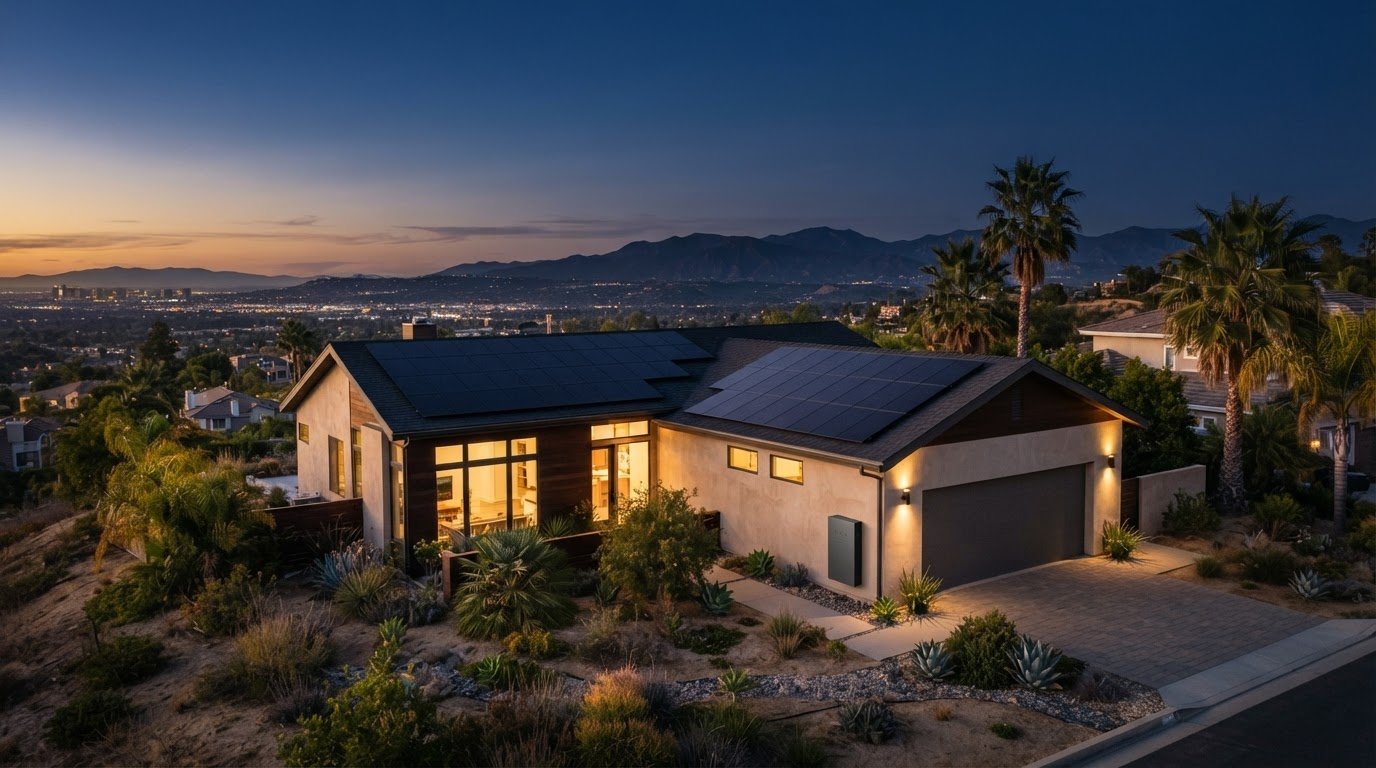
A successful residential solar installation in Los Angeles depends on more than the panels on your roof. Your home’s layout, utility provider, and approval process all help determine how the project should be designed and managed.
Before making a major home upgrade, it’s reasonable to ask: Is your roof a good fit? Does LADWP or Southern California Edison serve your address? And how can you compare contractor proposals and payment options fairly? A well-managed process should answer these questions clearly, without leaving you to coordinate every detail alone.
This guide explains how to assess your home, confirm your utility territory, and compare solar proposals using practical criteria. You’ll also learn what to expect from consultation through system design, permitting, installation, inspection, and utility permission to operate. We’ll cover purchase and lease options, plus when battery storage may be worth considering. Whether you’re in Los Angeles or Palmdale, use these steps to approach your project with a clearer plan.
Key Takeaways
- For residential solar installation in Los Angeles, your utility provider and home’s specific conditions help shape the right system design.
- Compare proposals using the same household usage assumptions, then check equipment, estimated production, exclusions, and responsibilities.
- Understand the project stages and which permitting, inspection, and utility steps your installer will coordinate.
- Compare ownership and lease terms, including payment structure, maintenance responsibilities, and what happens if you move.
- Use a practical installer checklist to assess local experience, communication, written scope, and current licensing and insurance.
Table of Contents
- Is your Los Angeles home a good fit for residential solar installation?
- How should you compare residential solar designs and proposals?
- What happens during a Los Angeles residential solar installation?
- How do you evaluate solar ownership, leasing, and optional battery storage?
- How can you choose a residential solar installer in Los Angeles?
Is your Los Angeles home a good fit for residential solar installation?
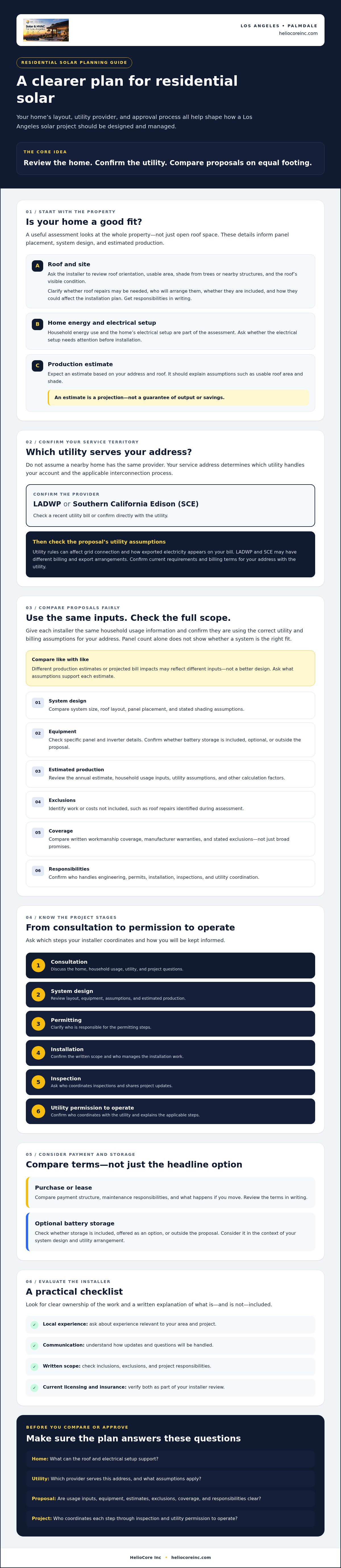
Start with three questions: Is your roof suitable? Which utility serves your home? Who will manage the project details? A useful assessment considers the whole property, not just the amount of open roof space. Roof layout, shading, electrical setup, household energy use, and utility territory all inform the system design.
For residential solar installation in Los Angeles, homeowners should expect a production estimate based on their address and roof. The proposal should explain its assumptions, such as usable roof area and shade. Treat projected production as an estimate, not a guarantee of output or savings. The broader California solar context is outlined in Solar power in California, but statewide information can’t replace a property-specific review.
What should a roof assessment check?
Ask the installer to review roof orientation, usable area, shade from trees or nearby structures, and the roof’s visible condition. These details can affect panel placement and estimated production. The assessment should also identify whether the home’s electrical setup needs attention before installation.
A solar assessment isn’t a substitute for standalone roofing work. If repairs may be needed, clarify who will arrange them, whether they’re included in the solar project scope, and how they could affect the installation plan. Get those responsibilities in writing before approving a proposal.
Why does utility territory matter in Los Angeles?
Your service address determines which electric utility handles your account and the applicable interconnection process. In Los Angeles, check whether your home is served by the Los Angeles Department of Water and Power (LADWP) or Southern California Edison (SCE). Don’t assume a nearby home has the same provider. Check a recent bill or confirm directly with the utility.
Utility rules can affect how a solar system connects to the grid and how exported electricity appears on your bill. LADWP and SCE may have different billing and export arrangements. Ask the installer which utility assumptions were used in the proposal, then confirm current requirements and billing terms with the utility for your address.
A first review should leave you with clear answers about what the roof can support, what the system is designed to produce, and which utility steps apply. If any of those details remain unclear, ask for clarification before comparing proposals.
How should you compare residential solar designs and proposals?
Compare proposals on equal footing. Give each installer the same household usage information and confirm they’re using the correct utility and billing assumptions for your address. Otherwise, differences in estimated production or projected bill impact may come from different inputs, not a better design.
Panel count alone doesn’t show whether a system is the right fit. A sound proposal connects system size and roof layout to your home’s usage, shading, and utility arrangement. Ask what assumptions support the production estimate, and remember that it’s a projection, not a guarantee of energy output or savings.
Which design details deserve a closer look?
Check the proposed system size, panel placement, shading assumptions, and estimated annual production. Ask how the design reflects your household’s usage pattern and utility billing arrangement. Confirm whether battery storage is included, offered as an option, or outside the proposal. These details explain what each design is intended to do, beyond simply counting panels.
| Proposal detail | What to compare |
|---|---|
| System design | System size, roof layout, and stated shading assumptions. |
| Equipment | Specific panel and inverter details, and whether battery storage is included or optional. |
| Estimated production | Annual estimate, household usage inputs, utility assumptions, and other factors used in the calculation. |
| Exclusions | Work or costs not included, such as roof repairs identified during assessment. |
| Coverage | Written workmanship coverage, manufacturer warranties, and stated exclusions. Compare the terms rather than relying on a broad promise. |
| Responsibilities | Who handles engineering, permits, installation, inspections, and utility coordination. |
What should a homeowner ask each installer?
Ask who owns each project step and how updates will be shared. Request equipment details, the written scope, coverage terms, and exclusions before signing. The California Solar Consumer Protection Guide is another resource for reviewing installer choices and contract details. Compare financing separately from system design: review payment structure and contract terms on their own rather than treating a lower payment as proof of a better system.
Homeowners considering residential solar installation in Los Angeles or Palmdale can use the same checklist to spot gaps and ask focused follow-up questions. To discuss a project’s design and coordination needs, explore HelioCore’s residential solar services.
What happens during a Los Angeles residential solar installation?
A residential solar project moves through several handoffs, from the first discussion to utility approval. Knowing the sequence helps you track progress, understand which decisions you’ll need to make, and confirm who’s responsible for each step. A typical process includes:
- Consultation: Share your goals, recent electricity use, and questions about the property.
- Site assessment: Review the roof, shading, electrical setup, and other site conditions.
- System design: Develop a design based on the home, expected energy use, and applicable utility requirements.
- Permits: Submit the required project documents to the authority responsible for the property.
- Installation: Install the approved system according to the project scope.
- Inspection: Complete applicable inspections after installation.
- Utility coordination: Submit required information and work through the utility’s process toward permission to operate.
There’s no single timeline for every residential solar installation in Los Angeles. Timing can vary with the property, jurisdiction, utility, design, and project requirements. Ask for a current estimate based on your address, and clarify how you’ll be notified if a review or correction affects the schedule. Don’t rely on a promised approval date before the relevant authorities and utility complete their steps.
Which approvals and inspections may be involved?
Permits and inspections depend on the property’s jurisdiction and approved design. Confirm which permitting authority applies. The Los Angeles Department of Building and Safety may be responsible for some properties, while requirements can differ elsewhere. For LADWP customers, consult LADWP Solar Programs for current utility information, and verify the process for your address. Passing an installation inspection is not the same as receiving utility permission to operate. The system may need utility approval before it can operate as an interconnected system.
What does turnkey project management mean?
Turnkey coordination means the installer manages agreed project tasks, such as engineering, permit submissions, installation, inspections, and utility paperwork. You still need to review the design, choose a purchase or lease arrangement, sign documents, and provide requested information. Before work begins, ask for the project contact, the documents you’ll receive, and how status updates and homeowner decisions will be handled. Get the division of responsibilities in writing.
Each project follows the requirements of its jurisdiction and utility, so another homeowner’s process may not match yours. A clear scope and regular updates make the handoffs easier to follow, from consultation through utility coordination.
How do you evaluate solar ownership, leasing, and optional battery storage?
There isn’t one payment path for every household. When considering residential solar installation in Los Angeles, compare the written agreement, your plans for the home, and the responsibilities you’re comfortable taking on. Direct purchase and leasing differ in who owns the system and what the customer agrees to pay or manage. Review the actual terms rather than relying on broad savings claims.
When might direct ownership or leasing suit a homeowner?
Direct purchase may appeal if you want to own the system. A lease may suit someone who prefers a contract with a third-party system owner. Neither option is automatically better. HelioCore offers direct purchase and Palmetto lease options; confirm the terms for your specific proposal.
Before deciding, compare the contract term, payment structure, maintenance provisions, and each party’s responsibilities. Check what happens if you sell or transfer the home, including any conditions for transferring or ending the agreement. Ask for every commitment in writing. You can review HelioCore’s solar purchase and lease options, then compare the detailed terms presented for your project.
When should you consider adding battery storage?
A battery is a separate design choice, not a requirement for every solar system. Start by separating two goals: keeping selected household loads powered during an outage, and managing when solar energy is used or sent to the grid. The right design depends on which appliances or circuits matter to you, how long you hope to power them, the system configuration, and the utility rules for your address.
Ask the installer which loads a proposed battery is designed to support and what assumptions shape that estimate. Don’t infer backup duration from the battery name alone. HelioCore offers Tesla Powerwall installation as a related option, but actual performance depends on the system design and household use.
Keep the decisions connected but distinct: first assess the ownership agreement, then decide whether storage supports your household priorities. For a project-specific discussion of solar and battery options, review your solar and storage options with HelioCore.
How can you choose a residential solar installer in Los Angeles?
A dependable installer should explain the work and responsibilities before you sign. When comparing contractors for residential solar installation in Los Angeles or Palmdale, look beyond the proposal’s headline figures. Check their experience with relevant utility coordination, the detail in their written scope, and how they communicate when a project needs to change.
- Local project experience: Ask about experience with homes and utility processes relevant to your address.
- Written scope: Confirm what the proposal includes, what it excludes, and how additional work or change orders are handled.
- Clear communication: Request a named project contact and a written schedule, including how delays or design changes will be shared.
- Coverage and support: Review workmanship coverage, manufacturer warranties, exclusions, and who handles questions after installation.
- Credentials: Verify applicable contractor licensing through the California Contractors State License Board and ask for current proof of insurance.
Read the agreement carefully. A broad statement about “full service” doesn’t explain who submits permit documents, arranges inspections, coordinates with the utility, or responds to warranty questions. Ask for those duties in writing, along with the process for approving changes before extra work begins.
Which questions reveal a contractor’s project process?
Ask who manages engineering, permits, installation, inspections, and utility coordination through permission to operate. Request a written schedule, a primary contact, and a clear process for updates if a review or change affects the plan. Also ask where to direct warranty questions and service requests after installation, and whether those responsibilities are described in your agreement.
Compare the answers across contractors. Direct, consistent explanations can help you understand how the proposed process is organized. If an answer is vague, ask for the responsibility or exclusion to be added to the written scope before you commit.
What are the next steps with HelioCore?
HelioCore designs and installs residential rooftop solar systems in Los Angeles, with a focus on the LADWP service area. A conversation can start with your address, utility, roof, household energy use, and project goals. HelioCore manages consultation, custom engineering, permits, installation, inspections, and utility coordination. Confirm the current process and responsibilities for your specific property.
If you’re ready to discuss your home and project goals, discuss a residential solar project with HelioCore. You don’t need to have every detail settled first. A clear conversation can help you understand the next steps.
Move forward with a clear solar plan
A well-planned solar project starts with your home, not a one-size-fits-all system. Roof layout, household energy use, and utility territory help shape the design. Compare proposals using the same assumptions, and review scope, exclusions, responsibilities, and written terms before choosing an installer.
For residential solar installation in Los Angeles, remember that installation is only one part of the process. Permits, inspections, and utility coordination matter too, and permission to operate follows the required project steps. Battery storage is optional, while direct purchase and leasing each have terms to review in light of your household and plans.
HelioCore manages projects from consultation through utility permission to operate. Homeowners can discuss direct purchase or Palmetto lease options and review what may suit their project. To talk through your address, utility, roof, and goals, discuss a residential solar project with HelioCore.
Take it one step at a time. With the right questions and a clear plan, you can move ahead with confidence.
Frequently Asked Questions
How do I know if my Los Angeles home is suitable for solar?
A property-specific assessment is the best way to judge suitability. Homeowners considering residential solar installation in Los Angeles should review roof orientation, usable area, shading, roof condition, electrical setup, household energy use, and utility territory. A home in Los Angeles or Palmdale needs a design based on its own site conditions, not a generic estimate. Ask the installer to explain the assumptions behind projected production, since estimates aren’t guarantees of output or savings.
Does LADWP approve every residential solar installation in Los Angeles?
No. LADWP handles utility review only for eligible homes it serves. Your service address determines the electric utility and applicable interconnection process. Some Los Angeles-area homes are served by Southern California Edison or another provider. Confirm your utility using a recent bill or by contacting the provider directly. Utility permission to operate is separate from local permits and inspections, so ask which approvals apply to your property.
How long does residential solar installation take in Los Angeles?
There isn’t one reliable timeline for every Los Angeles project. Consultation, site assessment, design, permit review, installation, inspection, and utility coordination each involve different steps. Timing can vary with the property, permitting jurisdiction, utility, and project requirements. Ask the installer for a current schedule based on your address, and clarify how updates will be shared if reviews, corrections, or design changes affect the expected sequence.
Can I add a battery to a residential solar installation?
Yes, battery storage can be included when the system is designed for it, but it’s optional. Consider what you want the battery to do: support selected household loads during an outage, or help manage how solar energy is used. Suitability depends on your loads, desired backup duration, system design, and utility rules. Ask the installer to explain the design assumptions. HelioCore offers Tesla Powerwall installation, but backup performance depends on the specific system and its use.
Should I buy or lease a residential solar system?
Neither option is best for every homeowner. Direct purchase may suit someone who prefers to own the system, while a lease involves a contract with a third-party system owner. Compare the written contract term, payment structure, maintenance responsibilities, and terms for transferring the agreement if you sell your home. HelioCore offers direct purchase and Palmetto lease options. Review the current terms for your proposal rather than relying on broad savings claims.
What should a solar installation proposal include?
A useful proposal should describe the system design, equipment, estimated production, assumptions, exclusions, and who is responsible for each project step. Look for written details on permits, installation, inspections, and utility coordination, as well as workmanship coverage and manufacturer warranty terms. Ask how changes are approved and documented. Compare proposals using the same household usage information and utility assumptions so you can understand what explains any differences.
Do I need to replace my roof before installing solar panels?
Not always. The answer depends on the roof’s condition, layout, and proposed panel placement. Ask the solar installer to review the visible roof condition and explain whether repairs may affect the project scope or schedule. A solar assessment isn’t a substitute for standalone roofing work. If repairs are needed, clarify who will arrange them and how that work relates to the solar installation before you sign.