
Solar
Tesla Powerwall Whole-Home Backup: How to Plan Reliable Backup Power

What if whole-home backup depends less on the battery itself and more on what your household needs to run? A Tesla Powerwall can support a whole-home backup goal, but the right setup depends on your home and priorities. Planning tesla powerwall whole home backup starts with the appliances you want available during an outage and how those appliances may be used together.
It’s natural to want essentials covered, from refrigeration to heating or air conditioning. It’s also easy to confuse backing up selected circuits with powering the entire home. A clear design defines which loads the system is intended to support before installation begins.
This guide explains what whole-home backup can mean in practice for Los Angeles homeowners, including those served by LADWP. You’ll learn how household loads, battery capacity, electrical integration, solar equipment, and utility coordination shape a suitable system. We’ll also outline the steps from planning and permitting to installation, so you can compare an essential-load setup with a broader backup goal and understand what each requires.
Key Takeaways
- Understand why tesla powerwall whole home backup is a design goal shaped by your home’s energy needs, not a blanket promise.
- See how the battery, solar equipment, grid connection, and home electrical system work together, and why solar panels alone don’t provide outage power.
- Compare a whole-home backup goal with selected essential loads to clarify which household priorities should guide your setup.
- Follow the planning path from reviewing household loads to design, approvals, installation, and inspection in the Los Angeles area.
- Learn how HelioCore coordinates Tesla Powerwall installation, electrical integration, permitting, and utility steps as one residential project.
Table of Contents
- Tesla Powerwall Whole-Home Backup: What Does “Whole Home” Really Mean?
- How Tesla Powerwall Whole-Home Backup Works with Solar and the Grid
- Whole-Home vs. Essential-Load Backup: Compare Your Tesla Powerwall Goals
- Plan Tesla Powerwall Backup in Los Angeles: Loads, Solar, and Project Steps
- Choose a Tesla Powerwall Whole-Home Backup Plan with HelioCore
Tesla Powerwall Whole-Home Backup: What Does “Whole Home” Really Mean?
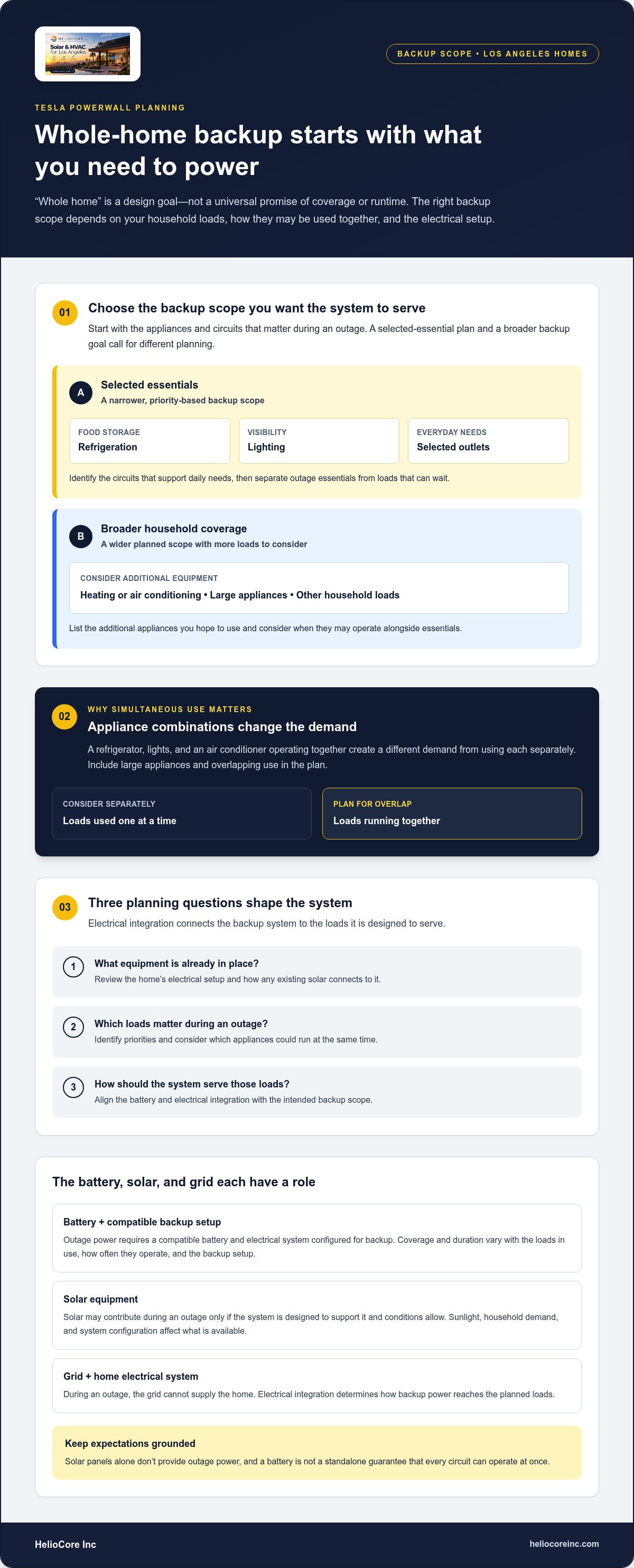
Whole-home backup is a design goal, not a standard level of coverage. What stays on during an outage depends on the home’s electrical design, the backup system, and the appliances drawing power. A setup intended to keep selected essentials available differs from one designed to support a wider range of household loads.
“Whole home” describes the scope a system is designed to serve, not a universal promise of runtime or coverage. That distinction helps set practical expectations. A household may prioritize lights, refrigeration, and a few outlets, while also hoping to use air conditioning or other high-demand equipment. Those priorities affect how the system is designed.
A Tesla Powerwall is part of a backup system, not a standalone guarantee. Outage power requires a compatible battery and electrical setup configured for backup. Solar panels alone don’t keep a home powered when the grid goes down. For a general overview of the battery’s history and functions, see the Tesla Powerwall Wikipedia page.
What does whole-home backup include in practice?
The backup scope is determined by the home’s electrical design and the loads the system is intended to serve. Depending on the plan, that could mean prioritizing refrigeration, lighting, and selected outlets, or aiming to support more of the home. Planning needs to account for which appliances matter and whether they might run at the same time.
For example, a refrigerator, lights, and an air conditioner operating together create a different demand from using each separately. Include large appliances and overlapping use in your planning. This helps align the system design with how your household expects to use power during an outage.
- Selected essentials: Identify the circuits that support daily needs, such as food storage, lighting, or key outlets.
- Broader coverage: List additional appliances you hope to use, and consider when they may run together.
- Household habits: Separate loads you need during an outage from those that can wait.
Can a Tesla Powerwall keep a home powered during an outage?
Yes, a Tesla Powerwall can provide backup when it’s part of a compatible system configured for that purpose. Whether it can support your whole home depends on the system design and household demand. Coverage and duration vary with the loads in use, how often they operate, and the backup setup.
Start by listing the appliances you consider essential, then add any larger equipment you hope to run alongside them. That gives the design a clear target without assuming every circuit can operate at once. HelioCore plans and installs Tesla Powerwall systems for Los Angeles homeowners, coordinating battery design with electrical integration and project installation.
How Tesla Powerwall Whole-Home Backup Works with Solar and the Grid
A home battery works as one part of an electrical system. The grid, solar equipment, battery, and home wiring each have a role, and the system design determines how they work together. During ordinary grid-connected operation, the home can draw electricity from the utility, while solar equipment may supply some household use. The battery’s role depends on the setup and its intended use.
During an outage, the grid can’t supply power to the home. A compatible battery and system configured for backup can serve planned household loads through the home’s electrical integration. Having solar panels or a battery does not automatically provide outage power. Reliable backup planning connects the equipment, the loads you want to serve, and the electrical design that brings them together.
How do solar panels and a battery work together during an outage?
Outage backup requires a compatible battery and system. Solar may contribute during an outage only if the system is designed to support that operation and conditions allow it. Sunlight, household demand, and system configuration all affect what’s available. Don’t assume solar will fully recharge the battery or provide uninterrupted power.
For planning, first decide what you want the battery to support. Then consider any solar contribution as dependent on the system design and conditions at the time. This keeps expectations grounded: the battery and backup configuration form the plan, while solar may play a supporting role.
Why electrical integration matters for backup power
Electrical integration determines how backup power reaches the home and which intended loads the system can serve. The home’s existing electrical equipment matters, as do the circuits and appliances included in the backup plan. A design review brings those details together before installation, rather than assuming a battery powers every part of the house.
In practice, planning brings together three questions:
- What equipment is already in place? Review the home’s electrical setup and how existing solar, if present, connects to it.
- Which loads matter during an outage? Identify priorities and consider which appliances could run at the same time.
- How should the system serve those loads? Align the battery and electrical integration with the intended backup scope.
This review is especially useful when comparing a limited backup plan with a broader goal. A refrigerator and selected lights present a different demand profile from a home that also hopes to use air conditioning or other large appliances. The design needs to account for those priorities and how they overlap, without assuming every load can operate together.
For Los Angeles homeowners, HelioCore coordinates Tesla Powerwall installation, electrical integration, and utility steps as part of a residential project. If you’re considering tesla powerwall whole home backup, a Tesla Powerwall system plan can connect your household priorities with the project design.
Whole-Home vs. Essential-Load Backup: Compare Your Tesla Powerwall Goals
Choosing a backup scope starts with a practical question: what do you want your home to do during an outage? An essential-load setup focuses on selected circuits and everyday priorities. A broader whole-home goal aims to support more of the house, so it calls for a closer review of household demand and the system design.
These labels describe goals, not fixed results. Neither guarantees a specific outage duration or a standard list of appliances. Your electrical setup, planned loads, and the way appliances operate together all shape the design.
| Planning factor | Broader whole-home goal | Selected essential loads |
|---|---|---|
| Intended loads | Aims to serve a wider range of household circuits and appliances. | Prioritizes chosen needs, such as refrigeration, lighting, or communications. |
| Simultaneous demand | Requires careful consideration of how several appliances might run together. | Focuses attention on the selected loads and their likely overlap. |
| System configuration | Must be designed around the home’s electrical setup and broader backup objective. | Must connect the planned battery system to the specific loads being prioritized. |
| Planning trade-off | Supports a wider backup ambition, with household demand as a key design factor. | Concentrates backup planning on the circuits that matter most to the household. |
The best backup scope begins with household priorities and a system assessment. That keeps the decision grounded in how your home is used, rather than in a label alone. For a tesla powerwall whole home backup plan, match the system design to the loads you want it to support.
Which household loads should you prioritize?
Make a short list of needs in order of importance. Include refrigeration, lighting, communications, and comfort. Then consider which devices may operate at the same time. Keeping food cold while charging a phone and using lights creates a different demand pattern from adding major equipment to that mix.
Separate must-have loads from optional ones. This makes trade-offs easier to identify: which circuits matter throughout an outage, and which would be useful but aren’t essential? Clear priorities give system planning a practical starting point.
When does a broader backup goal need closer planning?
A broader goal deserves careful review when the home includes major appliances or several loads that could overlap. Air conditioning, heating equipment, and other substantial household demands can shape expectations. The home’s electrical integration matters too, because the system must be designed to serve the intended loads.
There isn’t one configuration for every Los Angeles home. A clear load list and home assessment help turn a broad goal into a system plan tailored to the household.
Plan Tesla Powerwall Backup in Los Angeles: Loads, Solar, and Project Steps
A dependable backup plan starts with your household, then moves through the home’s electrical setup and project requirements. In Los Angeles, the service territory matters: LADWP customers have a different utility coordination path than customers served by other utilities. Permitting and utility steps can depend on the project, so the applicable requirements are reviewed as part of planning.
For tesla powerwall whole home backup, the process is easier to follow when each step has a clear purpose:
- Set priorities. Decide which appliances and circuits matter most during an outage.
- Review the home. Assess the electrical setup and any existing solar equipment.
- Design the system. Align the backup goal with household demand and the home’s equipment.
- Coordinate approvals. Prepare project documents and coordinate relevant permitting and utility steps.
- Install and inspect. Complete the installation, then coordinate inspections and remaining project steps.
What should homeowners prepare before system design?
A little preparation helps turn broad concerns into useful design details. List priority appliances, note typical household routines, and describe what you’d most want to keep available during an outage. Include whether major equipment might run at the same time. This context helps clarify the difference between essential backup and a wider coverage goal.
Gather information about existing solar equipment and the home’s electrical setup if it’s available. You don’t need to resolve technical questions yourself. The initial assessment uses these details to connect your priorities with a practical system design.
How does HelioCore coordinate a Los Angeles Powerwall project?
HelioCore guides residential projects from consultation and custom engineering through permitting, installation, inspections, and utility coordination. The team reviews the home and intended loads, develops the system design, and coordinates project steps based on the property and its service territory. This keeps battery planning and electrical integration connected instead of treating them as separate decisions.
For context on the installer’s role and project process, explore this Tesla Powerwall installer guide. If the project includes solar, consider equipment coordination alongside the battery design. HelioCore’s residential solar installation guide explains how solar projects move through planning and installation.
Permitting, inspections, and utility coordination are part of the project sequence, though the details can vary. HelioCore coordinates those steps for homeowners in Los Angeles and the LADWP service area, keeping the process organized from design through installation. To map your backup priorities into a project plan, plan your Tesla Powerwall installation with HelioCore.
Choose a Tesla Powerwall Whole-Home Backup Plan with HelioCore
A useful backup plan starts with what matters most in your home. Decide which appliances you want to prioritize, then connect those needs to the system design and installation. “Whole home” can describe a broad goal, but the equipment and electrical plan still need to suit the house and its expected demand.
HelioCore helps Los Angeles homeowners work through those decisions as one residential project. Consultation, custom engineering, electrical integration, permitting, installation, inspections, and utility coordination each contribute to a system designed for the home. This local guidance turns a general wish for outage relief into clear priorities and project steps.
What to expect from HelioCore’s Powerwall installation process
The process begins with a conversation about your household, existing equipment, and outage concerns. During custom engineering, those priorities inform a design for the home’s electrical setup and intended backup loads. This is the stage to explain whether you’re focused on essential circuits or a broader coverage goal, alongside the equipment already in place.
Once the design is established, HelioCore coordinates permitting and installation, followed by inspections and utility steps. Each stage supports a different part of the project. Permitting prepares the project for required review, installation brings the designed system together, and inspections and utility coordination address the remaining project details.
Backup depends on compatible equipment and a system designed for the home. A battery alone doesn’t establish which circuits will receive backup or how long power will last. The plan needs to reflect your priorities and the electrical integration required to serve them.
Take the next step toward planned home backup
Before a project conversation, note the appliances you’d most want available, the routines that matter during an outage, and any concerns about running several devices at once. Include information about existing solar equipment or electrical work if you have it. These details give the consultation a practical starting point.
Then discuss how your priorities can shape a Tesla Powerwall design. HelioCore installs Tesla Powerwall battery systems for homeowners in Los Angeles and the LADWP service area, including nearby communities such as Inglewood, Van Nuys, and San Pedro. The team coordinates the project stages so planning and installation stay connected.
If you’re also weighing solar leasing as a separate part of your energy plans, HelioCore offers Palmetto-backed lease plans. A $0-upfront option still involves monthly payments, and Palmetto uses a soft credit check that does not affect your credit score. Solar financing is distinct from the equipment and design choices that determine backup capability. For a tesla powerwall whole home backup project, begin with your household priorities and a conversation about the home itself. Discuss your Powerwall backup priorities with HelioCore.
Turn Your Backup Priorities into a Practical Plan
Before taking the next step, picture a typical outage at home. Which parts of the day would you most want to preserve? What could pause until power returns? Your answers help focus the backup plan on your household, instead of relying on the broad label “whole home” to define what you need.
Your priorities may shift as routines, appliances, or household needs change. Keep a simple list of must-have loads and revisit it when those changes affect how you’d use backup power. That gives the tesla powerwall whole home backup conversation a clear starting point and keeps the design focused on everyday needs.
For Los Angeles homeowners, HelioCore can help turn those priorities into a project plan. Start planning your Tesla Powerwall system with a team that can guide the next steps. A considered plan is a practical way to prepare your home for outages. Contact HelioCore to discuss your backup priorities and plan your system.
Frequently Asked Questions
How long can a Tesla Powerwall power a whole home during an outage?
There isn’t a fixed runtime for tesla powerwall whole home backup. Duration depends on which household loads are running, how much they overlap, and the system configuration. Keeping essential devices in use creates a different demand pattern from operating several major appliances. When reviewing a design, look at which loads it is intended to serve and how expected use affects runtime.
Can a Tesla Powerwall recharge from solar panels during a power outage?
It may, if the battery, solar equipment, and complete system are compatible and designed to support that operation. Solar contribution also depends on conditions at the time, so don’t assume panels will continuously recharge the battery or keep the home powered. If your home already has solar, gather the equipment details for your system assessment. HelioCore can review how the solar and battery integration fits your backup goals.
Can I install a Tesla Powerwall without solar panels?
A Powerwall and solar panels are separate planning considerations, but a particular battery setup must still suit your home and backup goals. The assessment should account for existing electrical equipment, the proposed system design, and how you intend to use backup power. HelioCore reviews those details and explains how the proposed battery system is designed to provide its intended backup function.
Will a Tesla Powerwall run central air conditioning during an outage?
It depends on the system design, so don’t assume central air conditioning will run during an outage. Include the air conditioner in your priority list and note whether you’d expect it to operate alongside other appliances. That helps the assessment account for its place in the household’s backup plan. HelioCore can review your intended loads and explain what the planned configuration is designed to support.
Does whole-home backup mean every outlet and appliance stays on?
No. The phrase doesn’t mean every outlet and appliance is guaranteed to work in every outage. The system design defines the intended backup scope, and household demand affects what can operate together. For a useful planning conversation, identify circuits or devices you’d consider essential, then list optional ones separately. This helps clarify whether your goal focuses on core needs or broader household coverage.
Does LADWP approve or inspect a Tesla Powerwall installation?
Project-specific utility coordination and inspections may involve different steps, so don’t assume every installation follows the same sequence. HelioCore coordinates permitting, inspections, and utility-related project steps for residential work in Los Angeles, including Inglewood, South Los Angeles, Crenshaw, Leimert Park, Baldwin Hills, Westchester, Van Nuys, North Hollywood, Reseda, Northridge, Woodland Hills, and San Pedro. Project review establishes the applicable coordination path.
Can a Tesla Powerwall provide backup if the battery is not compatible with the home system?
No. Backup shouldn’t be expected unless the battery and home system are compatible and configured for that purpose. Existing electrical equipment or solar components may affect how a proposed system can be integrated. HelioCore reviews the home’s equipment and intended backup loads during project planning, then coordinates the system design and electrical integration. This assessment helps establish whether the proposed setup is designed to deliver the intended backup function.