
Home Security
ADT Home Security Packages in Los Angeles
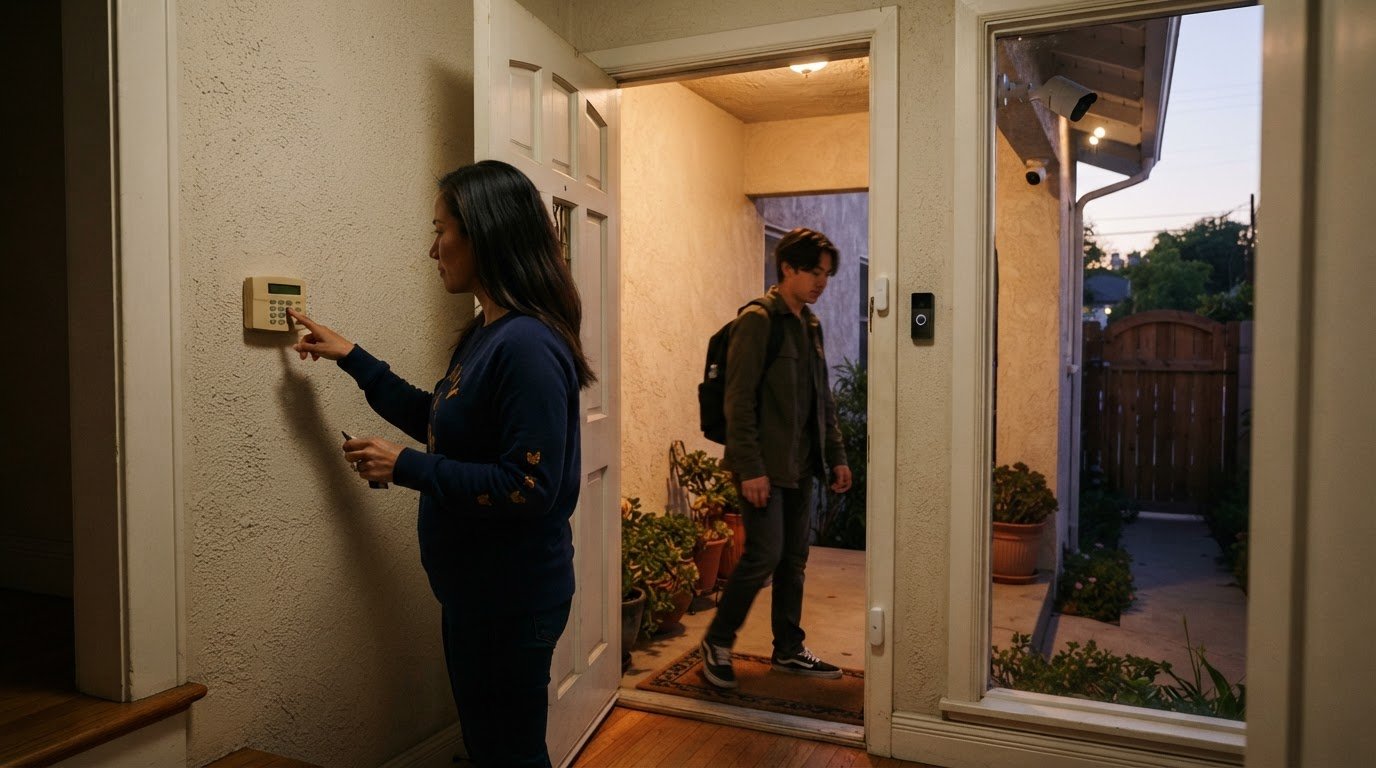
What makes one ADT home security package a better fit for a Los Angeles home than another? It comes down to how its equipment and service options match your home’s layout and the coverage you want. Comparing ADT home security packages in Los Angeles is easier when you look beyond package names and focus on what each option includes.
It’s reasonable to want clear differences before deciding. Choosing a security package involves more than selecting equipment: your home, the service terms, and your preferences all matter. A package that suits one household may not suit another.
This guide explains how to compare ADT package options in Los Angeles. Use the practical checks below to assess equipment, monitoring, and fit for your home, so you can make a decision with a clearer picture of what each option offers.
Key Takeaways
- Compare package options by the equipment and monitoring features they include, then match those features to your home’s layout and needs.
- Think about where cameras can provide useful views, including how entrances and other areas of your property affect coverage.
- Consider how cameras fit alongside the rest of a security system rather than treating them as a stand-alone decision.
- Factor local alarm-permit and false-alarm considerations into your decision, and learn where Los Angeles residents can find local guidance.
- Use the article’s comparison points to narrow down which package details matter most for your household.
Table of Contents
Security systems
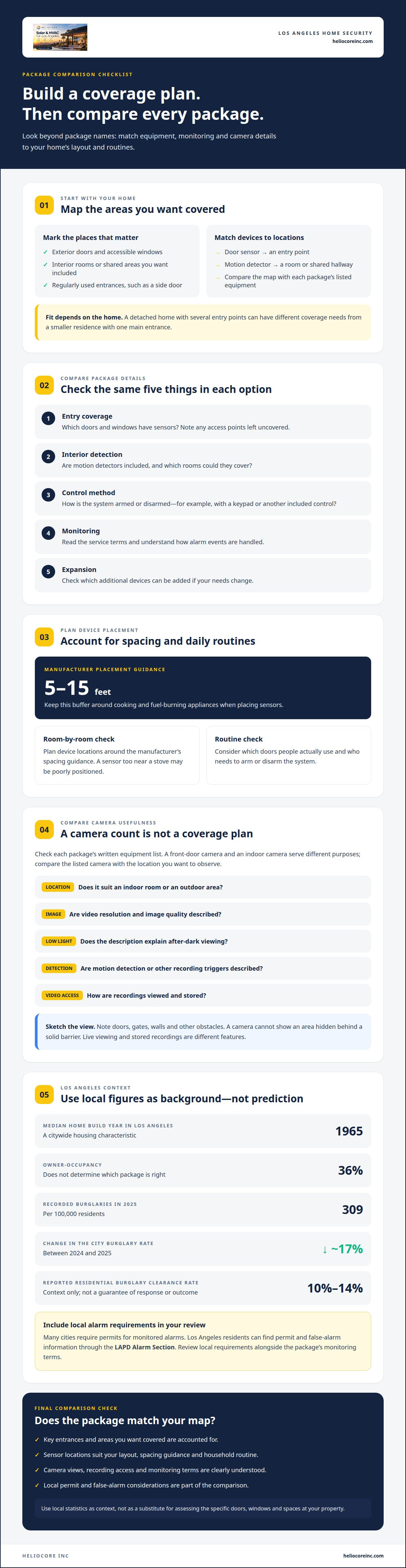
Comparing ADT home security packages in Los Angeles starts with the devices and services each option includes. A package name alone won’t show how well a system fits your floor plan. List the doors, accessible windows, and rooms you want covered, then match each included component to a specific area. A door sensor, for example, can address an entry point, while a motion detector may cover a shared hallway.
Los Angeles homes vary in age, layout, and occupancy. The median build year for homes in the city is 1965, and owner-occupancy is thirty-six percent. Those figures don’t determine which package is right. They do highlight why the same equipment list may suit one household better than another. A detached home with several entry points presents different coverage needs from a smaller residence with a single main entrance.
Local crime figures can provide context, but they can’t predict what will happen at an individual address. Los Angeles recorded 309 burglaries per 100,000 residents in 2025. The city’s burglary rate fell about 17 percent between 2024 and 2025. Use these figures as background, not as a substitute for assessing your property. Start with the places someone could enter and the areas you want included in your system.
To compare options clearly, review the same details for each package:
- Entry coverage: Note which doors and windows have sensors, and identify uncovered access points.
- Interior detection: See whether motion detectors are included and which rooms they can cover.
- Control method: Identify how you arm or disarm the system, such as with a keypad or another included control.
- Monitoring: Read the service terms and understand how alarm events are handled.
- Expansion: Check which additional devices can be added if your needs change.
Sensor placement deserves attention before installation. Manufacturers require a five-to-fifteen-foot buffer around cooking and fuel-burning appliances when placing sensors. That spacing can affect where a device belongs in a kitchen or utility area. For example, a sensor placed too near a stove may be poorly positioned. A room-by-room plan helps connect device locations with the manufacturer’s placement guidance.
Consider daily routines, too. A system should work for the people who use it and the doors they regularly enter. If a household often uses a side entrance, include that route in the coverage plan. Think about who needs to arm or disarm the system and whether its controls suit their routine. These details help distinguish useful coverage from devices that don’t address a real need.
Monitoring and local alarm rules are separate parts of the decision. Many cities require permits for monitored alarms, and Los Angeles residents can find permit and false-alarm information through the LAPD Alarm Section. Review those requirements alongside the package’s monitoring terms. Also consider the reported 10%-14% clearance rate for residential burglaries. An alarm system is one part of home security, not a guarantee of a particular response or outcome.
Before choosing, make a simple coverage map. Mark each exterior door, accessible window, and interior area you want protected. Compare the map with the devices and monitoring described for each package. If an option leaves a key entrance uncovered, a lower device count may not suit your plan. If it includes equipment for areas you don’t need, consider whether another package better matches your home’s layout and routine.
Security cameras
Camera options can affect how well a home security package suits your routines. Compare each package’s written equipment list rather than assuming every camera feature comes standard. A front-door camera and an indoor camera, for example, serve different purposes. One can show activity near an entrance; the other can help you view a shared room. Decide which location matters most, then check whether the package lists a camera suited to that use.
Placement determines what a camera can capture. A camera aimed at a front walkway may show visitors approaching, while one pointed toward a driveway may help you observe vehicles entering. Sketch the view from each proposed location and note doors, gates, walls, and other obstacles. A camera cannot show an area hidden behind a solid barrier, so the intended view matters as much as the device count.
Use these questions to compare camera details across package descriptions:
- Location: Does the listed camera suit an indoor room or an outdoor area?
- Image detail: Does the description state its video resolution and image quality?
- Low light: Does it explain how the camera captures images after dark?
- Detection: Does the package describe motion detection or another recording trigger?
- Video access: Does it explain how recordings are viewed and stored?
These details help distinguish a camera’s presence from its usefulness. A camera facing a side gate, for example, may have a narrow view that misses the approach path. One near a living-room entrance may show movement but overlook another access point. Compare the listed features with the specific place you want to observe. A higher camera count alone doesn’t prove broader or clearer coverage.
Review lighting separately. A porch light, bright window, or shaded entry can affect what a camera records. Look for details about low-light viewing and image handling, then picture a specific situation, such as someone approaching the front door after sunset. The useful comparison is whether the listed camera functions suit that scene, not whether the package simply uses terms such as “HD” or “night vision.”
Recording and viewing terms also affect everyday use. Live camera viewing and stored recordings are different features. Look for clear descriptions of how video is accessed, whether clips are saved, and which service terms apply. A homeowner who wants to review a delivery later, for example, needs to understand recording access, not just live viewing. Compare the package description alongside its service terms.
Privacy starts with camera direction. Aim each device at the property areas you intend to monitor, such as a front entrance or private driveway. Avoid framing a neighbor’s windows or unrelated shared spaces. For an indoor camera, choose the room and viewing direction deliberately. A family-room camera has a different role from one near an exterior door, so placement should serve a clear household purpose.
Before deciding, make a simple camera plan. Mark each proposed location, the scene it should capture, and the feature that supports that task. Then compare the plan with each package’s stated camera equipment and service terms. If a description leaves a practical question unanswered, don’t assume the package includes that feature. This process keeps the comparison grounded in your home’s actual layout.
Finally, compare camera coverage with the rest of the system. A camera provides visual information, while entry sensors address specific doors or windows. A camera watching the front path and a sensor on the front door, for example, serve different functions. Review each component’s role, then choose the package whose listed equipment aligns with your priorities. A clear plan makes camera options easier to assess.
HelioCore
HelioCore Inc helps Los Angeles homeowners plan energy and comfort upgrades alongside other home decisions. After comparing security systems and cameras, you may also be considering how your home uses power or stays comfortable through changing temperatures. These are separate needs, but both can shape day-to-day life at home.
High-efficiency solar panels and battery storage may be relevant if you’re exploring home energy options. HVAC, including heating and air conditioning, addresses comfort needs. The right place to start depends on your project and home. HelioCore Inc can help you understand these options and plan a suitable next step, separate from your security-package decision.
If you’re considering an energy or comfort upgrade, contact HelioCore Inc to discuss your home and priorities.
Choose a Clear Next Step
Your next step is to turn your comparison into a practical decision. Consider which areas of your home matter most, who will use the system, and which package details affect daily routines. This gives you a clearer basis for evaluating ADT home security packages in Los Angeles without choosing by package name alone.
Security planning can also prompt broader home-improvement questions. For separate energy or comfort projects, HelioCore Inc offers high-efficiency solar panels, battery storage, and HVAC solutions. These address different household needs from cameras or alarm equipment, so keep each decision focused on the outcome you want.
You don’t have to solve every home project at once. Choose the next decision that matters, gather the details relevant to that goal, and move forward at a comfortable pace. Setting a clear priority makes the process more manageable.
Contact HelioCore Inc about your options if you’re ready to discuss a home energy or comfort project. Take the next step with confidence and keep your plans centered on what works for your home.