
Home Security
ADT Security Installation in Los Angeles
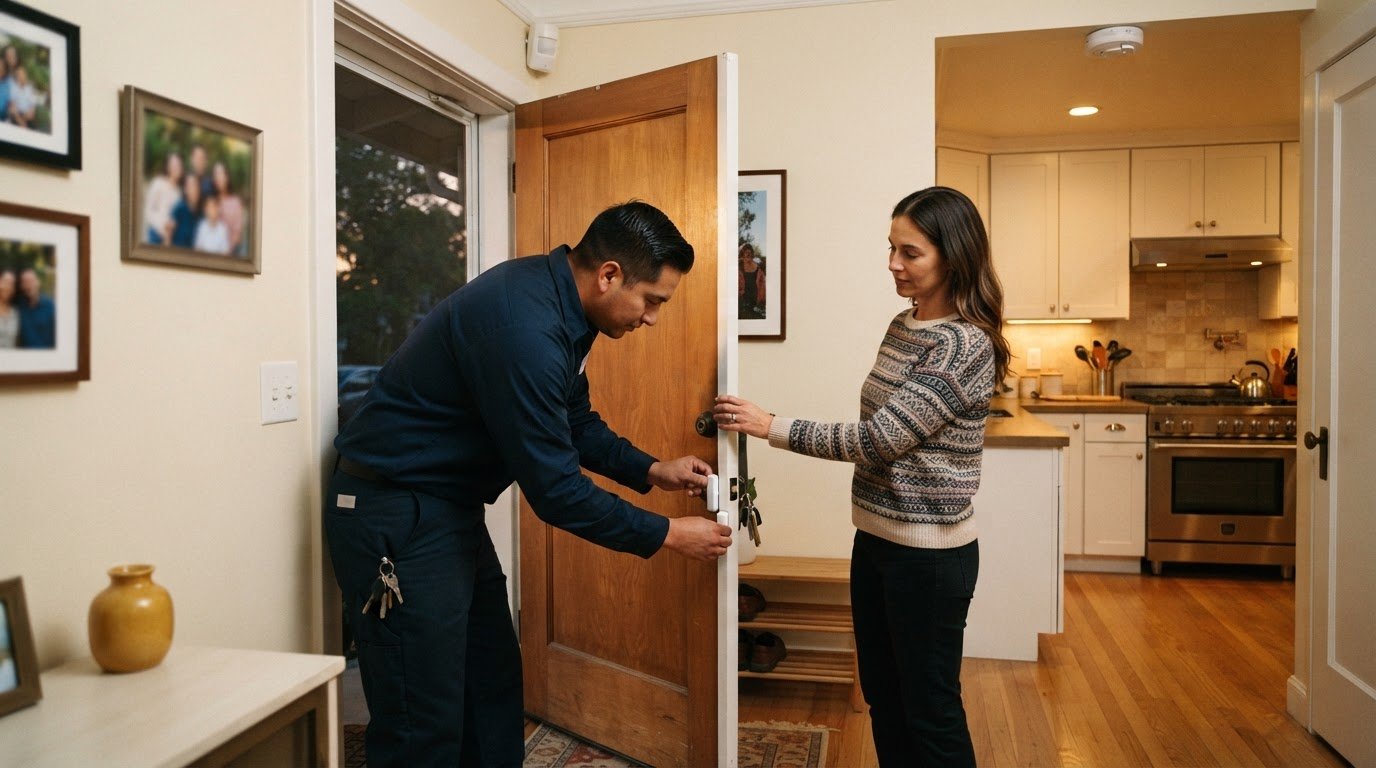
Burglaries in Los Angeles fell about 17% between 2024 and 2025, yet the city still recorded 309 burglaries per 100,000 residents in 2025. That context can help you weigh whether ADT security installation in Los Angeles fits your home, but citywide figures can’t predict the risk at a specific address.
It’s reasonable to want a clearer picture before choosing a home security system. Burglary statistics offer one useful starting point, alongside practical questions about your home’s layout, entry points, and the protection you want.
This article explains what the Los Angeles figures mean for your decision, what to consider when planning an ADT installation, and how to think through the next steps. The goal is a choice grounded in local context and your household’s needs, without letting a single statistic make it for you.
Key Takeaways
- Use citywide burglary trends as context, not as a prediction of what will happen at a particular home.
- Consider your home’s layout, entry points, and household routines when deciding what security measures suit you.
- Learn how sensor placement around cooking and fuel-burning appliances can affect a home security plan.
- Keep local requirements in mind: Torrance requires an alarm system permit for homes and businesses with alarm systems.
Table of Contents
Home security
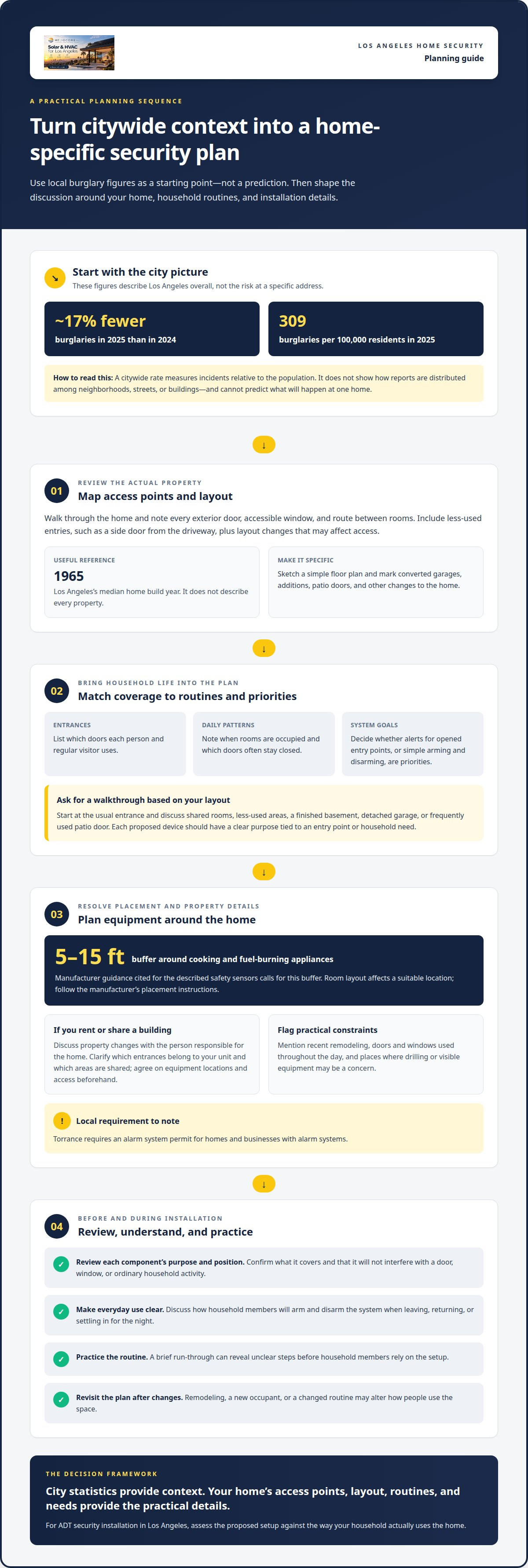
Los Angeles recorded about 17% fewer burglaries in 2025 than in 2024. Even so, the city had 309 burglaries per 100,000 residents in 2025. These figures describe the city, not the risk at an individual address. They can provide context for a security decision, but they cannot predict what will happen on a particular block. Treat the numbers as a starting point, then consider the home’s access points, layout, and daily use.
A burglary rate measures incidents relative to the population, not the risk to an individual home. It also doesn’t show how reports are distributed among neighborhoods, streets, or buildings. To make the figures more relevant, review your own property. Note each exterior door, accessible window, and route between rooms, including less-used entrances such as a side door from the driveway. A simple floor plan can keep this review clear and specific.
Los Angeles homes differ in age and construction. The city’s median home build year is 1965, but that figure doesn’t describe every property. Renovations, additions, window styles, and entry locations all shape a home’s layout. Walk through each room and identify changes that affect access, such as a converted garage or a newly added patio door. These details help explain why a security plan should follow the actual home instead of relying on a standard layout.
Household routines matter, too. List the entrances people use, when rooms are usually occupied, and which doors often remain closed. For example, a family might use a side door after work while guests enter through the front. That distinction can guide a conversation about coverage. For ADT security installation in Los Angeles, focus on how the proposed setup fits your home’s access points and routines, rather than assuming one plan suits every household.
Take care with sensor placement. The manufacturer guidance cited for the described safety sensors calls for a buffer of five to fifteen feet around cooking and fuel-burning appliances. The room layout helps determine a suitable location within that guidance. For example, a kitchen doorway may offer a different placement option from a wall beside a stove. Include appliance locations in your planning and follow the manufacturer’s placement instructions.
Ownership can shape planning. Owner-occupancy in Los Angeles is 36%, so some residents make home decisions as renters rather than owners. If you rent, discuss property changes with the person responsible for the home before installation. In a shared building, distinguish your unit’s entrances from shared access areas. Agreeing on equipment locations and access beforehand can help prevent misunderstandings between residents and property owners.
Make sure you understand the proposed system before work begins. Ask for a walkthrough showing how each component relates to a particular entry point or household need. A device near a side entrance, for example, should have a clear purpose in the plan. Discuss how household members will use the system when leaving, returning, or settling in for the night. Clear explanations help you judge whether the design fits everyday life.
Plan the installation around normal household activity. Mention recent remodeling, areas where visible equipment may be a concern, and doors or windows used throughout the day. Discuss how the work will account for these features. If several people will operate the system, make sure each understands the basic routine. A brief practice run can reveal unclear steps before anyone relies on the setup.
Consider whether the plan will still fit after changes at home. A remodeled entrance, new occupant, or change in routine may alter how people use the space. Revisit the layout and discuss changes that affect access or daily operation. Citywide statistics can frame your decision, but your home’s design and household needs provide the practical details for a security plan.
Your security
A useful security plan starts with the people who live in the home. List the doors each person uses, the hours rooms are occupied, and any regular visitors. For example, a household that enters through a side door may prioritize that route differently from one that uses the front entrance. These details help shape a plan around real routines, not just a generic floor plan.
Next, decide what you want the system to do. Some households want an alert when an entry point opens; others prioritize a straightforward way to arm and disarm the system. Write down your priorities before discussing equipment. A short list keeps the conversation focused on daily needs, such as leaving for work, welcoming guests, or settling in for the evening.
Think about how everyone in the household will use the controls. A system can be difficult to live with if its everyday steps are confusing. Consider who needs to operate it, where they usually enter, and what happens when plans change. For instance, a family may want a simple routine for arming the system before bed. Clear instructions matter as much as equipment placement.
Ask for a walkthrough based on your home’s actual layout. Start at the usual entrance, then move through shared rooms and less-used areas. Discuss how doors and windows fit the proposed plan and whether any parts of the home need different treatment. A finished basement, detached garage, or frequently used patio door can affect the discussion. Specific examples make it easier to understand the purpose of each proposed location.
Before installation, settle practical details that could affect the work. Identify access points, mention recent remodeling, and point out places where drilling or visible equipment may be a concern. If you rent or share ownership, agree on property changes before work begins. In an apartment building, clarify which entrance belongs to your unit and which areas are shared.
During the installation visit, review each device’s purpose and position. Ask for a plain-language explanation of what each component covers and how it fits the plan. A sensor near a side entrance, for example, should have a clear reason for its placement. Confirm that equipment won’t interfere with a door, window, or ordinary household activity.
Practice the routine before relying on it. Walk through arming and disarming the system, and make sure each regular user understands the basic steps. If a guest or caregiver needs access, decide how they should follow the household procedure. Keep instructions somewhere household members can find them, such as a shared home document. A brief practice run can uncover confusing steps early.
Daily habits affect how well a system fits. Keep entry routes clear, agree on who handles the controls, and update household routines when occupants change. A move, new roommate, or remodeled entrance can affect the original plan. Review the setup after such changes instead of assuming the old arrangement still suits the home.
Choose a plan by weighing coverage, ease of use, and fit with the property. Ask for a written explanation of the proposed setup, including each component’s purpose and how to use it. Compare the explanation with the priorities you listed at the start. A clear match between household needs and system design gives you a practical basis for deciding what belongs in your home.
HelioCore
HelioCore Inc is a helpful next step if your home plans also include energy or comfort improvements. Security planning focuses on entry points and household routines; separate upgrades can address energy use and indoor comfort. HelioCore Inc helps Los Angeles homeowners with high-efficiency solar panels, battery storage, HVAC, and air conditioning. These services may suit homeowners planning multiple improvements or considering energy needs alongside other property projects. The next step depends on the work you have in mind and how it fits your home. Contact HelioCore Inc to discuss energy and comfort upgrades.
Make a Thoughtful Next Move
Home security is one part of shaping a home that works for you. Keep each project distinct: define what you want from a security system, then consider other upgrades on their own merits. ADT security installation in Los Angeles is about choosing a system that suits your household. HelioCore Inc can discuss separate home improvement needs, including energy and comfort projects, without presenting them as part of security installation.
If you’re planning an installation or considering improvements alongside your security decision, start with the goal you want the work to meet. A focused conversation can help clarify the right direction for your home. Contact HelioCore Inc about installation to discuss your project. A well-planned next step can make home upgrades easier to manage and more aligned with everyday life.