
Solar
Appliance Rebates & Ways to Save Home Energy in LA
Lower energy use in an LA home can start with a few practical changes. To understand how to reduce home energy consumption in LA, use efficient routines, choose energy-saving appliances when replacements are due, and look into available rebates. Small adjustments to lighting, thermostat schedules, and idle devices can also help trim everyday energy use.
It’s understandable to want lower bills without sacrificing comfort or taking on a complicated project. This guide explains how to reduce home energy consumption in LA with practical steps: use appliances efficiently, switch to LED lighting, set a thermostat schedule, and unplug devices when they’re not in use. You’ll find manageable changes to try first, plus guidance on larger heating and cooling upgrades if your existing system uses more energy than you’d like.
Key Takeaways
- Plan appliance replacements around efficiency labels and available rebates to make upgrades more practical.
- Use full dishwasher and laundry loads, choose cold-water cycles, and reduce heated drying where possible.
- Switch frequently used lights to LEDs and use thermostat schedules to match heating and cooling to your routine.
- Unplug idle chargers and use power strips to make it easier to switch off devices that draw standby power.
- When everyday changes aren’t enough, consider whether an HVAC or air-conditioning upgrade could better suit your home.
Table of Contents
1. Energy Star appliance replacements and rebates
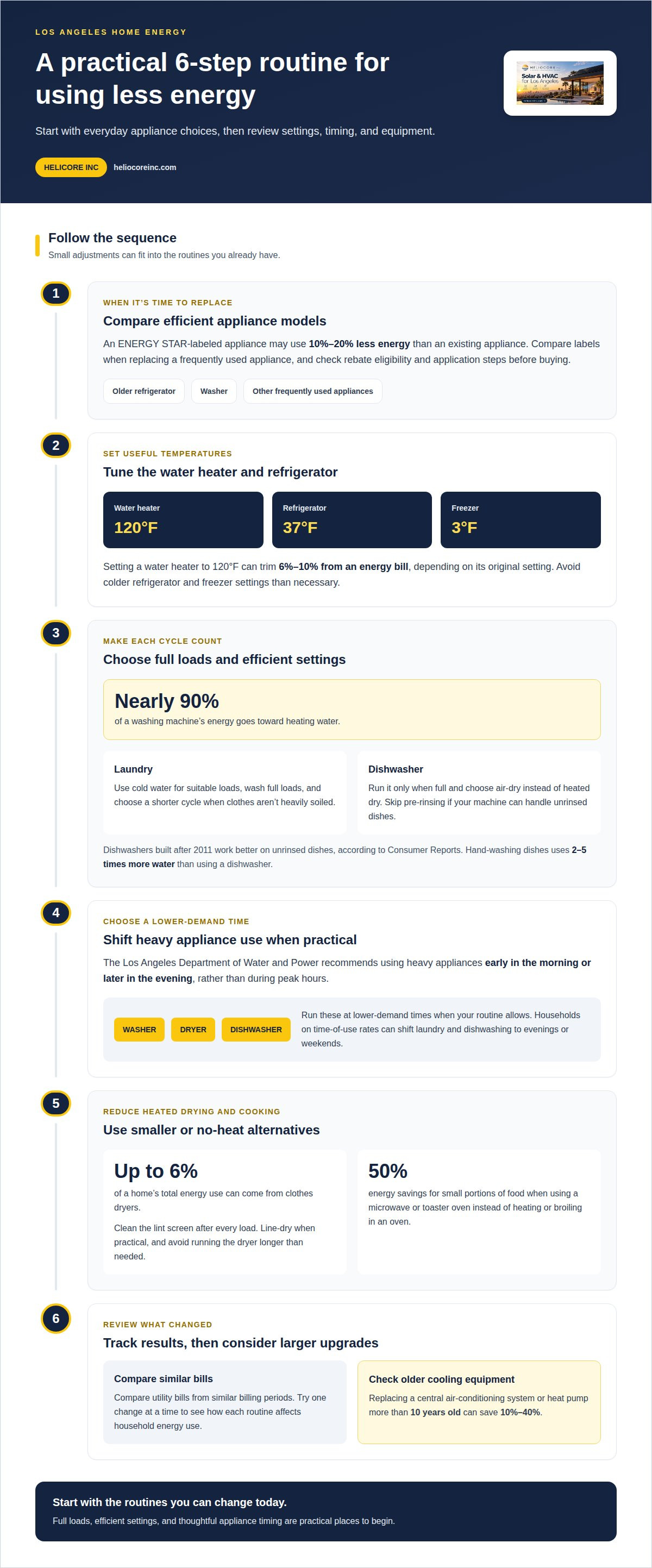
When an appliance needs replacing, compare ENERGY STAR-labeled models with your current one. An ENERGY STAR appliance may use 10% to 20% less energy than an existing appliance. That can help reduce electricity use over time, especially when replacing an older refrigerator, washer, or other frequently used appliance. Before buying, check whether the model qualifies for a rebate and review the program’s eligibility and application steps.
Pair equipment choices with simple settings. Set the water heater to 120 degrees Fahrenheit to reduce energy use. Set the refrigerator to 37 degrees Fahrenheit and freezer to 3 degrees Fahrenheit, and avoid colder settings than necessary. If you’re planning home upgrades, remember that windows affect heating and cooling needs too. Shading them can limit heat entering the home, while efficient appliances address electricity use directly.
Timing matters in Los Angeles. The Los Angeles Department of Water and Power recommends using heavy appliances early in the morning or later in the evening rather than during peak hours. Run the washer, dryer, or dishwasher at those times when your routine allows. Washing with cold water uses less energy than heating water, and full loads make better use of each cycle.
For small portions of food, use a microwave or toaster oven instead of heating a full-size oven. This can save 50% energy compared with heating or broiling in an oven. The smaller appliance avoids warming a larger cooking space for a small meal.
Are heat pumps more energy efficient than gas furnaces in Southern California? A heat pump moves heat rather than generating it through gas combustion, but actual energy use depends on the equipment and home conditions. Replacing a central air-conditioning system or heat pump more than 10 years old can save 10 to 40 percent.
Rooftop solar, batteries, and net billing in Los Angeles involve more than choosing equipment. Local permitting, utility connection, and billing terms for electricity sent back to the grid all affect system design and how exported power is credited.
What are the cheapest ways to reduce home energy consumption in LA? Start with no-cost routine changes: shift heavy appliance use, wash clothes in cold water, and adjust refrigerator settings. Use a microwave for small meals rather than heating a full oven.
Heating and cooling, water heating, and frequently used appliances are useful places to start when reviewing household energy use in Los Angeles. Older heating and cooling equipment can make system efficiency especially important.
To monitor household energy use in Los Angeles, compare utility bills from similar billing periods and note changes after adjusting appliance schedules or settings. Try one change at a time so you can see how each routine affects your household’s energy use.
2. Efficient dishwasher and laundry practices
Dishwasher and washer settings affect electricity and water use. The Los Angeles Department of Water and Power recommends running dishwashers only when full and choosing air-dry instead of heated dry. Full loads make better use of each cycle, while air-drying avoids the energy used to heat drying air. If your dishwasher has an air-dry option, select it before starting the cycle.
Skip pre-rinsing where your machine can handle it. Dishwashers built after 2011 work better on unrinsed dishes, according to Consumer Reports. Scrape food scraps into the bin, then load plates and bowls with space between them. Hand-washing dishes uses 2 to 5 times more water than using a dishwasher, so a full cycle can be a practical option for everyday cleanup.
For households deciding how to reduce home energy consumption in LA, laundry routines are another place to focus. Nearly 90% of a washing machine’s energy goes toward heating water, according to Energy Star. Choose cold water for suitable loads and wash full loads rather than several small ones. Use a shorter cycle when clothes aren’t heavily soiled.
Dryer habits matter, too. Clothes dryers can account for up to six per cent of a home’s total energy use. Clean the lint screen after every load to support airflow and drying efficiency. Line-dry clothes when practical; otherwise, avoid running the dryer longer than needed. Clear airflow helps warm air move through the load effectively.
Water-heater upkeep can reduce wasted heating. A non-self-cleaning water-heater tank should be drained once a year, with water cycled for about 20 seconds to flush minerals and sediment. Follow the equipment’s instructions, since tank designs and maintenance needs differ. Keep dishwasher filters and washer dispensers clean so water and detergent can move through the machines as intended.
To reduce home energy consumption in LA through daily routines, review when you run appliances and which settings you choose. Wait for full loads, select efficient cycles, and air-dry or line-dry when practical. These steps can fit around work and family schedules without changing how often you wash dishes or clothes.
If your household is also reviewing heating performance, HVAC maintenance and repairs can address system upkeep as part of a wider efficiency plan.
Households on time-of-use rates can shift laundry and dishwashing to evenings or weekends. Wash full loads in cold water, and choose a shorter cycle when it suits the load. A dishwasher’s air-dry setting avoids heated drying. These adjustments fit into existing routines while making each appliance cycle more efficient.
Setting a water heater to 120 degrees Fahrenheit can trim 6% to 10% from an energy bill, depending on its original setting. In New Hampshire, each 10-degree reduction in water-heater temperature can save 3% to 5% on water-heating costs. Cleaning the dryer lint screen after every load can improve air circulation and drying efficiency and help prevent fire hazards.
3. Efficient lighting and smart thermostats
Replacing frequently used bulbs is a straightforward lighting upgrade. The Los Angeles Department of Water and Power recommends replacing incandescent and compact fluorescent bulbs with LEDs. ENERGY STAR-certified LED bulbs last at least 25 times longer than incandescent bulbs. Start with lights used for long stretches, such as kitchen, living-room, and porch fixtures. This prioritizes bulbs that are switched on most often.
LEDs use less energy than incandescent bulbs. Choose a bulb that fits the fixture and provides suitable light for the room. Use brighter task lighting over a desk or counter, and turn off lights in empty rooms. Open blinds during daylight when weather and privacy allow. These habits reduce unnecessary lighting without making everyday tasks harder.
For a simple lighting plan, note which rooms have lights on for long periods and replace those bulbs first. Then change bulbs in less-used fixtures as they need replacing. ENERGY STAR-certified LEDs last longer than incandescent bulbs, which can mean fewer replacements and easier maintenance, especially for hard-to-reach fixtures.
A smart thermostat adds control over heating and cooling. It can follow a schedule and adjust the system when household routines change, rather than relying on someone to make every adjustment manually. A smart thermostat can reduce heating and cooling costs by up to 15 per cent.
Before choosing a thermostat, identify the heating and cooling equipment it will control. Check your existing thermostat setup and the equipment instructions, then select a compatible model. A clear schedule helps the thermostat make useful adjustments. Keep comfort in mind and avoid settings that lead household members to override the schedule repeatedly.
Automated lighting can support an energy-saving routine. Use a timer or schedule for lights that are often forgotten, such as an entry light left on after bedtime. Set the light to turn off when the area is no longer in use. Keep manual switches accessible for unexpected needs, and avoid leaving decorative lighting on all night.
Lighting and thermostat controls work best alongside basic home comfort measures. Close blinds during hot weather to limit heat entering through windows, and use insulation to help maintain indoor temperatures. These steps can reduce the work heating and cooling equipment must do. Review the thermostat schedule when routines or seasons change, and adjust it to match how rooms are used.
4. Programmable thermostat schedules
A programmable thermostat can match heating and cooling to your household routine. The Los Angeles Department of Water and Power recommends setting a thermostat to 65 degrees in winter while at home. These settings provide a local starting point for a seasonal schedule.
Build the schedule around when people are home, asleep, or away. The Los Angeles Department of Water and Power recommends using an energy-saving mode during regular periods away. If your weekday and weekend routines differ, create separate schedules instead of relying on one setting all week.
Small adjustments can make a difference. The U.S. Department of Energy says shifting a thermostat by 1-3 degrees can save up to 9% every year. Change the setting gradually, then notice whether the rooms still feel comfortable. A schedule is most useful when household members can follow it without frequent manual overrides.
Ceiling fans can help a room feel cooler, allowing you to raise the thermostat a few degrees, according to the Los Angeles Department of Water and Power. Fans cool people, not rooms, so turn them off when a room is empty. In winter, reverse the fan at low speed to circulate warm air down from the ceiling.
During hot weather, block direct sunlight with blinds, curtains, awnings, or window film. The Los Angeles Department of Water and Power also recommends opening windows and doors in the late evening to release indoor heat and circulate cooler outdoor air. Use this approach when outdoor conditions suit your home, then close windows as temperatures rise.
How much can smart thermostats and AC settings reduce energy bills in Los Angeles? A smart thermostat can reduce heating and cooling costs by up to 15 per cent. The U.S. Department of Energy’s estimate for a 1-3-degree thermostat shift is up to 9% in yearly energy savings; actual results depend on household routines and equipment.
To use less air conditioning during LA heat waves, use shade and ceiling fans, and adjust the thermostat in modest steps while keeping indoor conditions comfortable. Don’t rely on open windows during a heat wave if the outdoor air is warmer than the home.
Thermostat schedules control heating and cooling equipment, such as a furnace or air conditioner. They don’t control refrigerators, clothes washers, or other appliances, which need separate routines. Check the system filter as part of regular upkeep, since airflow also affects equipment operation.
5. Reducing phantom power consumption
Electronic devices can use electric power even when they appear to be off. Appliances with clocks or instant-on settings can draw electricity 24/7, and standby power can account for about 5% to 10% of a home’s electricity use. Look for devices with lights, clocks, or standby indicators, then decide which need to stay connected.
Start with the television area. Connect the television, game console, and speakers to a power strip, then switch it off before bed if those devices don’t need to stay on. A regular power strip also makes it easier to turn several devices off together.
Chargers are another simple target. The Los Angeles Department of Water and Power recommends unplugging non-essential appliances and electronics when they’re fully charged and not in use. Disconnect a phone charger after charging, and unplug a tablet or laptop adapter when idle. Keep essential equipment connected when it needs continuous power.
Screen settings also offer a practical adjustment. The Los Angeles Department of Water and Power recommends turning display brightness down by 30% to conserve energy. Lower brightness on televisions and computer screens when the room is dim, then adjust it if the display becomes difficult to use. Turn off screens when nobody is watching or working.
Electricity and natural gas use varies among Los Angeles homes, depending on occupancy, equipment, heating and cooling habits, and water-heater use. Compare your utility bills from similar billing periods to understand how your household’s consumption changes.
Make standby reduction part of an evening routine. Switch off the power strip connected to entertainment devices, unplug idle chargers, and turn off unused lights. In winter, keep heating equipment connected as needed, but disconnect non-essential electronics that don’t require overnight power. Avoid switching off a device if doing so interrupts a needed function, such as recording a scheduled program.
A quick room-by-room review can reveal easy changes. In a home office, turn off the monitor and printer after work. In the kitchen, unplug countertop appliances when they’re not in use, while keeping the water heater and other essential equipment connected. Repeat the review when you add electronics, since each device can add standby use.
Make shutdowns easy to repeat by grouping computers and televisions on power strips and switching the strips off before bed. This can reduce standby electricity use. A programmable power bar can switch off grouped appliances and electronics at night, so the routine doesn’t depend on remembering each item. Keep equipment that needs continuous power off the switched group.
Unplug chargers after devices are fully charged, since chargers can continue drawing energy. Build a consistent shutdown routine by grouping devices on a power strip or programmable power bar and unplugging individual chargers once charging is complete.
HelioCore Inc
When routine changes aren’t enough, HelioCore Inc can help you consider larger home energy upgrades. If heating and cooling are a concern, HelioCore Inc’s HVAC and air-conditioning services can help address your home’s equipment and needs. Homeowners considering a broader energy plan can also explore high-efficiency solar panels and battery storage.
The right next step depends on what you want to improve: indoor comfort, electricity use, or how your home stores energy. Consider which options fit your household’s priorities and plans. Routine changes still matter, but equipment upgrades may be worth exploring when existing systems no longer suit your needs.
Contact HelioCore Inc to talk through your home energy goals.
Make Your Next Energy Step Count
A useful next step in how to reduce home energy consumption in LA is to decide what matters most in your home: comfort, electricity use, or greater control over how energy is stored. That priority can help focus future improvements instead of turning every possible upgrade into a project at once.
For upgrades beyond household routines, HelioCore offers HVAC, high-efficiency solar panels, and battery storage. These options address different needs, from heating and cooling to generating and storing electricity. The right choice depends on your home and the goals you want an upgrade to support.
Bring your questions and priorities into the conversation. Contact HelioCore to discuss your home and consider a practical next step. Steady decisions can make energy improvements feel more manageable, one home priority at a time.
Frequently Asked Questions
What insulation, air sealing, and window upgrades work best for LA homes, and what do they cost?
For homes in Los Angeles, start by sealing drafts around window and door frames with caulk and weatherstripping. A door sweep can close gaps at the threshold, while insulation helps maintain more even indoor temperatures. Window film or shading can also limit heat entering rooms. Before planning upgrades, consider the project’s scope, materials, window size, and existing conditions.
What rebates and incentives are available for LA homeowners to improve energy efficiency?
Rebate options depend on the equipment and program requirements. Eligibility for appliance upgrades may depend on the specific model and current program terms, so don’t assume every efficient appliance qualifies. Homeowners across Los Angeles, including Inglewood, South Los Angeles, Crenshaw, Leimert Park, Baldwin Hills, Westchester, Van Nuys, North Hollywood, Reseda, Northridge, Woodland Hills, and San Pedro, can review the applicable terms before choosing an upgrade.