
Solar
Backup Power During Los Angeles Outages: Compare Your Options
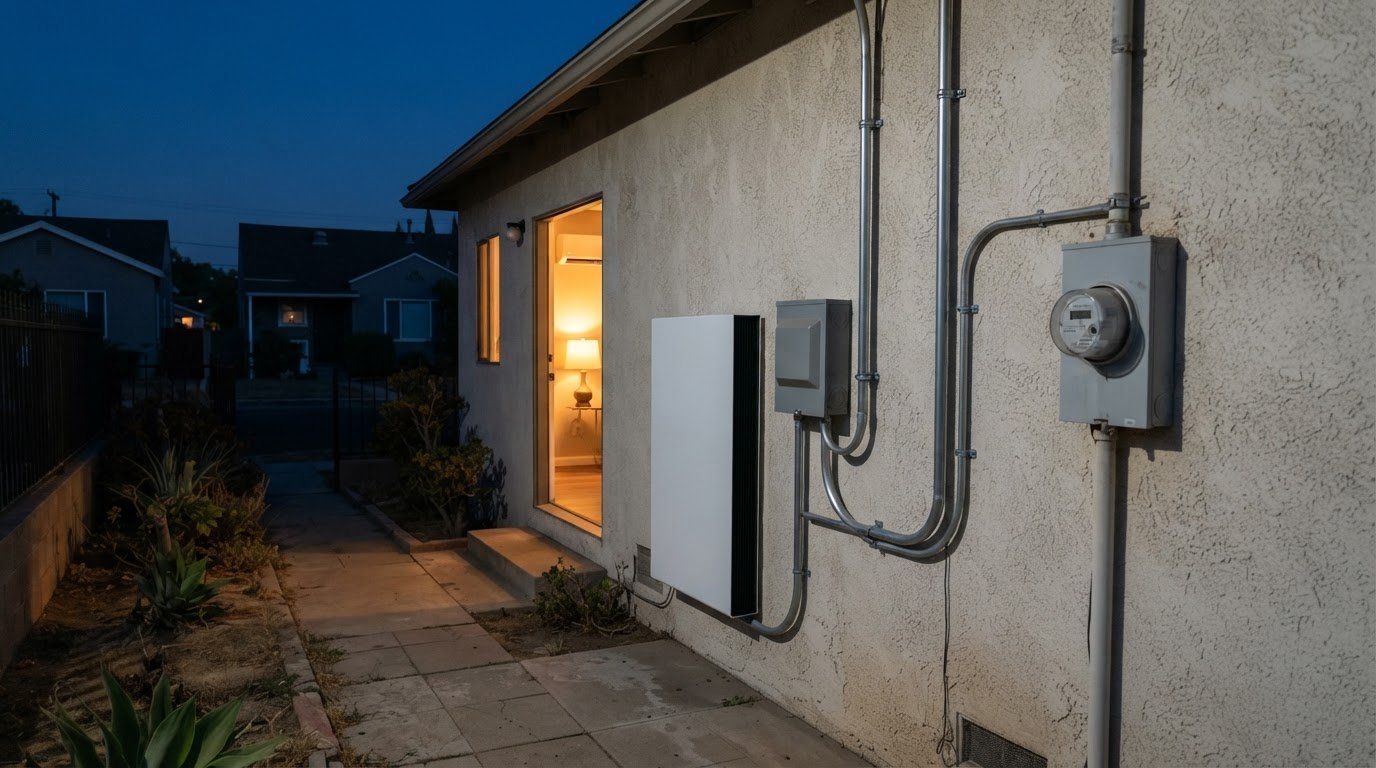
A refrigerator keeps food cold for about 4 hours during a power outage, according to the U.S. Food and Drug Administration. For backup power during an outage in Los Angeles, a battery with suitable equipment can disconnect a home from the grid and supply stored electricity to selected circuits. Solar panels alone generally shut down when the grid goes out.
It’s easy to think of an outage as a brief inconvenience, until the refrigerator, internet, lights, or air conditioning stop working. The right backup setup depends on what you want to keep running, how long you may need power, and how your home uses electricity. This guide compares portable power stations, batteries, and generators, explains how circuit management works, and explores how Los Angeles heat, installation costs, and incentives can shape your decision.
Key Takeaways
- Choose backup equipment based on the circuits and appliances you want to keep running, not just the size of your home.
- Understand how transfer equipment separates your home from the grid and helps direct backup power to selected circuits.
- Compare essential-loads backup with whole-home coverage to balance household priorities and power needs.
- Factor in Los Angeles heat and increased cooling demand when planning how your home will use stored power.
- Explore how installation needs and available incentives may affect the overall cost of a battery system.
Table of Contents
1. Why Power Outages Matter?
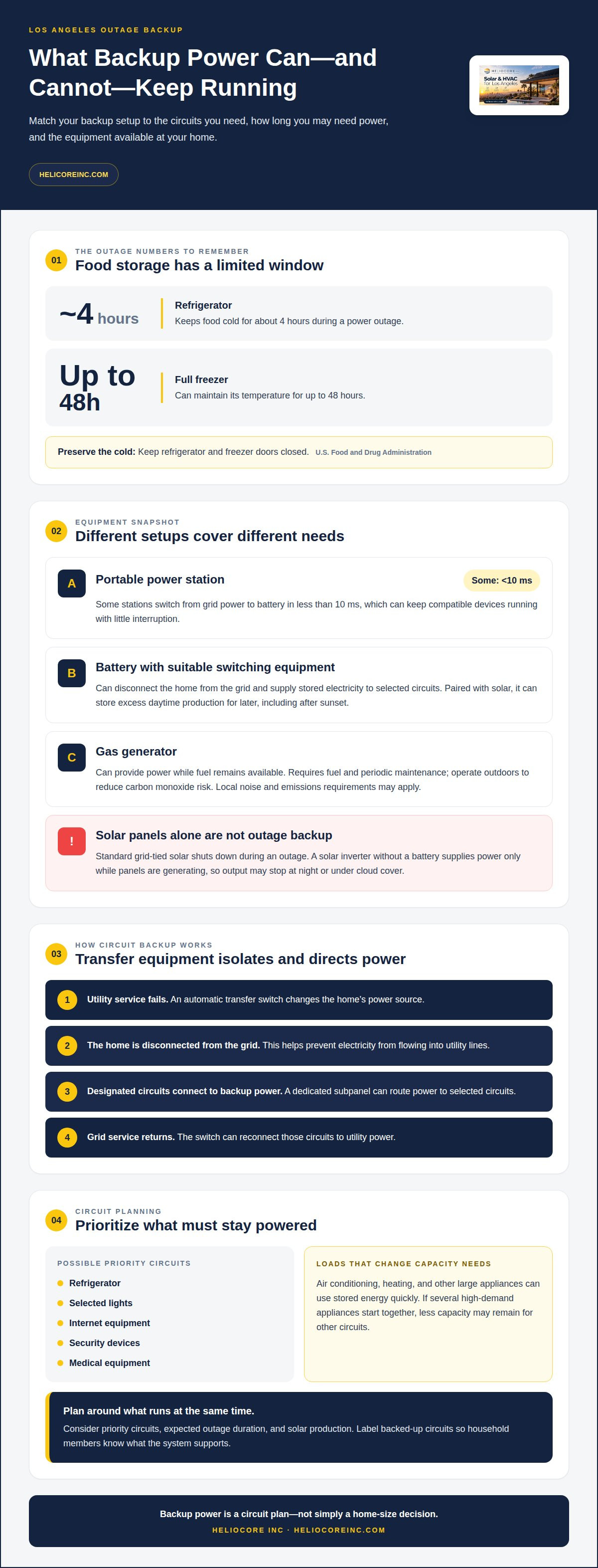
In Los Angeles, an outage can affect food, comfort, communications, and essential household routines. The U.S. Food and Drug Administration says a refrigerator keeps food cold for about 4 hours during a power outage. A full freezer can maintain its temperature for up to 48 hours, according to the U.S. Food and Drug Administration. Keep refrigerator and freezer doors closed to preserve the cold.
Backup systems differ in what they can power and how they connect. With suitable equipment, a battery system can disconnect a home from the grid and supply stored electricity to selected circuits. Standard grid-tied solar panels alone shut down during an outage. Pairing solar with battery storage lets a system store excess daytime production for later use, including after sunset.
Choose battery capacity based on priority circuits, expected outage duration, and solar production. Start by listing the appliances and devices you most need, such as refrigeration, internet, lights, or medical equipment. Consider which will run at the same time. Air conditioning, heating, and other large appliances can use stored energy quickly, so including them changes the capacity needed.
Gas generators are another option, particularly when an outage outlasts stored battery power. They require fuel and periodic maintenance, and must operate outdoors to reduce carbon monoxide risk. Local noise and emissions requirements may also apply. Batteries avoid fuel storage and can work with solar; generators can provide power while fuel remains available.
Solar chargers can replenish compatible portable batteries when sunlight is available, but performance depends on daylight, weather, and connected equipment. A solar inverter without a battery supplies power only while panels are generating, so output may stop at night or under cloud cover. During California shut-offs, utility Community Resource Centers provide charging for electronic devices and sometimes electric vehicles.
For backup equipment connected to home wiring, check with your electric utility before use. Generator wiring changes should be inspected by the city or county building department. Local noise and emissions requirements may also apply to generators.
Generators can create fire and carbon monoxide hazards. Operate them outdoors, learn how to use them safely, keep fuel available, and maintain the equipment periodically. Battery systems avoid generator exhaust and fuel handling; match their size and use to the circuits they support. For backup power during an outage in Los Angeles, start by matching equipment to your household’s priority loads.
2. Automatic transfer switches and circuit management
An automatic transfer switch changes a home’s power source when utility service fails. It disconnects the home from the grid, then connects designated circuits to a backup source. This separation helps prevent electricity from flowing into utility lines during an outage. When grid service returns, the switch can reconnect those circuits to utility power. The setup depends on the home’s electrical panel and backup equipment.
Some portable power stations switch from grid power to battery in less than 10 ms. That fast change can keep compatible devices running with little interruption. A transfer switch for a home battery or generator serves a broader role. It directs power to circuits wired for backup, rather than sending power through every circuit in the house.
Circuit planning begins with deciding what must stay powered. A dedicated subpanel can route selected circuits to the backup system. For example, a homeowner might prioritize the refrigerator, a few lights, internet equipment, and security devices, while leaving other circuits outside the backup group. This helps keep optional loads from using power needed by essential equipment.
Appliances draw different amounts of electricity, so plan loads carefully. A refrigerator may run alongside lights and a router, while air conditioning adds greater demand. If several high-demand appliances start together, less capacity may remain for other circuits. A clear circuit plan sets priorities instead of treating every outlet as equally important.
For backup power connected directly to home wiring, check with your electric utility about any applicable requirements before use. A generator connected to household wiring must also be configured to prevent power from flowing into the de-energized utility grid. The connection method is therefore part of system design, not an afterthought. Portable equipment used without a direct home-wiring connection has a different setup.
Before an outage, identify which circuits the transfer switch serves and which remain on utility power. Labeling them makes the setup easier to understand when the lights go out. Follow the equipment instructions when testing the system, and keep the panel area accessible. These steps help household members understand what backup power supports and avoid adding loads without considering capacity.
In a home with solar panels, backup operation requires equipment that can separate the home from the grid. Standard grid-tied solar systems shut down during an outage. A suitable battery and switching setup can supply stored electricity to selected circuits instead. Mapping the panels, inverter, battery, and backed-up circuits together helps clarify how power moves through the home.
3. Essential-loads backup versus whole-home backup
Essential-loads backup supplies selected circuits, while whole-home backup can cover most or all household circuits. Los Angeles County recommends identifying essential devices that need electricity during an outage. That decision sets the system’s priorities. A household might prioritize refrigeration, communications, lighting, or equipment needed for daily routines rather than every outlet and appliance.
With essential-loads backup, selected circuits connect through a dedicated subpanel, directing stored electricity to chosen parts of the home. This can suit households that want specific services available without powering every room. The trade-off is that circuits outside the backup group won’t receive battery power, so household routines may need to change during an outage.
Whole-home backup aims to keep most or all circuits operating, including larger loads such as HVAC systems and EV chargers. These appliances can draw substantial power, so whole-home coverage requires more battery capacity. The system must also account for which loads will run at the same time. Cooling, cooking equipment, and an EV charger together place different demands on stored power than lights and internet equipment.
To compare the approaches, begin with your household’s outage priorities. List the devices that must stay available, then separate essential needs from convenient extras. Consider which appliances may run simultaneously. A refrigerator, communications equipment, and selected lights may form one priority group; air conditioning or an EV charger calls for a broader capacity plan.
Battery runtime depends on capacity and household electricity use. More circuits aren’t automatically a better fit if the battery can’t support their combined demand. A focused circuit plan can make stored energy last longer by excluding loads you don’t need during an outage. Existing solar production also matters because a battery can store solar electricity for later use.
Outage duration matters too. A short interruption and an extended shut-off create different demands for the same household. Consider whether refrigeration, medical devices, cooling, or home communications must operate continuously, and how much electricity they need together. Use those priorities, expected outage needs, and available solar production to decide between essential-loads and whole-home backup.
There isn’t one circuit plan for every Los Angeles home. A household with electricity-dependent medical equipment may prioritize those devices, while another may value maintaining indoor temperature during hot weather. Design around those specific needs and suitable battery capacity rather than assuming essential-loads or whole-home backup is automatically the right choice.
4. Heat waves and grid demand
Los Angeles heat waves with temperatures over 100°F increase electricity demand and strain the grid. Air conditioning becomes a central household load as residents try to manage indoor temperatures. This makes outage planning part of heat planning. A backup system should account for cooling needs, not only lights, internet, and refrigeration.
Start by considering how cooling affects your home’s electricity use. Note which rooms need cooling most, what equipment serves them, and which other appliances may run at the same time. A household planning to run air conditioning alongside refrigeration has different backup needs from one protecting only smaller devices. Those priorities shape which circuits and battery capacity to plan for.
Heat also affects when a household uses electricity. Cooling may run during the hottest hours, while stored battery power may be most valuable after sunset or during an interruption. If your home has solar panels, consider their production alongside household demand. The aim is to understand when electricity is available and when your home needs it.
Before a forecast heat wave, review your backup plan. Identify the cooling equipment and circuits the system supports, and decide which optional loads can wait. A dishwasher, laundry equipment, or EV charging may be less urgent than keeping a room comfortable and food cold.
California households can prepare for a planned shut-off by charging electric vehicles when notified. This can matter if the vehicle is part of the household’s transportation plan. It doesn’t replace home backup, but may help reduce uncertainty about getting around during an outage. Consider cooling and transportation needs together when planning for an interruption.
For battery sizing, consider cooling equipment’s electricity demand alongside other priority loads and likely outage duration. A system designed around essential devices may not support air conditioning. Whole-home coverage can include larger loads but requires more battery capacity. Compare your household’s actual priorities, not just a broad label such as “backup.”
Weather can affect solar production, so a solar-only setup may not meet every need during a hot-weather outage. A battery stores electricity for use when panels aren’t producing, but system output and household demand still determine how long stored power lasts. Planning for a Los Angeles heat wave means accounting for temperature, cooling demand, solar contribution, and priority circuits.
5. Installation costs and incentives
Battery backup costs depend on the system design, not just the battery. Capacity, selected circuits, electrical work, and existing solar equipment all shape the installation. A home backing up refrigeration and lights has different requirements from one covering air conditioning or an EV charger. Planning for extended outages can also affect the capacity selected and the electricity the system needs to store.
For a home with solar panels, inverter compatibility is another factor. Whether an existing system can accept a battery depends on its inverter and other equipment; some older systems may need an inverter upgrade. The installation scope also depends on how the battery connects to home wiring and which circuits receive backup power. These details distinguish a straightforward addition from a project involving wider electrical changes.
The Self-Generation Incentive Program (SGIP) is a California battery-storage incentive that may be available to eligible customers. The program can reduce costs by $1,000 per kWh of capacity. Federal tax credits provide an additional 30% through 2032. These incentives can affect the net cost, but they don’t change the capacity or circuit plan a household needs.
Compare the full project scope before considering incentives. Note the battery capacity, backed-up circuits, inverter compatibility, and installation work in the design. If panels are present, consider how the system will use solar electricity. A design that stores excess solar production for later serves a different purpose from one focused mainly on outage backup.
Installation pricing depends on the home and is provided in a quote. Battery capacity, selected circuits, inverter compatibility, and electrical work shape the project. This ties the estimate to your actual needs rather than a generic system. A plan for essential circuits, for example, differs from one intended to support larger loads during an extended outage.
Incentive amounts and tax treatment can affect a household’s decision, while battery capacity and installation scope determine the system itself. Keep these questions separate: first define the circuits and outage duration the home needs to support, then account for applicable incentives. This helps you compare options without choosing a smaller system simply because its initial scope seems simpler.
For a project-specific battery and solar design, request a battery storage quote that accounts for your home’s circuits, equipment, and installation needs.
HelioCore: Tesla Powerwall & Battery Storage Installation
HelioCore installs Tesla Powerwall and battery storage systems for homeowners planning for outages. Consider battery storage after identifying your priority circuits, whether you need essential-loads or broader backup, and how existing solar fits your plans. These choices help shape a system around your household’s needs.
HelioCore also offers high-efficiency solar panels and HVAC solutions. Considering your electricity priorities alongside solar production and cooling needs can help bring those decisions together. Contact HelioCore to discuss battery storage installation for your home.
Make Your Home’s Backup Plan Work for You
A practical next step is to turn your household priorities into a plan for future energy decisions. Decide what matters most during an outage, and consider how backup power during an outage in Los Angeles fits with your solar production and heating or cooling needs. A clear plan can help you make choices in stages rather than treating every upgrade as a separate decision.
HelioCore offers battery storage, high-efficiency solar panels, and HVAC solutions for homeowners. These services can support a coordinated approach to home energy, shaped around your property and priorities.
If you’re ready to discuss a backup plan for your home, contact HelioCore about backup power. A thoughtful conversation is a steady place to begin.
Frequently Asked Questions
Why do power outages matter?
Outages can interrupt food safety, water access, cooking, and household routines. A home relying on an electric pump may lose water service, while electric water heaters and stoves may be unusable. Los Angeles County advises discarding food exposed to 40 degrees or higher for two hours or more. Keeping refrigerator and freezer doors closed helps preserve cold during the interruption.
Can I add a battery to a solar system I already have?
An existing solar system may accept a battery, but compatibility depends on its inverter and other equipment. Some older systems may need an inverter upgrade before storage can work with them. Suitable equipment is also needed to isolate the home from the grid during an outage. The inverter, system configuration, and intended backup circuits all factor into the design.
Is a generator still worth having if I have a battery?
A generator can complement a battery during an extended outage. The battery can supply stored electricity, while a generator can provide backup after its capacity is depleted. This combination may suit households concerned about longer outages or high-priority loads. Generators require fuel and periodic maintenance, so their usefulness depends on fuel availability, safe outdoor operation, and the loads you expect to run.
What is the difference between whole-home and essential-loads backup?
Essential-loads backup powers selected circuits, such as a refrigerator, internet equipment, and chosen lights. Whole-home backup aims to run most or all circuits, potentially including HVAC and an EV charger, and requires more battery capacity. The key difference is coverage: decide whether your household needs a few critical functions or broader use across rooms and larger appliances.
What backup power options are available for homes during outages in Los Angeles?
Homeowners can consider a home battery, generator, or portable power station. Solar panels paired with a battery and suitable backup equipment can store electricity for use during an outage; standard grid-tied panels alone shut down when grid service fails. Solar chargers can replenish compatible portable batteries in sunlight. Options differ in supported circuits, fuel or sunlight needs, and connection to the home.
How much does a home battery backup system cost in Los Angeles?
Installation costs vary with battery capacity, selected backup circuits, existing solar and inverter compatibility, and electrical work. Project pricing depends on the home and is provided in a quote. A focused setup for priority circuits has different requirements from whole-home coverage, especially when larger loads such as air conditioning are included. Applicable incentives may also affect eligible project costs.
How long can a home battery power essential appliances during an outage?
In California, a single-battery system can typically power priority appliances for 24 to 48 hours during a power shut-off. Actual runtime depends on battery capacity and household electricity use. Refrigeration, lights, and internet equipment draw power differently from air conditioning or EV charging. Limiting backup to priority circuits can help reserve stored energy for the devices your household depends on most.
What size generator or battery does a Los Angeles home need?
Size a battery or generator according to the circuits you want to protect, expected outage duration, and existing solar production. Account for appliances likely to run together, not just each device separately. A plan for a refrigerator, lights, and internet equipment differs from one that includes HVAC or an EV charger. Larger combined loads call for more capacity, while solar output can affect how stored electricity is replenished.