Solar
Cost to Upgrade an Electrical Panel for Solar in LA
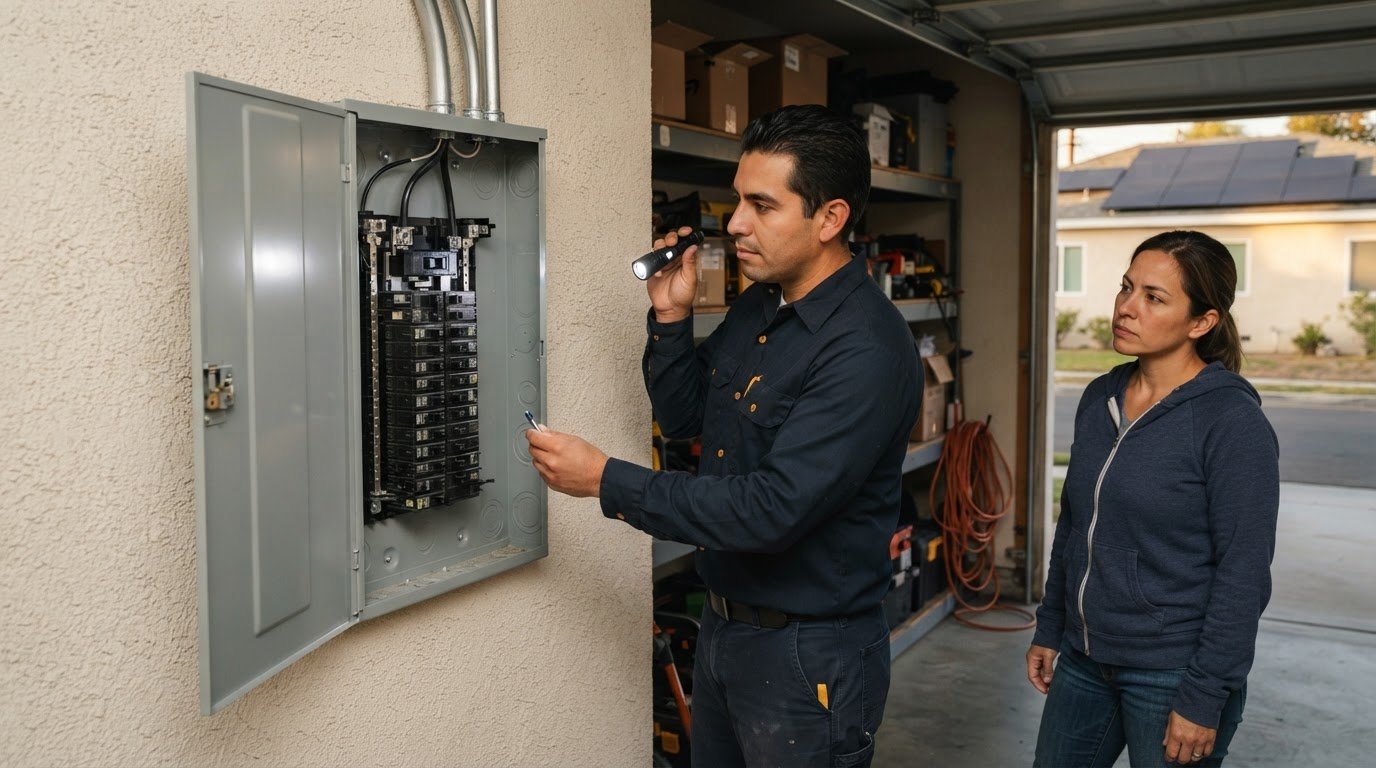
There isn’t one fixed cost to upgrade an electrical panel for solar in LA. The cost depends on the panel’s condition, its service capacity, and the electrical loads the home needs to support. Solar may work with the existing panel, or the project may require additional electrical work.
It’s reasonable to want a clear picture of panel work before weighing the full solar project. The panel is one part of the electrical scope, and the home’s existing setup helps determine what needs to change. Understanding those factors makes the project easier to assess.
This article explains how panel capacity, household loads, and the type of work involved shape an upgrade. It also shows how panel work fits into a solar installation, so you can understand what drives the scope before deciding how to proceed.
Key Takeaways
- Solar, battery storage, and EV charging all add electrical demand, so the panel’s capacity and available breaker space matter when planning the system.
- An older or unsuitable panel may need attention before solar can connect, while some homes can use their existing equipment.
- Panel work is one part of a solar project’s electrical scope. Understanding that distinction helps put upgrade needs in context with the overall installation.
- The federal solar tax credit for homeowners ended on December 31, 2025, according to the Internal Revenue Service.
Table of Contents
Main panel upgrade cost in California in 2026
In California, panel upgrade costs depend on amperage, service-line work, labor, and permitting. For a solar system, the home’s existing electrical setup determines which costs apply.
Amperage-Based Upgrade Costs
Amperage-based pricing reflects the panel’s electrical capacity and the work the home needs. These figures help explain why two homes planning similar solar systems may require different electrical work. Existing capacity, not solar alone, shapes the upgrade.
Typical Residential 200-Amp Upgrade Costs
These figures are market estimates, not project quotes. The required amperage and any additional service work affect the final scope.
Service-Line and Installation Charges
Service-line charges cover work beyond replacing the panel itself. The utility connection and site conditions determine whether this additional work is needed.
Local Labor, Permits, and Inspections
These steps add to the project scope alongside equipment and installation. A typical upgrade takes 4-8 hours of electrician labor, though coordinating service work can extend the schedule.
How long does a solar electrical panel upgrade take in Los Angeles? The panel work typically takes 4-8 hours of electrician labor, while utility coordination or permitting can add time. A panel upgrade may add 1-3 weeks to a solar permit timeline in some jurisdictions.
What factors affect the cost of a solar-related panel upgrade in Los Angeles? Amperage, panel condition, required service-line or transformer work, labor, permits, and inspections all shape the total. The federal solar tax credit for homeowners ended on December 31, 2025, according to the Internal Revenue Service. The Internal Revenue Service states that the federal Energy Efficient Home Improvement Credit (25C) covered 30% of a qualifying panelboard cost, up to $600, when paired with other qualifying work; it did not cover a standalone service upgrade. That credit is no longer available for property placed in service after December 31, 2025.
Are rebates, tax credits, or incentives available for electrical panel upgrades in California? The federal credits described above are no longer available for property placed in service after December 31, 2025. Incentive eligibility depends on the program and the project; the former 25C credit did not apply to a standalone service upgrade.
Load calculations for solar, batteries, and EV chargers
A load calculation compares the panel’s capacity with the equipment connected to it. For solar planning, breaker space and back-feed limits also affect how the system can connect.
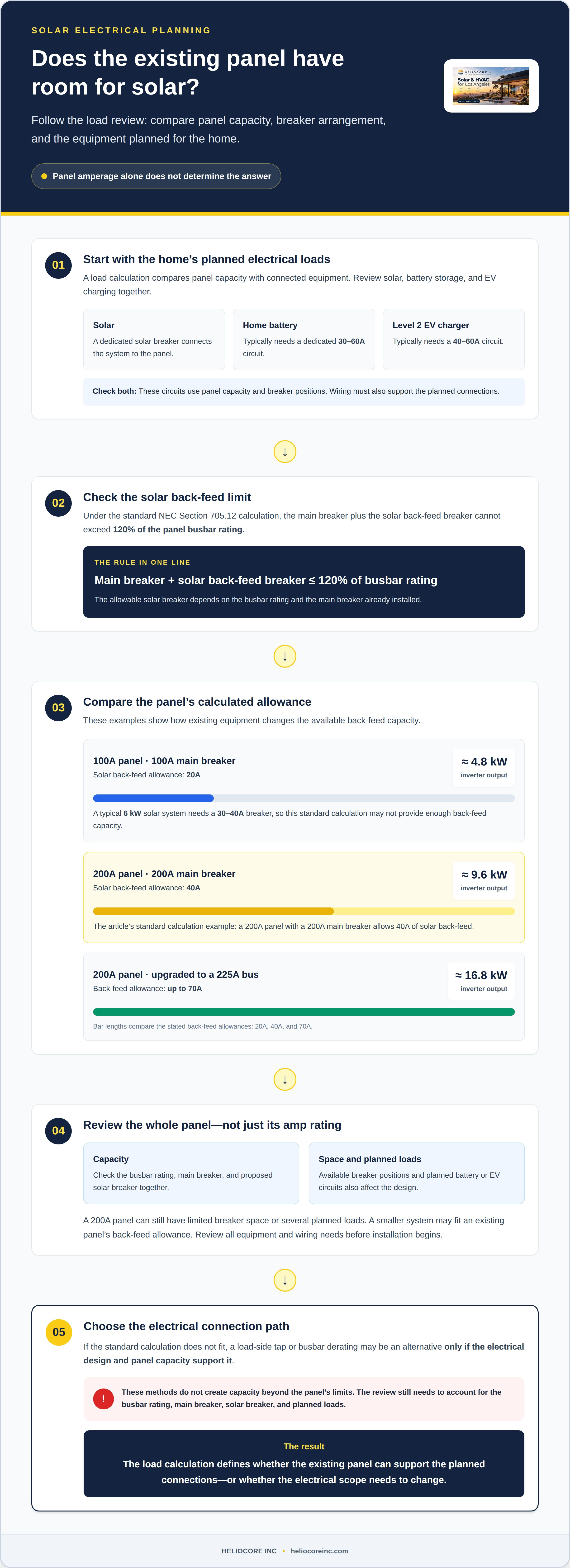
Under the standard NEC Section 705.12 calculation, the combined main breaker and solar back-feed breaker cannot exceed 120% of the panel busbar rating. On a 200-amp panel with a 200-amp main breaker, the solar back-feed allowance is 40 amps. That allowance supports roughly 9.6 kW of inverter output. The calculation helps determine whether a proposed solar system fits the existing panel.
A 100-amp panel with a 100-amp main breaker leaves 20 amps for solar back-feed, or roughly 4.8 kW of inverter output. A typical 6 kW solar system requires a 30-40 amp breaker, so that standard calculation may not provide enough back-feed capacity. The panel’s rating, breaker arrangement, and system inverter output all matter. A 200-amp panel upgraded to a 225-amp bus can allow up to 70 amps of back-feed, supporting about 16.8 kW.
Solar is only one part of the home’s electrical demand. A home battery typically needs a dedicated 30-60A circuit, while a Level 2 EV charger typically needs a 40-60A circuit. Those circuits occupy panel capacity and breaker positions. The load review considers the equipment planned for the home, its electrical requirements, and how the wiring can support those connections.
- Solar: A dedicated solar breaker connects the system to the home’s electrical panel.
- Battery: A dedicated circuit supports the battery connection.
- EV charging: A Level 2 charger adds another substantial circuit demand.
Can a load-side tap or busbar derating avoid a panel upgrade for solar? It may be an alternative if the electrical design and panel capacity support the connection. The calculation still needs to account for the busbar rating, main breaker, solar breaker, and planned loads. This method does not create capacity beyond the panel’s limits.
These calculations also clarify why a panel’s amperage alone doesn’t settle the question. A 200-amp panel may have limited breaker space or several planned loads, while a smaller system may fit within an existing panel’s back-feed allowance. Reviewing solar, battery, and EV needs together helps define the electrical scope before installation begins.
Los Angeles and California regional pricing
Regional pricing reflects the work needed at the home, not just the panel’s listed amperage. In Los Angeles, utility coordination and the electrical service setup can shape a project proposal.
Regional Pricing Differences
Regional pricing reflects how local labor, permitting, and service conditions affect an electrical project’s scope. For Los Angeles homeowners, the utility connection and existing equipment can change what the electrician needs to include. Replacing a panel with adequate service is different from a project that also requires service-line or transformer work. These details help explain why costs vary across California.
Comparing Electrician Quotes
Quotes are most useful to compare when each describes the same work. How do quotes for solar panel upgrades compare among Los Angeles electricians? Differences often reflect whether a proposal covers only the panel or also a breaker change, service-line work, permits, inspections, and utility coordination. Compare the scope and exclusions, not just the total.
A useful proposal clearly describes the electrical work. It should identify the panel work, the planned solar connection, and any changes to the home’s electrical service. For example, a proposal that includes utility service coordination covers a different scope from one limited to panel replacement. Clear itemization helps explain differences between estimates.
Location matters because it can change the work involved. In Los Angeles, the utility connection may require an electrician to coordinate service work alongside panel installation. A transformer change is a different project component from replacing a breaker, and each should appear in the proposed scope. This makes local comparisons more useful than relying on a statewide average alone.
Homeowners can compare proposals by reviewing a short set of details:
- Panel replacement or amperage change included.
- Solar breaker and related wiring included.
- Service-line or transformer work included or excluded.
- Permit, inspection, and utility coordination described.
These items also help distinguish a solar-related panel upgrade from the wider solar proposal. A breaker connection may be part of the electrical scope, while changes to the utility service add separate work. The proposal should make that distinction clear so panel work is not mistaken for the full solar installation.
A tax credit does not define the electrician’s scope or make proposals directly comparable. Treat incentives as a separate part of the project budget, then compare electrical work on matching terms. In Los Angeles, a clear comparison accounts for the panel, service connection, and utility coordination together.
Panel evaluation during solar planning
A solar panel review checks the existing equipment, available capacity, and planned household loads. This helps determine whether the project needs panel work or can use the current setup.
Evaluating the Existing Panel
Panel evaluation is a review of its condition, amperage, breaker space, and compatibility with the planned solar connection. In Southern California, an estimated 30-40% of assessed homes need a main panel upgrade before solar interconnection, while 60-70% already have a 200-amp panel with enough breaker space. The assessment helps identify the specific work instead of assuming every home needs the same change.
The 200-Amp Panel Question
A 200-amp panel is not a universal requirement for every California solar installation. The deciding factors are the proposed system, existing electrical loads, and available panel capacity. A 100- to 150-amp panel can often support full electrification with careful planning, while a panel above 150 amps usually needs less capacity-related work. The calculation, not the amperage label alone, guides the answer.
Age and equipment type also shape the evaluation. Panels older than 25-30 years may trigger an upgrade requirement during solar planning. Federal Pacific, Zinsco, and split-bus panels are commonly flagged during solar permitting. These details can affect the project even when the panel’s stated amperage appears sufficient. A panel can also be replaced without increasing its amperage when its condition is degraded or unsafe.
Does a solar installation require a 200-amp panel in California? No, not in every case. The solar connection and the home’s existing loads determine whether its current capacity works. A carefully planned 100- to 150-amp panel may support electrification, while a smaller solar system can sometimes fit a 100-amp panel under the applicable back-feed calculation.
Planning should account for future equipment as well as solar. Battery storage, heating equipment, or an EV charger adds electrical demand that may affect the capacity review. Considering these loads together avoids assessing a solar breaker in isolation and shows whether the panel can support the home’s planned upgrades.
Electrical suitability and financial payback are separate questions. A federal tax credit may affect a homeowner’s financial model, but it does not change panel capacity or breaker space. The evaluation should identify the electrical work the design requires; the payback calculation can then account for the complete project scope.
Solar electrical work as a share of installation cost
Solar electrical work is one part of the installation budget, not another name for a panel upgrade. Separating the two helps homeowners understand proposals and see which work affects the total project scope.
Electrical balance-of-system components account for 8-12% of total solar system cost. A separate estimate puts electrical work at 9.5% of the average solar installation cost. These figures describe related electrical components, not the cost of every panel replacement. The actual scope depends on the home’s existing equipment and the connections required for the solar system.
A panel upgrade is a specific part of that scope. Some homes can connect solar using existing electrical equipment, while others need panel work or changes to the electrical service. A quote should distinguish those tasks from the rest of the solar electrical work. This breakdown shows whether the proposal includes panel replacement, a service change, or only the connections needed for the system.
Permitting and installation details also shape the electrical portion of a solar project. A proposal might group wiring, breakers, and system connections together while listing panel work separately. This can make two quotes look different even when they cover the same solar capacity. Review the included work and exclusions before comparing totals.
- Solar connections: Identify the wiring and breaker work needed to connect the system.
- Panel work: Check whether replacement or capacity changes are included.
- Permitting: See how permit-related work appears in the project scope.
- Service work: Note whether electrical service changes are included or separate.
The practical takeaway is to compare like with like. If one quote includes a panel upgrade and another covers only solar electrical connections, they describe different projects. Request a clear breakdown that separates solar installation from additional panel or service work. This keeps the electrical costs visible without treating them as a fixed percentage for every home.
For a solar project with panel work, plan your solar installation around the home’s electrical scope and the system connections it needs.
HelioCore: High-Efficiency Solar Panels
HelioCore Inc helps Los Angeles homeowners plan solar panel installation around their home’s electrical setup. Reviewing panel capacity and planned household loads helps clarify how electrical work fits into the wider solar project.
HelioCore Inc installs high-efficiency solar panels and battery storage, with options suited to the home’s energy needs. If you’re considering a panel upgrade alongside solar, bring the electrical scope into the project discussion. HelioCore Inc manages the solar process, including permitting, installation, inspections, and utility coordination.
For a straightforward next step, contact HelioCore Inc to discuss your solar plans and how your existing panel fits into them.
Plan the Next Step Around Your Home
The cost to upgrade an electrical panel for solar in LA is just one part of planning home energy improvements. Bring your solar goals and expected electrical needs into one project conversation. This gives the panel review useful context, especially if you’re also considering battery storage or future HVAC updates.
HelioCore offers high-efficiency solar panels, battery storage, and HVAC solutions for homeowners. These options can be considered alongside solar panel installation, helping connect today’s electrical planning with the way you want your home to work over time. The right project scope starts with your home, your priorities, and the equipment you plan to use.
Ready to discuss how your panel fits into your solar plans? Contact HelioCore about your panel and take the next step with a clear view of your home’s needs.
Frequently Asked Questions
Is a panel upgrade worth it?
An upgrade may be worthwhile when the existing panel cannot support the planned solar connection or household electrical needs. For example, a homeowner planning solar alongside battery storage or an EV charger may benefit from addressing capacity as part of one coordinated project. If the panel already supports the intended system and loads, an upgrade may not add value. The decision depends on the panel’s condition and the home’s plans.
Does LADWP have different panel upgrade rules than SCE?
LADWP and SCE serve different utility territories, so utility coordination and interconnection processes can differ. That does not mean every home in one territory needs a 200-amp panel. The panel’s capacity, solar design, and utility requirements all factor into planning. In Los Angeles, the solar proposal should identify the utility service territory and show how the electrical work supports the planned connection.
Does a panel upgrade affect my solar permit timeline?
Yes. A panel upgrade can add 1-3 weeks to a solar permit timeline in some jurisdictions, particularly when service work needs coordination. That timing can affect homeowners in Los Angeles, Inglewood, South Los Angeles, Crenshaw, Leimert Park, Baldwin Hills, Westchester, Van Nuys, North Hollywood, Reseda, Northridge, Woodland Hills, and San Pedro. The project sequence matters: panel plans, permitting, utility work, and solar installation may need to align.
What is the difference between an upgrade and a replacement?
A replacement swaps an existing panel for another panel, while an upgrade increases electrical capacity or changes the service. A home might need replacement because its panel is degraded, even if its amperage stays the same. An upgrade may involve moving from 100-amp to 200-amp service to support planned electrical demand. The project description should clarify whether capacity changes or only equipment replacement is included.
What signs mean the panel should be looked at?
A panel that is older than 25-30 years may warrant evaluation during solar planning. Federal Pacific, Zinsco, and split-bus panels are also commonly flagged during solar permitting. Limited capacity can matter too, especially for a panel below 100 amps or a home adding several electrical loads. A degraded or unsafe panel may need replacement even when the homeowner is not increasing its amperage.
Will my HOA or city require anything extra for a panel upgrade?
A typical residential panel upgrade includes electrical permits and inspections, while an HOA may have separate review requirements under its governing documents. These processes are distinct: HOA approval does not replace city permitting or inspection. If the work changes the panel’s location or affects shared property, the project details may influence HOA review. The written scope should identify the permitting and inspection work included.
What is the average cost to upgrade an electrical panel for solar in Los Angeles?
Treat that as a market estimate, not a fixed quote: panel condition, service-line work, and utility or transformer coordination can change the scope. A proposal should separate panel work from solar installation so homeowners can see what drives the electrical portion of the project.
How much does a 100-amp to 200-amp electrical panel upgrade cost in LA?
Costs depend on whether the work also requires service-line changes, transformer coordination, permits, or additional installation work.