
HVAC
Electric Heat Pump vs Gas Furnace: Which Fits a California Home
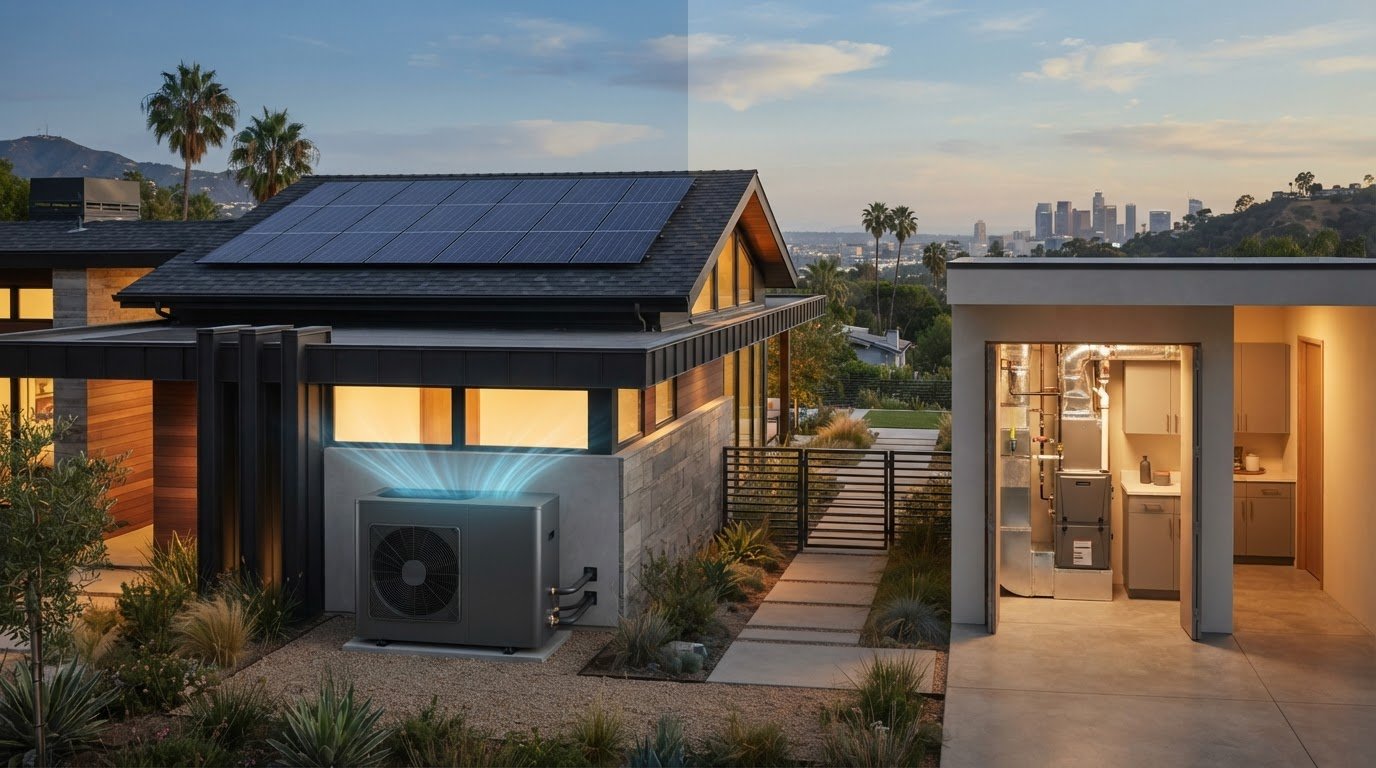
The system that heats your home can also cool it. When weighing an electric heat pump vs. a gas furnace in California, a heat pump can be a practical fit because it provides both heating and cooling. Southern California’s mild winters may allow a modern system to handle most or all home heating without a backup furnace. A gas furnace provides heat, while cooling typically requires a separate air conditioner.
Look beyond the heating equipment alone. Your existing air conditioner, winter comfort preferences, and how you want your home’s systems to work all affect the choice. Replacing only the furnace may make sense if the air conditioner still works. A heat pump may suit you if you want one system for both heating and cooling.
This guide explains how the systems work, how mild Southern California winters affect the comparison, and which home factors to weigh. A side-by-side table and decision guide help you assess which option fits your home.
Key Takeaways
- Compare the full heating-and-cooling setup, not just the heating equipment. An existing air conditioner can change which option makes practical sense.
- Use your home’s layout, comfort preferences, and current system condition to weigh a heat pump, furnace, or hybrid setup.
- Southern California’s mild winters can let a modern heat pump provide most or all of a home’s heating without a backup furnace.
- AFUE ratings show how much of a furnace’s fuel becomes heat. Learn what an 80% rating means and how higher-efficiency models compare.
- According to the California Energy Commission, the 2025 Energy Code expands heat pump use in newly constructed homes, encourages electric-readiness, and strengthens ventilation standards.
Table of Contents
WHAT IS A HEAT PUMP VS GAS FURNACE?
A gas furnace burns fuel and transfers heat through a heat exchanger. An electric furnace uses heating elements, while a heat pump moves heat between indoors and outdoors. If your home needs both heating and cooling, compare a heat pump with a furnace paired with a separate air conditioner. The difference affects the equipment, energy use, and number of systems involved.
For existing homes, California’s code context depends on whether the project is new construction or a replacement. The California Energy Commission says the 2025 Energy Code expands heat pump use in newly constructed residential buildings, encourages electric-readiness, strengthens ventilation standards, and more. That statement covers new construction, not a specific gas-furnace replacement requirement for an existing home.
Installation scope depends on the equipment and work your home needs. The comparison changes if your air conditioner still works, both heating and cooling systems need replacement, or the ducts need work. A heat pump combines heating and cooling; a furnace and air conditioner are separate systems. Electrical capacity can also affect the work required to install a heat pump.
Utility rates shape operating expenses. Southern California Edison residential rates increased roughly 83% over the decade preceding 2026 and 25% in the three years since 2022. Those rate changes make electricity costs relevant to a heat pump comparison, while natural gas rates influence furnace operating costs. Household use, thermostat settings, insulation, and weather also affect the final bill.
| Option | Equipment | Heating and cooling | Key cost considerations |
|---|---|---|---|
| Heat pump | One system | Provides both | Equipment, ducts, electrical capacity, and electricity use |
| Gas furnace with air conditioning | Separate furnace and air conditioner | Furnace heats; air conditioner cools | Equipment condition, ducts, natural gas, and electricity use |
A heat pump moves heat instead of generating warmth by burning fuel. It can deliver more heating energy than the electrical energy it consumes, though household operating costs depend on local rates and usage. A gas furnace provides quick warmth by sending very hot air through the home. Consider which comfort you prefer and compare the complete heating and cooling setup.
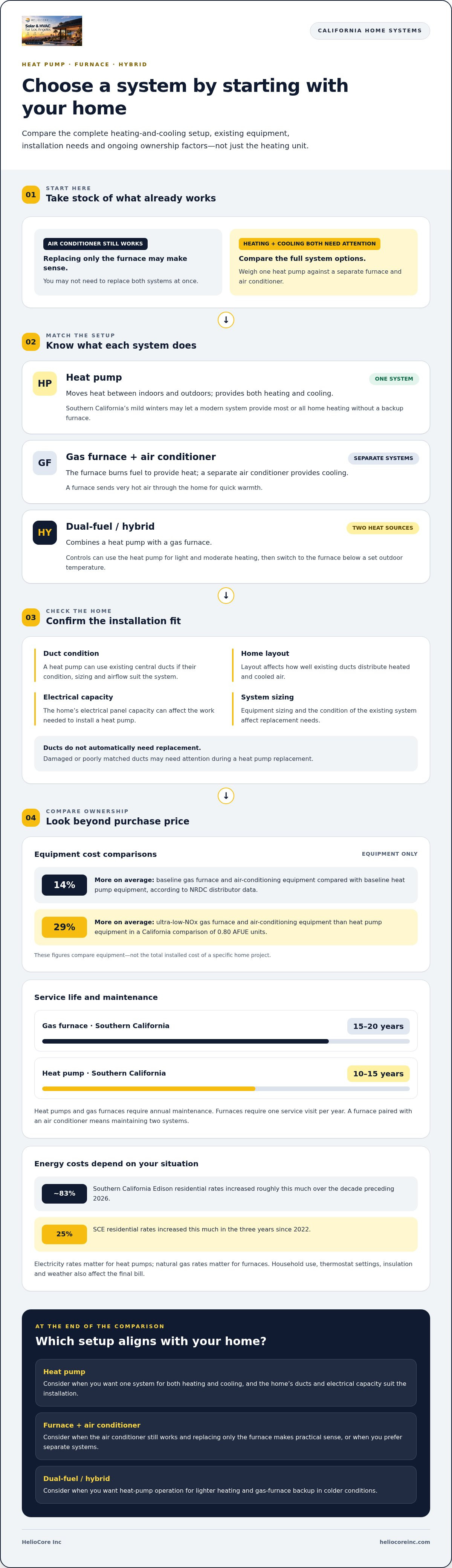
Start with your home’s existing equipment. If the air conditioner still works, replacing only the furnace may avoid replacing both systems at once. If both heating and cooling equipment need replacement, compare a heat pump with separate furnace and air-conditioning systems. Duct condition, system sizing, and electrical panel capacity also affect installation needs.
Heat pump, furnace, and hybrid system suitability
For a California home, the choice depends on existing equipment, ductwork, maintenance needs, and how you want the system to respond to outdoor conditions. Compare each setup as a whole, including its energy source and expected service life.
System Suitability and Dual-Fuel Options
A heat pump handles heating and cooling in one system, while a natural gas furnace provides heat and needs separate air conditioning. A dual-fuel, or hybrid, system combines a heat pump with a gas furnace. Its controls can use the heat pump for light and moderate heating, then switch to the furnace below a set outdoor temperature. This gives homeowners another option when weighing electric operation against gas backup.
Existing Ductwork Compatibility
Yes, a heat pump can replace a gas furnace without replacing existing ductwork if the ducts suit the new system. Duct condition, sizing, airflow, and home layout determine whether the existing network can distribute heated and cooled air effectively. A heat pump can use central ducts, but damaged or poorly matched ducts may need attention during replacement.
Equipment purchase price is only one part of the comparison. NRDC distributor data found baseline gas furnace and air-conditioning equipment cost 14% more on average than baseline heat pump equipment. In a California comparison of 0.80 AFUE units, ultra-low-NOx gas furnace and air-conditioning equipment averaged 29% more than heat pump equipment. These figures compare equipment, not the total installed cost of a particular home’s project.
Maintenance and lifespan also differ. Heat pumps and gas furnaces require annual maintenance to operate efficiently, and furnaces require one service visit per year. In Southern California, furnaces typically last 15 to 20 years; heat pumps typically last 10 to 15 years. A furnace paired with an air conditioner also means maintaining two systems, each with separate wear points and controls.
Fuel use can shape your priorities. A gas furnace burns natural gas for heat, while a heat pump uses electricity to move heat. This affects where energy is consumed and whether your heating depends on gas service. A hybrid system keeps both options available, with controls selecting the heat pump or furnace based on current conditions.
Use your home’s existing setup as a starting point. If the ducts are in good condition and both heating and cooling equipment need replacement, a heat pump may simplify the system. If gas backup matters to you, dual-fuel equipment offers that option. Compare annual maintenance and typical system lifespan alongside equipment costs.
How mild Southern California winters affect heating choices
Southern California’s mild winter weather can make a heat pump a practical heating choice. A modern system may provide most or all home heating without a backup furnace. The decision also involves cooling, household comfort, fuel use, and how each system delivers warmth.
A heat pump moves heat instead of creating it by burning fuel. It provides both heating and air conditioning and can deliver more heating energy than the electrical energy it consumes. In a mild winter, one system can serve both seasons. A gas furnace burns natural gas for heat, while a separate air conditioner cools the home.
The systems can feel different during a heating cycle. A furnace provides quick warmth by sending very hot air through the home. A heat pump can heat without burning gas, and its performance suits Southern California’s relatively mild conditions. The right fit depends on your home’s layout, insulation, ductwork, and preferred indoor comfort.
The fuel mix in U.S. homes reflects both options. The NRDC comparison found that 43.9 percent of U.S. homes used electricity for space heating, while 42.8 percent used gas. Nearly 60 percent of newly constructed U.S. homes were being built with electric space heating at the time of the NRDC memo on November 12, 2020. These figures describe U.S. homes, not California alone.
New construction is also addressed by California’s energy code. According to the California Energy Commission, the 2025 Energy Code expands the use of heat pumps in newly constructed residential buildings, encourages electric-readiness, strengthens ventilation standards, and more. That gives new-home planning a different context from replacing heating equipment in an existing home.
For emissions, the NRDC stated that a heat pump installed in California at the time reduced air and climate pollution from heating by half. That comparison reflects the heating-related pollution and conditions discussed in the NRDC memo. It does not promise the same result for every home or electricity source.
For incentives, the federal 25C Energy Efficient Home Improvement Credit offered up to $2,000 for qualifying heat pump installations, but expired on December 31, 2025, according to the Internal Revenue Service. That expired credit shouldn’t be treated as a current incentive when planning a replacement.
For a California home, weigh winter comfort alongside the system’s role throughout the rest of the year. A heat pump provides heating and cooling; a gas furnace supplies heat and works with separate air conditioning. Mild winter conditions can suit heat pump heating, while home layout and preferred indoor warmth help determine which setup fits.
Furnace efficiency and AFUE ratings
AFUE, or Annual Fuel Utilization Efficiency, measures how much of a furnace’s fuel becomes heat over a heating season. An 80% AFUE furnace converts 80% of its fuel energy into useful heat; the remaining 20% is lost during operation. The rating helps compare gas furnaces, but it doesn’t measure electricity use or describe a heat pump’s performance.
Gas furnaces on the market reach approximately 97% to 98% AFUE at most. At 97% AFUE, about 97% of fuel energy becomes useful heat, compared with 80% for a basic furnace. That difference describes fuel conversion, not a household’s total energy bill. Rates, heating demand, equipment condition, and thermostat settings all affect operating costs.
AFUE isn’t the right measure for a heat pump. It moves heat using electricity rather than burning fuel and can deliver more heating energy than the electrical energy it consumes. Compare the different energy inputs: AFUE measures furnace fuel use, while a heat pump comparison considers electricity consumption and delivered heat.
Climate and weather help determine how much an AFUE rating matters in everyday use. In a Southern California home with modest heating demand, the furnace may run less often than it would in a colder climate. That can make a higher AFUE rating less influential when considering winter heating alone. Homes with frequent heating cycles may place greater emphasis on efficient fuel use.
Use these steps to read a furnace rating:
- Start with the percentage. An 80% AFUE rating means 80% of fuel energy becomes useful heat.
- Compare furnace ratings consistently. A 97% AFUE unit converts a larger share of its fuel into heat than an 80% model.
- Consider the whole system. Duct condition, system sizing, household heating patterns, and local fuel costs affect real-world performance.
Installation scope doesn’t depend on AFUE alone. Equipment selection, the existing heating setup, ductwork, and required project work all affect the overall project. A higher-rated furnace can reduce fuel losses, but its rating alone doesn’t establish whether it’s the better fit for a particular home.
Maintenance also supports the rated performance. A neglected furnace may not operate as intended, even if its label shows a high AFUE. Keep the filter clean, maintain airflow, and schedule annual system maintenance. For example, comparing an 80% furnace with a 97% model means little if either system is poorly sized or struggling to move air through the home.
Use AFUE to compare gas furnaces, then consider your home’s climate, heating needs, and energy source. The rating gives a clear measure of furnace fuel efficiency, but it cannot provide a direct heat-pump-versus-furnace comparison on its own.
Heat pump heating and cooling operation
A heat pump uses one system for heating and cooling. Unlike a gas furnace, it moves heat rather than generating warmth by burning fuel. This explains how one heat pump can meet a California home’s seasonal comfort needs.
In heating mode, refrigerant carries heat from outdoor air into the home. The compressor circulates the refrigerant, and indoor coils release the captured heat into the air. The system can deliver more heating energy than the electrical energy it consumes. A gas furnace, by contrast, burns natural gas and transfers heat through a heat exchanger.
Cooling uses the same equipment in reverse. The heat pump draws heat from indoor air and moves it outdoors, lowering the temperature inside. Its reversing valve changes the refrigerant’s direction so the indoor and outdoor coils switch roles. A furnace cannot cool the home, so it needs separate air-conditioning equipment.
Using one system for both seasons can simplify operation. For example, you can select heating on a cool Southern California morning, then switch to cooling as indoor conditions change. The heat pump changes modes without requiring you to switch between separate heating and cooling systems. The thermostat controls the mode and temperature.
Comfort also depends on how heat reaches each room. A ducted heat pump sends conditioned air through the home’s ducts, much like a central furnace and air conditioner. A ductless system delivers air directly to indoor units. In either case, sizing, airflow, duct condition, and room layout affect how evenly the system heats or cools the home.
Think through these operating differences before comparing equipment:
- Heating: A heat pump transfers outdoor heat indoors; a gas furnace burns fuel and uses a heat exchanger.
- Cooling: A heat pump reverses direction to move indoor heat outdoors; a furnace needs separate air conditioning.
- Energy use: A heat pump uses electricity to move heat, while a gas furnace uses natural gas for heat.
If your home needs both a furnace and air conditioner replaced, compare one heat pump system with two separate systems. If the air conditioner still works, that changes the replacement decision. The practical question is whether one system for heating and cooling suits your existing equipment, ducts, and comfort preferences.
For help planning heating equipment around your home’s comfort needs, explore your heating options.
HelioCore: High-Efficiency Solar Panels
HelioCore helps Los Angeles homeowners consider heating choices alongside household electricity needs. If you’re comparing a heat pump with a gas furnace, its high-efficiency solar panels and battery storage may also be relevant to your home energy plans. HelioCore offers air conditioning services as well, so you can discuss heating, cooling, and electricity needs together.
Start with the decision your home needs today. If your heating or cooling equipment needs attention, consider how a replacement fits your comfort needs and existing setup. If you’re also exploring solar or battery storage, include those options in your household energy plans. Prioritize the changes that matter now while keeping future improvements in view.
Contact HelioCore to discuss your home’s heating, cooling, and energy priorities.
Make Your Next Home Upgrade a Thoughtful One
Choosing an electric heat pump vs. a gas furnace in California is also an opportunity to think beyond one piece of equipment. Consider how your heating choice fits your home energy plans, comfort priorities, and potential future upgrades. A useful next step starts with your household’s needs, not a one-size-fits-all recommendation.
HelioCore offers HVAC, high-efficiency solar panels, and battery storage. Considering these systems together can help you weigh how heating, electricity, and backup power fit into your home plans. Focus on the changes that matter now while keeping future improvements in view.
When you’re ready to discuss how your home’s needs shape the options, contact HelioCore about your options. A clear conversation can help you move forward with confidence and choose a direction that feels right for your home.
Frequently Asked Questions
How do electric heat pumps and gas furnaces compare in efficiency and heating performance?
Heat pumps use electricity to move heat, while gas furnaces burn fuel and transfer heat through a heat exchanger. A furnace’s AFUE rating measures fuel conversion: an 80% model turns 80% of its fuel energy into useful heat. Heat pumps don’t use AFUE, so compare electricity use and heating output separately. Furnaces deliver quick warmth; heat pumps also provide cooling.
What is the average cost to install a heat pump versus a gas furnace in California?
Installation scope depends on the equipment and work your home needs. System sizing, ductwork, electrical capacity, and whether air conditioning is also being replaced all affect the project. For example, replacing a furnace while keeping a working air conditioner differs from replacing both systems with one heat pump. These factors provide a more useful basis for comparing local estimates than a statewide average.
How do annual operating costs compare for heat pumps and gas furnaces in California?
Operating costs depend on household energy use and electricity and gas rates. A heat pump uses electricity for heating and cooling; a gas furnace uses gas for heat, while its paired air conditioner also uses electricity. In Los Angeles, compare seasonal utility bills and identify heating use separately where possible. This makes the electric heat pump vs. gas furnace decision in California more specific to your household.
How do California electricity and natural gas rates affect heating costs?
Electricity rates affect the cost of running a heat pump, while natural gas rates affect furnace heating expenses. For a meaningful comparison, consider both rate structures and how much energy each system uses. If your household also runs central air conditioning, include that electricity use when reviewing annual bills. A California comparison should account for both fuels, not just the heating equipment.
How well do heat pumps work in California climate zones and during cold weather?
In Southern California’s mild winters, a modern heat pump may provide most or all home heating without a backup furnace. As outdoor temperatures fall, equipment sizing, insulation, and airflow influence indoor comfort. If you want gas backup, a hybrid setup can switch to the furnace below a selected outdoor temperature. Your home’s winter conditions and comfort preferences guide the choice.
What maintenance, lifespan, and repair costs should California homeowners expect for each system?
Both systems need annual maintenance, and filter replacement generally falls every 30 to 90 days, depending on filter type and household conditions. In Southern California, furnaces typically last 15 to 20 years; heat pumps typically last 10 to 15 years. Repair expenses reflect the failed part, system condition, and labor involved. Maintenance history and equipment age help homeowners plan for service needs over time.
Are dual-fuel heat pump and gas furnace systems a good option in California?
A dual-fuel system combines a heat pump with a gas furnace. It uses the heat pump for lighter heating and switches to the furnace below a set outdoor temperature. This can suit homeowners who want electric heat pump operation alongside gas backup. It also means maintaining both pieces of heating equipment.
What are the California building code requirements for replacing a gas furnace with a heat pump?
The 2025 Energy Code expands heat pump use in newly constructed homes, but the article gives no specific requirement for replacing a gas furnace in an existing home. The California Air Resources Board is advancing standards that could require heat pump replacements when gas furnaces reach end of life by 2030.