
HVAC
Heat Pump vs Air Conditioner in California: Compare Costs

In California, choosing a heat pump vs. air conditioner comes down to whether you need cooling alone or heating and cooling from one system. Both cool your home, but a heat pump can also provide heat; a standard air conditioner needs separate heating equipment. If your AC needs replacing, a heat pump may address both needs in one project.
Weigh installation scope against the energy costs you may face over time. A heat pump can cost more to install than an AC-only system, while its heating efficiency may reduce operating costs compared with electric resistance heating. The right fit depends on your existing heating system, ductwork, electrical setup, and household energy use.
This comparison covers how the systems differ, what affects installation and operating costs, and when replacing an AC with a heat pump may make sense. Use the decision guide to weigh comfort, budget, and your home’s existing equipment.
Key Takeaways
- Compare cooling performance separately from heating needs: an air conditioner cools, while a heat pump can provide both heating and cooling.
- Weigh the full cost picture, including installation, heating equipment you already own, and likely energy use.
- Match the system to your local climate and home layout, including the condition of your ducts and electrical setup.
- If your AC needs replacement, consider whether switching to a heat pump now could avoid replacing separate heating equipment later.
- The Internal Revenue Service says the federal Section 25C Energy Efficient Home Improvement Credit, which offered up to $2,000 for qualifying heat pump installations, expired after 2025.
Table of Contents
Is a heat pump better than an AC?
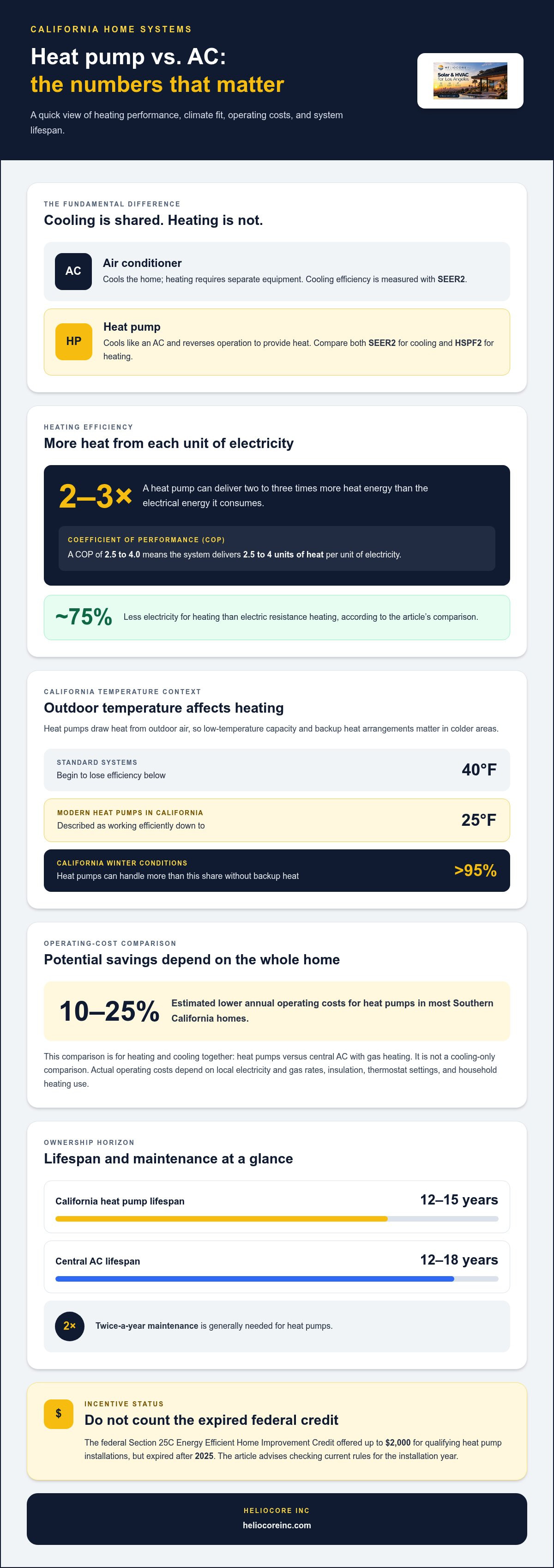
For cooling, heat pumps and air conditioners work in much the same way: both use refrigerant to move heat from indoors to outside. In typical operation, their cooling efficiency and energy costs are not significantly different. The key distinction is heating. A standard air conditioner cannot heat your home, while a heat pump reverses direction to bring outdoor heat inside.
That heating function changes the efficiency comparison. A heat pump can deliver two to three times more heat energy than the electrical energy it consumes. Its coefficient of performance, or COP, describes this relationship: a COP of 2.5 to 4.0 means the system delivers 2.5 to 4 units of heat per unit of electricity. Electric resistance heating converts electricity directly to heat, so heat pumps can use about 75% less electricity for heating than that method.
Outdoor temperature affects heating performance because a heat pump draws heat from outside air. Standard systems begin to lose efficiency below 40 degrees, while modern heat pumps in California are described as working efficiently down to 25°F. Heat pumps can handle more than 95% of California winter conditions without backup heat. For homes in colder areas, the system’s low-temperature capacity and any backup heat arrangement matter alongside its headline efficiency.
Use the ratings for the mode you care about. SEER2 compares cooling efficiency, and a higher rating means more efficient cooling. HSPF2 measures a heat pump’s heating efficiency, with higher ratings indicating better performance. These ratings help compare equipment, but they don’t replace a look at the home’s heating needs, climate, and existing system.
Heating choices also affect a home’s carbon footprint. The U.S. Environmental Protection Agency’s electricity-emissions calculation is: 1,405.3 lbs CO2/MWh × 1 metric ton/2,204.6 lbs × 1/(1-0.051) MWh delivered/MWh generated × 1 MWh/1,000 kWh = 6.72 × 10⁻⁴ metric tons CO2/kWh. This factor describes emissions per kilowatt-hour of electricity; it is not an estimate of a particular home’s total emissions.
| Option | Cooling | Heating | Efficiency measure |
|---|---|---|---|
| Air conditioner | Yes | Requires separate heat source | SEER2 |
| Heat pump | Yes | Reverses operation to heat | SEER2 and HSPF2 |
Choose based on whether you need cooling alone or one system for heating and cooling, then compare the equipment’s SEER2 and HSPF2 ratings for your home.
Heat pump costs and financial incentives
Compare the total installed cost with the equipment your home already has, potential utility-bill savings, and available incentives. Heat pumps generally need twice-a-year maintenance; California heat pumps typically last 12-15 years, while central AC systems last 12-18 years. Repair costs depend on the failed component, system access, and whether work affects cooling alone or the combined heating-and-cooling system.
Upfront Costs and Utility-Bill Savings
A heat pump provides heating and cooling; an air conditioner cools and relies on a separate heating system. The comparison changes if your furnace also needs replacement. A heat pump may cost more upfront than an AC-only replacement, but lower heating energy use may offset some of the difference over time. Compare the complete system plan, not just the cooling equipment.
Equipment and Installation Costs
Installation costs depend on more than equipment. Ductwork, electrical setup, system capacity, and any required modifications all affect the work involved. A ducted heat pump may use existing ducts if they suit the system; unsuitable ducts can require additional work. An AC replacement also involves installation, while retaining a separate furnace means maintaining and repairing two systems.
Annual Operating Costs
Operating costs depend on local electricity and gas rates, home insulation, thermostat settings, and how much heating the household uses. In most Southern California homes, heat pumps are estimated to have annual operating costs 10-25% lower than central AC with gas heating. That comparison describes heating and cooling together, not cooling alone. If a home uses its AC often but needs little heat, the savings picture may differ.
Incentives can affect the upfront calculation, so check the current rules for the installation year. According to the Internal Revenue Service, the federal Section 25C Energy Efficient Home Improvement Credit, which offered up to $2,000 for qualifying heat pump installations, expired after 2025. A past credit should not be counted toward a new installation’s expected cost.
For a practical comparison, list what each option would replace: the AC, furnace, electrical components, ductwork, and any backup heat. Then consider the installation work alongside expected energy use and future maintenance. Replacing only the AC may be simpler now; replacing two aging systems with one heat pump changes both the project scope and the long-term comparison.
Coastal, valley, and high-desert climate suitability
California’s coastal, valley, and high-desert homes have different heating and cooling needs. Consider how often your home needs heat compared with cooling, then account for your existing furnace and the outdoor temperatures in your area.
Air Conditioner Climate Suitability
An air conditioner may suit a home where cooling is the main replacement need and the separate heating system still works well. In coastal neighborhoods such as Westchester and San Pedro, a homeowner might prioritize cooling and keep an existing gas furnace for winter. In inland Los Angeles, an AC-only replacement may also be practical if the heating equipment remains reliable.
Assess both systems before deciding. If the furnace is in good condition and you do not plan to replace it, an AC can address cooling without changing the heating setup. If the furnace is aging too, replacing only the AC leaves another equipment decision ahead. Consider the condition of both systems, winter comfort, and whether one system should serve both seasons.
Heat-Pump Suitability by Climate
Heat pumps work across California’s coastal, valley, and high-desert climates because they provide both heating and cooling. Modern heat pumps in California are described as working efficiently down to 25°F, and they can handle more than 95% of California winter conditions without backup heat. For a home in a colder inland area, compare the unit’s heating capacity with local winter conditions.
Along the coast, including San Pedro and Westchester, consider whether combining heating and cooling in one system fits your plans. In valley areas such as North Hollywood and Reseda, weigh summer cooling needs alongside winter heating. The best comparison accounts for your home’s layout, insulation, electrical setup, and existing equipment, not just its regional climate.
In high-desert conditions, pay particular attention to winter performance. Compare the heat pump’s heating capacity with the outdoor temperatures your home experiences, and decide whether backup heat belongs in the plan. In any climate, check that the equipment can meet the home’s heating and cooling loads. An undersized unit may not maintain comfort; an oversized one may waste energy.
Ducted heat pump heating and cooling
A ducted heat pump uses central ductwork to deliver heating and cooling throughout multiple rooms. It moves heat using refrigerant and reverses operation in heating mode to bring outdoor heat inside. It can replace the functions of a separate central AC and furnace if the ducts and system capacity suit the home.
Existing ducts are a useful starting point, not a guaranteed fit. An HVAC professional can assess ductwork, electrical wiring, and temperature controls before installation. Leaks, poor airflow, and uneven room temperatures can affect comfort, so the assessment should consider how air reaches each room. Equipment capacity must also match the home’s heating and cooling needs.
Correct sizing matters in both seasons. An undersized heat pump may struggle to heat or cool the home comfortably; an oversized unit may waste energy. For example, equipment sized for a warm afternoon still needs to meet the home’s heating demand on a cold night. Home size alone does not determine the right balance: duct condition and temperature controls matter too.
In colder conditions, a heat pump can be paired with a furnace. The heat pump serves as the primary heat source, and the furnace can switch on when appropriate. This gives the home another source of heat when conditions call for it. The choice depends on the home’s heating needs, existing furnace, and system settings.
Before comparing models, map out the installation using these practical checks:
- Inspect the ducts for leaks, damage, and airflow problems.
- Review electrical wiring and existing temperature controls.
- Compare the home’s heating needs with its cooling needs.
- Decide whether an existing furnace will remain as backup heat.
These checks clarify the project scope before you choose equipment. A home with usable ducts and suitable electrical service may be able to use its existing systems. Duct problems can mean extra work to distribute air evenly. The selected model must handle both heating and cooling without being oversized for either.
An affordable option is not simply the one with the lowest equipment price. Consider the full installation requirements, the condition of the central ducts, and whether a furnace will remain part of the system. A heat pump’s advantage is that one system can provide both functions. If your furnace works well and heating needs are limited, keeping separate equipment may better suit your priorities.
Replacing an air conditioner with a heat pump
When an AC reaches the end of its useful life, replacing it with a heat pump can address both cooling and heating. This decision matters most if the furnace is aging too, because replacing one system now may affect your next upgrade.
California’s building-code direction is not a blanket requirement to replace an existing air conditioner. The California Energy Commission was on track to adopt a voluntary building code encouraging existing buildings to replace air conditioners with heat pumps. Voluntary encouragement is not the same as a mandatory replacement rule.
Look beyond the failed AC. A heat pump provides heating and cooling, while an AC replacement typically leaves the furnace in place. If the furnace works well and your home needs little heat, replacing only the AC may fit your priorities. If the furnace is nearing replacement too, compare the cost and timing of both systems with a single heat-pump upgrade.
Consider a Los Angeles homeowner replacing a failed AC while the gas furnace still works. If the furnace needs replacement later, that could mean two separate equipment projects instead of planning for both functions at once. Replacing the AC with a heat pump from the outset may avoid that sequence, though the overall cost depends on the home and installation scope.
Before choosing equipment, assess the parts of your home that determine whether the change is practical:
- Review the ductwork for leaks, airflow problems, and condition.
- Assess electrical wiring and the existing temperature-control system.
- Compare heating needs with cooling needs across the home.
- Determine whether the furnace will be removed or retained as backup heat.
These checks can reveal work beyond replacing outdoor equipment. An undersized heat pump may not heat or cool comfortably; an oversized system may waste energy. Duct condition, electrical capacity, and home layout all shape the installation plan. An HVAC professional can assess these factors before you finalize the equipment choice.
The practical takeaway: consider a heat pump when AC replacement coincides with a furnace nearing replacement, or when one system for both seasons better fits your plans. If your air conditioner needs replacement, explore heat pump installation as a way to plan for heating and cooling together.
HelioCore: High-Efficiency Solar Panels
HelioCore helps Los Angeles homeowners plan HVAC and energy upgrades together. If you are changing your air conditioning or heating, HelioCore’s HVAC services can address home comfort. High-efficiency solar panels and battery storage may also fit into a broader household energy plan.
The next step depends on your home’s equipment and priorities. You may focus on heating and cooling now or consider how solar panels and battery storage could fit future plans. Defining the project scope helps connect those decisions.
Contact HelioCore Inc to discuss options for your home.
Make Your Next Home Upgrade Count
Choosing between a heat pump and an air conditioner in California is also a chance to consider how your home will use energy over time. Start by deciding what equipment to replace, what to keep, and whether you are planning other home energy improvements. A clear scope makes it easier to compare options and keep the project aligned with your priorities.
HelioCore offers HVAC, high-efficiency solar panels, and battery storage. These can be relevant parts of a broader home energy plan, whether you’re addressing comfort now or considering future upgrades. Start with the needs of your home, then build a plan around them.
Contact HelioCore to discuss your options. A thoughtful next step can help you move toward a more comfortable, well-planned home.
Frequently Asked Questions
Do heat pumps qualify for California rebates?
Yes, heat pumps in California can qualify for rebates, with reported amounts ranging from $1,000 to $1,900. Qualifying low- and moderate-income households may receive up to $3,300 through HEEHRA when the program is active. Eligibility depends on program rules, household qualifications, and the equipment installed. Treat rebates as a possible part of the project budget, separate from the system’s energy use after installation.
When should I choose central AC + gas furnace instead?
Central AC with a gas furnace may suit a home where the furnace is in good condition and cooling is the main replacement need. Keeping the furnace avoids replacing working heating equipment as part of an AC project. This can also suit households that prefer gas heating or do not plan to change their heating system. Compare the furnace’s condition and expected use with the scope of replacing both systems.
How does a heat pump compare with an air conditioner in California?
A heat pump provides heating and cooling; a standard air conditioner cools and relies on separate heating equipment. If you are replacing only the AC, ask whether the current furnace will remain in service. A sound furnace and a cooling-focused project may support an AC replacement, while aging heating equipment makes a combined-system plan worth comparing.
What are the upfront costs of heat pumps versus central air conditioners in California?
Upfront cost depends on the system and the work needed in your home. Equipment capacity, duct condition, electrical wiring, and whether the furnace stays or is replaced all affect installation scope. Exact pricing depends on the home and is provided after a quote request. Compare complete project plans, including duct or electrical changes, rather than equipment alone.
How much can California homeowners save on heating and cooling with a heat pump?
Energy costs depend on the system being replaced, household use, local electricity and gas rates, insulation, and thermostat settings. A heat pump may offer greater savings potential when replacing less-efficient electric resistance heating. If it replaces central AC while a gas furnace remains, the outcome depends on household heating use and the relative cost of electricity and gas.
How do heat pump and air conditioner efficiency ratings compare (SEER2, EER2, and HSPF2)?
SEER2 compares seasonal cooling efficiency, while EER2 compares cooling efficiency under specified conditions. Higher ratings indicate more efficient cooling. HSPF2 applies to a heat pump’s heating performance, with higher ratings indicating greater heating efficiency. Compare SEER2 or EER2 for cooling equipment, then use HSPF2 to evaluate a heat pump’s heating mode. Ratings describe equipment performance, not a household’s exact utility bill.
Are heat pumps effective in California climate zones and during cold weather?
Heat pumps can serve homes in California’s coastal, valley, and high-desert climates, but heating needs vary by location and home. In colder areas, compare heating capacity with winter conditions and consider how backup heat fits the setup. Duct condition, electrical service, and indoor comfort needs also shape performance. A system designed only for cooling may not meet year-round needs.
What California rebates, tax credits, and incentives are available for heat pumps?
California heat pump rebates may be available, and HEEHRA offers up to $3,300 for qualifying low- and moderate-income households when the program is active. The federal Section 25C Energy Efficient Home Improvement Credit, which offered up to $2,000 for qualifying heat pump installations, expired after 2025, according to the Internal Revenue Service. Rebates and tax credits are separate programs, each with its own eligibility rules.