
Solar
Home Battery Backup System Cost in Los Angeles: What to Pay
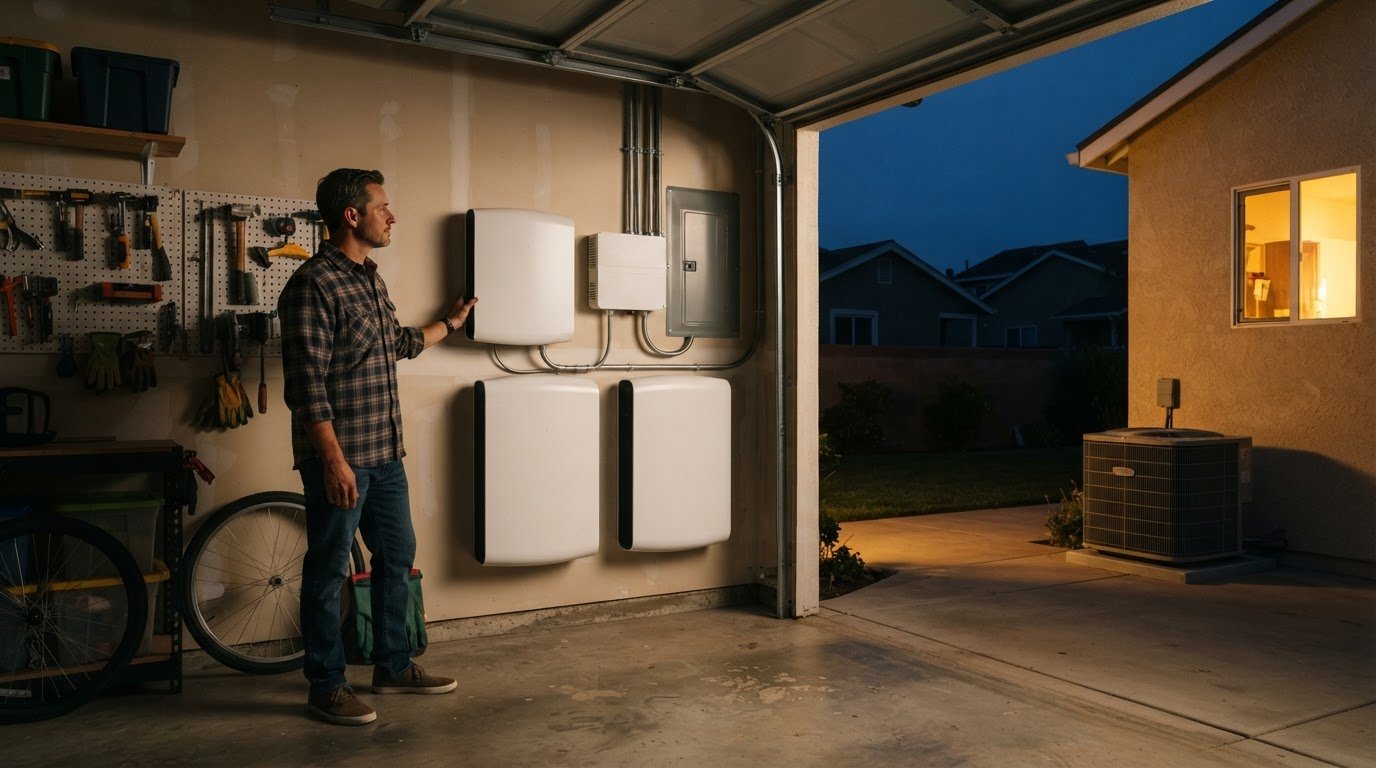
A home battery’s cost in Los Angeles depends on how much of your home you want to power during an outage. There is no single figure for home battery backup system cost in Los Angeles: battery capacity, installation requirements, and the appliances you want to run all affect the project.
It’s reasonable to want a clear budget and confidence that a system will cover the right essentials. This guide explains how battery size affects outage runtime, what can change installation costs, and which incentives may apply in Los Angeles. You’ll also see how partial-home and whole-home backup differ, so you can understand the trade-offs before choosing a setup.
Key Takeaways
- Battery capacity is only part of outage planning. The appliances you prioritize and their electricity use shape how long backup lasts.
- Installation needs such as electrical panel work and longer conduit runs can affect the final project cost.
- For LADWP homes, a critical-loads design may fit one battery, while whole-home backup that includes air conditioning may call for two.
- The federal Residential Clean Energy Credit under Section 25D does not apply to homeowner battery systems installed after December 31, 2025, according to the Internal Revenue Service.
- California SGIP eligibility depends on factors such as household income or enrollment in qualifying assistance programs.
Table of Contents
What is a home battery backup system?
A home battery backup system stores electricity for use when utility power is unavailable. It can support selected circuits or more of the house, based on capacity, inverter output, and system design. A Los Angeles installation may connect with existing solar panels or operate alongside the utility. The home battery backup system costs in Los Angeles County vary with the equipment and electrical work included.
These are market estimates, not a project quote. To assess home battery backup system cost in Los Angeles, compare capacity, installation scope, and backup coverage rather than relying on a single average.
Battery installers in Los Angeles County assess the electrical panel, proposed battery location, and circuits selected for backup. A refrigerator, lights, and internet equipment create a different load profile from air conditioning. The design accounts for those loads before the equipment is connected and tested. If solar panels are already installed, the design must also account for how storage connects to the existing system.
An electrical panel upgrade may be needed if the existing panel cannot support the planned configuration. Permits and inspections add to the project work, while long conduit runs or trenching can change the installation scope. A clear proposal separates equipment, electrical work, permitting, and panel changes, making it easier to understand why homes with similar batteries can receive different estimates.
Professional installation includes system design, wiring, connection, and commissioning. Permitting and inspection provide local review of the installation. Equipment certification and installer credentials refer to different things, so homeowners should understand what each term describes. A typical California battery installation takes one to two days on site, while planning and approvals take place outside that work window.
How do home batteries compare with standby generators in Los Angeles? A battery stores electricity and may work with solar panels, while a standby generator produces power using fuel. Equipment and site requirements differ, so compare the backup loads and operating needs each system is designed to handle.
How much does it cost to add a battery to an existing solar system in Los Angeles? The project depends on capacity, inverter compatibility, panel condition, and the wiring needed to connect storage. Existing solar panels may shape the design, but the home’s electrical setup and backup goals also affect the installation scope.
What should homeowners consider about risks, warranties, and maintenance? Poor load planning can leave important circuits without backup, and installation quality affects system performance. Warranty terms depend on the equipment, and maintenance needs depend on the system design. Review the written scope for coverage, maintenance expectations, and inspection details.
Battery sizing and outage runtimes
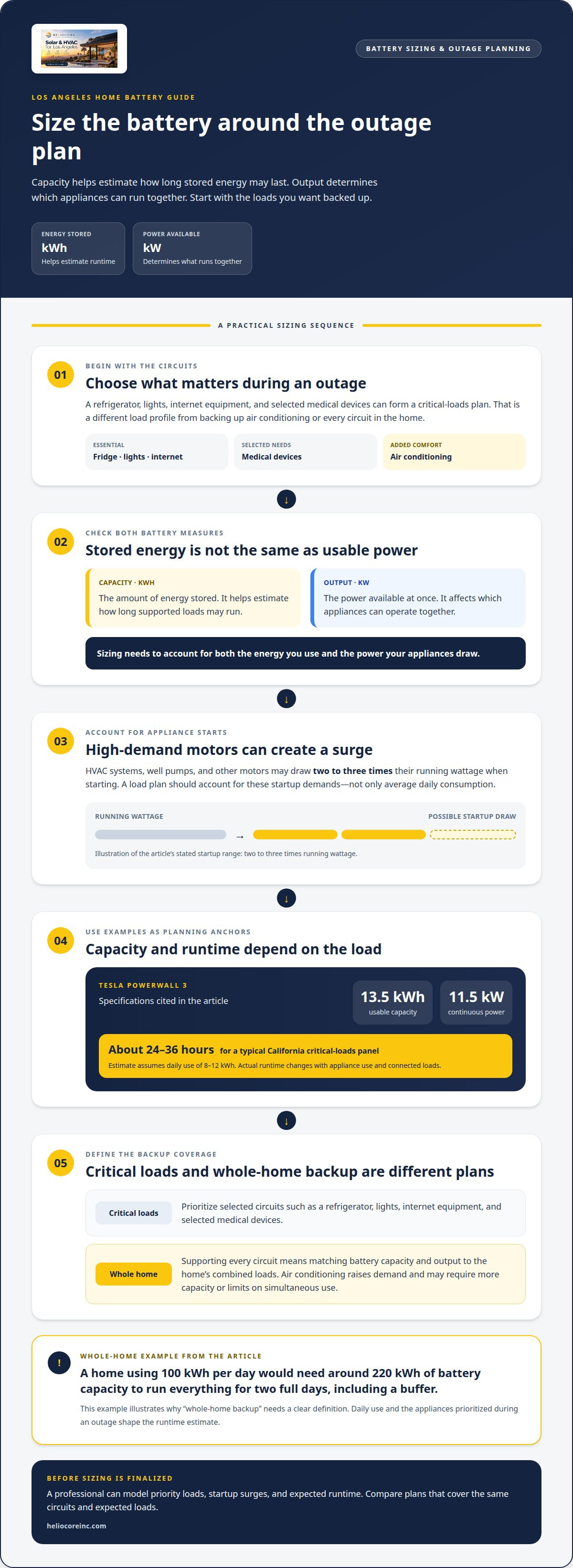
Battery size affects both stored energy and the backup power available at once. Capacity, measured in kilowatt-hours, helps estimate runtime. Output, measured in kilowatts, determines which appliances can run together. A system for lights and a refrigerator has different requirements from one that also supports air conditioning.
A Tesla Powerwall 3 has 13.5 kWh of usable capacity and 11.5 kW of continuous power. One battery can run a typical California critical-loads panel for about 24 to 36 hours. That estimate assumes daily use of 8 to 12 kWh. Actual runtime changes with appliance use and the loads connected during an outage.
Consider the difference between energy and power. A battery may store enough energy for several hours, but high-demand appliances can use it quickly. HVAC systems, well pumps, and other motors may draw two to three times their running wattage when starting. System design must account for these surges, not just average daily consumption.
- Essential circuits: A refrigerator, lights, internet equipment, and selected medical devices can form a critical-loads plan.
- Added comfort: Air conditioning raises demand and may require more battery capacity or limits on simultaneous use.
- Whole-home coverage: Supporting every circuit requires matching the battery’s capacity and output to the home’s combined loads.
For a home using 100 kWh per day, around 220 kWh of battery capacity would be needed to run everything for two full days, including a buffer. That example shows why “whole-home backup” needs a clear definition. A household’s average use and the appliances prioritized during an outage shape the runtime estimate.
Automatic outage switching depends on the system configuration. Transfer equipment detects a utility interruption and shifts supported circuits to battery power. The backup plan should identify which loads transfer, how they operate, and whether large appliances need to be managed. Proposals are easier to compare when they cover the same circuits and expected loads.
Public Safety Power Shutoff events call for the same practical planning as other outages. A battery can provide backup power, but runtime depends on consumption and stored energy. A system paired with solar panels may recharge when conditions allow. Weather and household demand affect how much energy is available.
Before installation, a professional can model priority loads, startup surges, and expected runtime. That makes sizing a household decision, not simply a choice between one or two batteries. For a tailored load plan, explore battery storage planning and discuss which circuits matter most during an outage.
Factors that affect battery system prices
A battery system’s price reflects more than storage capacity. Equipment quality, inverter type, capacity, and battery chemistry all affect the project scope. The inverter converts stored electricity into usable power for household circuits. Higher capacity may support more appliances, while the home’s existing electrical setup can affect the installation work.
Installation details also matter. A longer conduit route or trenching adds labor and materials. An existing solar system may need compatible equipment and wiring to connect storage. Panel conditions, backup circuits, and the system’s intended output also shape the design. A project price depends on its specific scope and is provided after a quote request; equipment, electrical work, and included components affect that scope.
Package comparisons are clearer when the included components are specified. A proposal may cover the battery, inverter, transfer equipment, wiring, installation labor, permits, and inspections. One package may include electrical upgrades, while another lists them separately. Compare usable capacity and backup output alongside the complete installation scope, not just the battery name.
- Equipment: Check which battery and inverter are included.
- Electrical scope: Identify wiring, panel work, and transfer equipment.
- Project scope: Confirm whether installation, permits, and inspections appear in the package.
The Anker SOLIX E10 price should be considered with its package details, not as a standalone benchmark. Compare the stated battery capacity, inverter, usable energy, and installation scope with other system proposals. This keeps equipment-only pricing distinct from a complete installed system. The same comparison applies to a Powerwall package or any other named battery system.
Battery chemistry can influence long-term value as well as initial system design. A system rated for 6,000 cycles is compared with an NMC system rated for 3,000 cycles. Cycle ratings describe a different measure from usable capacity or inverter output, so each figure answers a separate question. Review them together when comparing equipment options.
For a fair comparison, match the backup purpose, usable capacity, inverter type, and installation scope. A critical-loads design and a whole-home design are not equivalent packages. Clear proposals show these differences, helping homeowners weigh equipment, electrical work, and expected household use.
Federal tax credit and California SGIP eligibility
Incentives can affect a home battery’s net cost, but eligibility depends on the program, household, and utility territory. For installations after the applicable federal cutoff, don’t include the former residential clean energy credit in your budget. State support follows different rules and may be limited to specific income-qualified groups or program tiers.
The federal Residential Clean Energy Credit under Section 25D does not apply to homeowner battery systems installed after December 31, 2025, according to the Internal Revenue Service. That means a battery installation completed after that date cannot use this credit under Section 25D. Earlier assumptions in a project budget should be updated to reflect the installation date and this eligibility rule.
California’s Self-Generation Incentive Program, or SGIP, offers a separate path for eligible residential storage projects. California Public Utilities Commission eligibility includes households at or below 80% of area median income or households enrolled in CARE, FERA, or ESA. These are qualifying routes, not automatic approval. The household’s program status and the project’s location matter.
That example shows how capacity can affect a possible incentive, but it doesn’t mean every household receives the maximum. The funding tier and eligibility requirements determine the actual amount.
LADWP and Southern California Edison customers face different incentive conditions. In 2026, the CPA Sun Storage Rebate applies in SCE territory and does not apply to LADWP customers. LADWP-area SGIP incentives are limited to waitlisted, income-qualified tiers. A customer’s utility territory therefore matters before an incentive is included in a project budget.
A modular battery design may let you choose capacity based on priority loads, but adding storage does not by itself establish program eligibility. Incentives depend on program rules, household qualifications, and service territory. Outage concerns may motivate a purchase, but resilience goals and incentive eligibility are separate considerations.
- Identify the utility: LADWP and SCE customers may face different program options.
- Review household eligibility: SGIP equity funding uses income or qualifying program enrollment.
- Match the project: Capacity can affect potential funding, while the program tier determines eligibility.
For a sound estimate, separate the installed project cost from any incentive that may apply. Keep the federal credit out of budgets for systems installed after December 31, 2025, and assess California SGIP eligibility on its own criteria. This gives homeowners a clearer view of the amount they may need to fund themselves.
Partial-home and whole-home backup packages
A partial-home package powers selected circuits during an outage. A whole-home package aims to support more of the house, including larger electric loads. The choice affects battery capacity, inverter output, and how much energy remains in reserve. In California, start by identifying the appliances your household needs most.
For an LADWP home, a critical-loads design for a refrigerator, internet, lights, and medical equipment can fit one battery unit. This setup directs stored energy to essential circuits rather than every outlet. It may suit households that want a defined backup plan without supporting air conditioning or other high-demand equipment.
Whole-home backup changes the design goal. For an LADWP home seeking whole-home backup that includes air conditioning, two battery units are recommended. More capacity can support more circuits, but runtime still depends on household use. The design should account for which appliances run together, not just the number of batteries.
These ranges are market estimates, not a project-specific quote. Panel condition, equipment, and installation scope influence where a package falls.
That added capacity may make sense when the backup plan includes air conditioning or more simultaneous loads. It may be unnecessary if the household’s priority is a smaller group of circuits. Compare packages built for the same backup purpose.
- Partial-home backup: Prioritize essential circuits and keep energy in reserve for longer outages.
- Whole-home backup: Include larger loads, such as air conditioning, in the capacity and output plan.
- Expanded capacity: Add another unit when the intended loads require more stored energy.
Incentives can affect what a qualifying household pays, but they don’t determine which package fits. California SGIP eligibility depends on program tier and household qualifications. First identify the package scope, then consider any applicable incentive. This keeps the comparison focused on the installed system and its intended use.
A useful proposal describes backed-up circuits, battery count, expected loads, and whether air conditioning is included. It should also distinguish partial-home coverage from whole-home coverage. Those details help explain why two packages with similar equipment may serve different needs. Request a tailored backup design to match the package to your home’s priorities.
HelioCore Inc
HelioCore Inc helps Los Angeles homeowners plan battery storage around household needs, backup priorities, and existing solar panels. The team manages solar projects from consultation and custom engineering through permitting, installation, inspections, and utility permission to operate. This local coordination helps clarify how system design, electrical loads, and air conditioning needs shape a project.
Turn to HelioCore Inc when you're weighing backup options and want a professional assessment of how storage may fit your home. The discussion can connect your outage priorities with equipment choices and installation scope, rather than treating every home as the same project.
Contact HelioCore Inc to discuss your home battery plans.
Make a Backup Plan That Fits Your Home
Start by turning your outage priorities into a practical home plan. Think about which rooms and routines matter most, then consider how battery storage, solar panels, and HVAC needs interact. Clear priorities make system design discussions more focused and help align the project with how you use your home.
Home battery backup system cost in Los Angeles is most useful as a planning question when it leads to a specific design discussion. HelioCore can help connect your backup goals with your home’s energy setup, including battery storage, high-efficiency solar panels, and HVAC considerations. Bring your priorities, not a finished technical plan.
Discuss your backup needs with HelioCore and take the next step toward a setup that suits your household.
Frequently Asked Questions
Do I need a battery with solar on LADWP?
No, a battery isn’t always needed for solar in LADWP territory. LADWP has not adopted NEM 3.0, and its net metering credits mean solar-only systems usually make economic sense without storage. A battery may still suit a homeowner who wants backup during outages or greater control over stored solar energy. The choice depends on whether outage coverage matters alongside the financial case for solar.
Does a home battery pay for itself in California?
California home battery systems paired with solar have an estimated payback period of about 8 to 12 years. That estimate is a planning reference, not a universal outcome. How a household uses stored energy, its solar production, and its electricity costs all affect the financial value. A homeowner focused mainly on outage resilience may also value backup power, even when bill savings aren’t the only reason for installing storage.
Does the federal tax credit or SGIP still lower the price?
The federal Residential Clean Energy Credit under Section 25D doesn’t apply to homeowner battery systems installed after December 31, 2025, according to the Internal Revenue Service. California SGIP equity funding may help eligible households. California Public Utilities Commission criteria include income at or below 80% of area median income or enrollment in CARE, FERA, or ESA. LADWP-area SGIP incentives are limited to waitlisted, income-qualified tiers.
How does a home battery help during a PSPS shutoff?
During a Public Safety Power Shutoff, a charged battery can provide backup electricity to connected household circuits. Depending on the system design and electricity use, selected essentials such as a refrigerator or internet equipment may keep running. A battery does not mean every appliance can run throughout the shutoff. Prioritizing essential circuits helps reserve stored energy for the needs that matter most.
How many batteries do I need to back up my house?
The number of units depends on which circuits you want to support and how much power they use. For an LADWP home, one unit can fit a critical-loads design for a refrigerator, internet, lights, and medical equipment. A home seeking whole-home backup that includes air conditioning may need two units. A professional load assessment can distinguish essential-circuit coverage from a plan designed for larger household loads.
How much do storage systems cost in Los Angeles County, CA, in 2026?
These market figures help compare capacities, but the installation scope affects each project.
What is the average installed cost of a home battery backup system in Los Angeles in 2026?
For a broader market view, installed home battery systems typically range from $16,000 to $34,000, with a median of about $24,000. The wider range reflects differences in battery capacity and installation scope. Compare estimates for similar system sizes and backup plans.
How much do popular home battery systems such as Tesla Powerwall, Enphase, and FranklinWH cost installed in Los Angeles?
Installed cost depends on system capacity, inverter configuration, backup coverage, and the home’s electrical work, so brand names alone don’t make a like-for-like comparison. Compare each proposal’s usable capacity, supported loads, and included installation scope to understand what the quoted system provides.