
Solar
Home Battery Storage in Los Angeles: Costs and System Types
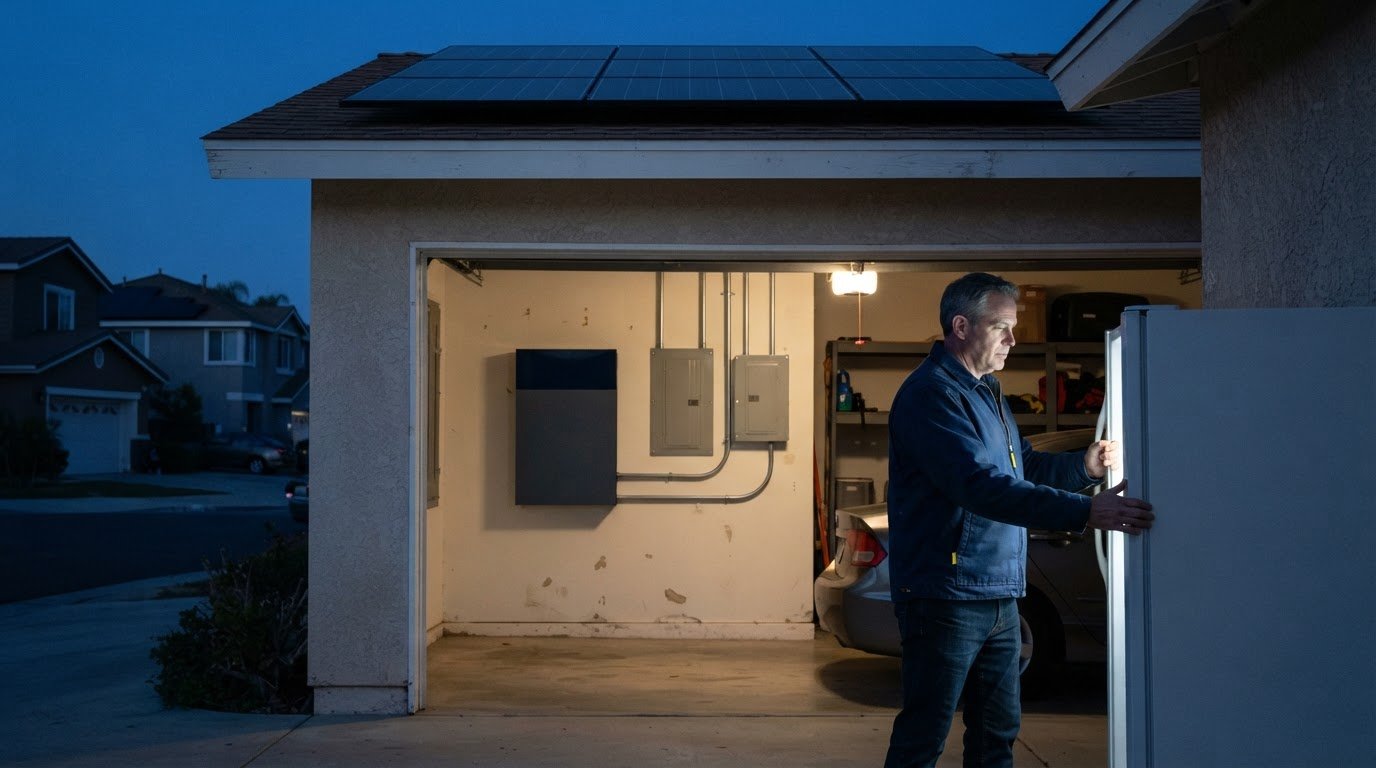
The most useful home battery is the one sized for the power you want to keep. For home battery storage in Los Angeles, that means matching battery capacity and system type to your solar setup and household priorities. A Tesla Powerwall 3 stores 13.5 kWh, but the right design depends on what you want to run during an outage.
It’s reasonable to want a clear picture before making a major home upgrade. A home battery can supply selected household circuits during a grid outage, but the system design determines how it connects to solar and what it can support. The right setup depends on the home’s needs.
This guide explains how home batteries work, how AC, DC, integrated, and expandable systems differ, and what installation involves. It also covers the factors that shape a home battery storage project in Los Angeles County, including system size and whether you’re adding a battery to existing solar or planning solar and storage together.
Key Takeaways
- Decide which circuits matter most during an outage to clarify whether essential-load or whole-home backup suits your household.
- Account for major appliances, especially air conditioning, when planning how much backup power your home needs.
- Choose a battery connection type based on whether you’re installing solar at the same time or adding storage to an existing system.
- Understand how system size, solar pairing, and installation needs shape the cost of storage in Los Angeles County.
- Learn what the installation process involves and how battery storage can fit into your home energy plans.
Table of Contents
What Is Battery Storage?
Home battery storage keeps electricity available for household use when solar panels or the grid aren’t supplying it. For homeowners considering home battery storage in Los Angeles, the main decisions are how much energy to store and which circuits to back up. Capacity, power output, and household demand determine how the system serves the home.
Battery Capacity and Backup Circuits
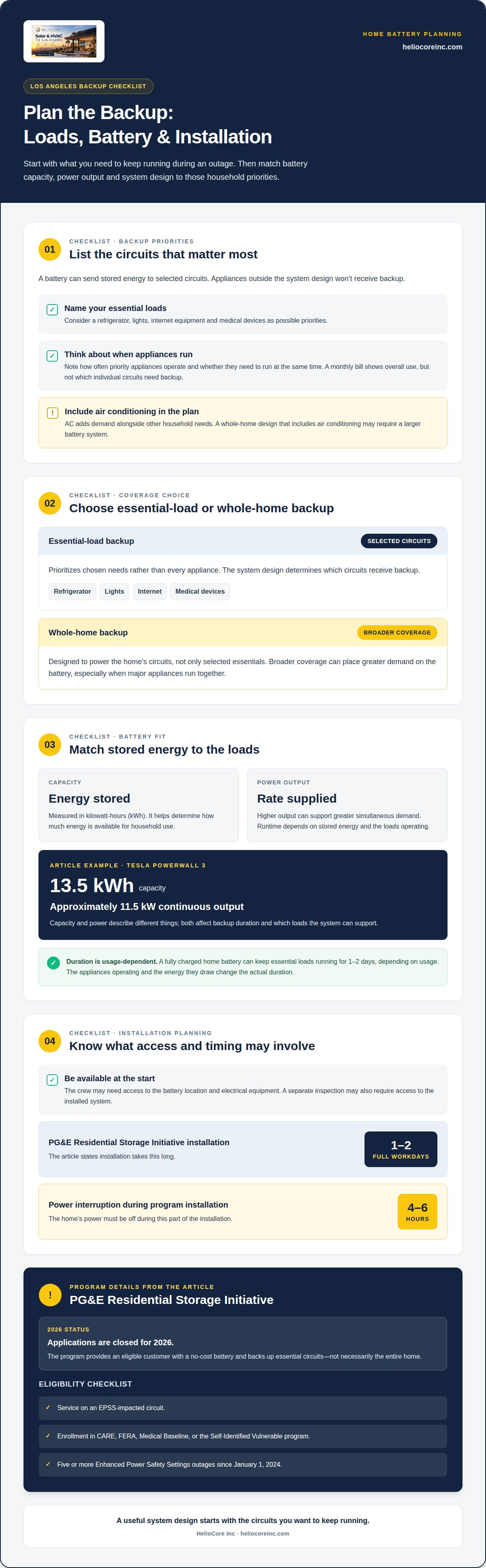
Battery capacity is the amount of energy a battery can store, measured in kilowatt-hours. Backed-up circuits are the parts of a home’s electrical system that can draw from stored energy during an outage. A design might prioritize a refrigerator, lights, internet equipment, or medical devices. Other appliances won’t receive backup unless they’re included in the system design.
Choosing Battery Capacity
Choose capacity by matching stored energy to household priorities and expected use. First identify which appliances should keep working during an outage, then consider how often they operate and whether they run at the same time. A monthly electricity bill shows overall use, but not which individual circuits need backup. If the plan includes air conditioning, account for its demand alongside other household needs.
Battery Power and Backup Duration
Battery power is the rate at which a system can supply electricity, while capacity describes the energy it stores. Both affect backup duration. The Tesla Powerwall 3 has 13.5 kWh of capacity and approximately 11.5 kW of continuous output. Higher output can support greater simultaneous demand, while runtime depends on stored energy and the loads operating in the home.
Installation Cost by Battery Capacity
Battery capacity is one factor in a project’s overall cost. Larger storage capacity may require additional battery equipment, while electrical setup and the number of backed-up circuits also shape the work. Wiring changes and the connection to existing solar can affect project scope. Compare the complete installation design, not capacity alone.
California’s Battery Storage Capacity
California’s battery storage capacity is the combined storage capability counted across the state. By mid-2026, it exceeded 23,000 megawatts, according to the California Energy Commission. That statewide measure describes grid resources, not a typical home system. For a household, capacity and power output are useful measures for comparing a battery’s ability to support planned backup loads.
Stored Energy and Monthly Use
Stored energy is electricity held for later use, including when solar panels aren’t generating. During an outage, a battery can direct that energy to selected circuits, and the remaining charge changes with household demand. Planning home battery storage in Los Angeles starts with listing priority appliances and deciding which should run together. This helps define the intended backup design.
Do I need to be home for installation or inspection?
Battery installation timing in Los Angeles depends on system design and electrical work. For PG&E’s Residential Storage Initiative, installation takes 1 to 2 full workdays. Plan to be available at the start so the crew can access the battery location and electrical equipment. A separate inspection may also require access to the installed system.
Essential-load backup supplies selected circuits, such as a refrigerator, lights, internet equipment, or medical devices. It prioritizes these needs rather than sending stored energy to every appliance. The system design determines which circuits receive backup. Listing household priorities helps establish what the battery should keep running during an outage.
Whole-home backup is designed to power the home’s circuits rather than selected essentials alone. Broader coverage can place greater demand on the battery, especially when major appliances run together. Air conditioning is an important consideration in Los Angeles homes. A whole-home design that includes air conditioning may require a larger battery system.
Backup duration is the time stored energy can serve household loads before the battery needs recharging. A fully charged home battery can keep essential loads running for 1-2 days, depending on usage. Actual duration changes with the appliances operating and how much energy they draw. Running air conditioning alongside other household loads uses stored energy differently than powering only lights and internet equipment.
Solar battery sizing matches storage capacity and power output to the home’s backup priorities. Identify the circuits that matter most, then consider how often their appliances run together. A single battery can comfortably serve critical loads such as a refrigerator, internet, lights, and medical equipment in an LADWP home. Supporting more circuits or larger loads requires a design suited to that demand.
PG&E’s Residential Storage Initiative is a program that provides eligible customers with a no-cost battery. Applications are closed for 2026. Eligibility requires service on an EPSS-impacted circuit and enrollment in CARE, FERA, Medical Baseline, or the Self-Identified Vulnerable program. Customers must also have experienced five or more Enhanced Power Safety Settings outages since January 1, 2024. The program backs up essential circuits, not necessarily the entire home.
During installation through that PG&E program, the home’s power must be off for 4 to 6 hours. That interruption is part of the installation process, while the full installation takes 1 to 2 full workdays. Knowing which circuits need backup, whether air conditioning is included, and how long essential loads should run helps define the system before work begins.
2026 Storage System Costs in Los Angeles County, CA
A solar-plus-storage system combines solar panels with a battery that holds electricity for later use. Pairing them can help a household use more of its own solar energy, including after sunlight fades. Project cost depends on storage capacity, electrical work, solar configuration, and backup scope. The project price depends on those details and is provided after a quote request.
For a new solar installation, planning the battery alongside the panels lets the system be designed as one project. The design can account for how much solar electricity the household uses during the day and what it wants available later. A battery-ready plan also considers equipment connections and which household circuits need backup power.
Adding storage to existing solar starts with reviewing the system already in place. Battery storage can be added to many existing solar systems, with compatibility depending on the equipment and configuration. The existing inverter and electrical arrangement influence how the battery connects. This review helps define project scope and whether system changes are part of the installation.
A home battery stores excess solar electricity and releases it when the home needs it. During sunny hours, panels can serve household use while charging the battery with surplus generation. Later, stored energy can supply household loads, including after sunset or during an outage, if the system includes a compatible battery setup. How much energy remains depends on generation, charging, and household use.
NEM 3.0 reduces compensation for solar electricity exported to the grid, which can make stored solar energy more valuable for household use. The effect depends on when the home generates electricity and when it uses power. A battery can shift some solar energy from production hours to later household demand, rather than exporting all surplus electricity.
California’s Self-Generation Incentive Program, or SGIP, provides rebates for home and commercial battery storage users. In the LADWP area in 2026, battery incentives are limited to waitlisted income-qualified tiers. The program’s terms therefore matter to the project’s potential incentive, alongside location and eligibility. California’s federal residential clean energy credit expired on December 31, 2025.
Battery-ready solar planning means considering storage connections and backup priorities before finalizing the solar project. Start by outlining household energy use, identifying circuits for backup, and designing solar and storage around those needs. For existing panels, compatibility shapes the available design. This planning helps homeowners compare a solar-only project with solar paired with storage.
AC, DC, integrated, and expandable battery systems
An AC or DC battery system describes how stored electricity connects with solar panels and household power. For home battery storage in Los Angeles, the choice often depends on whether storage is part of a new solar installation or being added to an existing system. AC systems can suit an existing solar setup, while DC systems are commonly designed alongside new panels. The connection type shapes how the equipment works together.
An AC-coupled system connects the battery to the home’s alternating-current electrical system. Solar electricity passes through conversion equipment before storage, then changes form again when the battery supplies household power. This arrangement can suit an addition to existing solar because it works with an established system layout. The inverter and electrical configuration affect the design.
A DC-coupled system connects solar panels and battery storage on the direct-current side. It can be planned as part of a new solar installation, coordinating panels, inverter, and battery from the start. This setup can reduce conversion steps between solar generation and storage. The equipment still needs to match the home’s electrical system and intended backup circuits.
An integrated battery system combines key storage and power-management components in a coordinated unit. An expandable system lets homeowners add battery units to increase storage capacity. The Tesla Powerwall 3 can scale to up to four units, for 54 kWh total capacity. Expansion planning accounts for electrical connections, available installation space, and the household loads the system will serve.
Battery system design matches equipment, connection type, and backup circuits to a home’s needs. For home battery storage in Los Angeles, planning can begin by reviewing existing solar equipment, identifying backup priorities, and selecting an AC or DC configuration. The design also considers battery and equipment locations. Incentives may affect project finances, but they don’t determine which system type fits.
CAISO is the grid operator serving California customers and coordinating resources connected to its grid. Utility-scale battery and hybrid systems support grid operations, unlike residential batteries designed around one home’s energy needs. California’s statewide storage dashboard includes out-of-state utility-scale battery resources when they serve customers on the CAISO grid. This distinction matters when comparing statewide capacity figures with the storage planned for a home.
Permits and utility approvals depend on the system design, electrical work, and local requirements. Those factors shape the approval process for a Los Angeles home, so a single permit or utility path does not apply to every battery configuration.
Average home battery storage costs in Los Angeles County
An average battery cost is a market benchmark, not a project estimate. For a Los Angeles County home, project scope depends on storage capacity, installation work, and the system’s connection to solar. A useful comparison uses the same capacity and scope. Battery-only installation and solar-plus-storage are different projects, so compare estimates that cover the same work.
Capacity affects the amount of energy available for household use. A 10-kWh system stores less energy than a 20-kWh or 26-kWh system, so those sizes shouldn’t be treated as interchangeable. The right comparison begins with the devices and circuits you want powered, then matches storage size to expected demand. More capacity changes equipment needs and project scope.
Installation details also shape project scope. Existing electrical equipment, battery location, wiring changes, and the number of included circuits can affect the work. Adding storage to existing solar involves assessing how the battery connects to that system. A new solar-and-storage project combines panel and battery planning, so its scope differs from battery-only work.
Existing solar can make storage an addition to an established system, but compatibility affects the design. The inverter and electrical arrangement influence how the battery connects. A home without panels may consider solar and storage together. Compare options using the same battery capacity, backup circuits, and electrical work in each project scope.
Incentives are financial programs that may reduce eligible project expenses. Availability depends on location and eligibility, so incentives don’t provide a universal cost reduction for every Los Angeles County household. Project location, battery configuration, and household qualification all matter. Assess incentives separately from equipment and installation scope rather than assuming every system receives the same support.
Compare estimates with a consistent checklist: battery capacity, included electrical work, solar compatibility, backed-up circuits, and any applicable incentives. An equipment-only estimate doesn’t cover the same scope as one that includes installation. Clear project details make differences easier to understand. The most useful comparison is between designs that address the same household demand.
For a project-specific price, the cost depends on capacity, existing solar compatibility, electrical work, and backup scope, and is provided after a quote request. To discuss a storage project, request a battery storage quote.
HelioCore
HelioCore Inc helps Los Angeles homeowners connect battery decisions with their solar setup, backup priorities, and household energy needs. If you’re weighing battery storage, planning solar panels, or considering how air conditioning affects backup demand, start with how you use your home. HelioCore Inc can help assess these needs together, from selected circuits to a broader backup plan. System design depends on the home, so one setup won’t suit everyone. To discuss your energy needs and request an estimate, contact HelioCore Inc.
Make your next energy decision with confidence
The next step is to connect your backup priorities with the way your household uses energy. If you’re considering home battery storage in Los Angeles, identify what matters most: keeping essential devices available, planning around existing solar, or shaping a broader home energy upgrade. This clarity can make the project discussion more useful and focused on your home.
HelioCore offers high-efficiency solar panels, HVAC, and battery storage, bringing related home energy needs into one discussion. Talk through your goals, the system choices that fit them, and the practical details that shape a project. You don’t need to have every decision settled before getting started.
Contact HelioCore to discuss home batteries and take a considered next step toward a setup that fits your household.
Frequently Asked Questions
Why Install a Battery System?
A battery can provide backup power for selected household needs and store surplus solar electricity for later use. For example, a household may prioritize keeping a refrigerator and internet equipment available during an outage, with backup dependent on a compatible battery system. Across Los Angeles, including Inglewood, South Los Angeles, Crenshaw, Leimert Park, Baldwin Hills, Westchester, Van Nuys, North Hollywood, Reseda, Northridge, Woodland Hills, and San Pedro, the right choice depends on each home’s priorities and existing energy setup.
Why would my home be ineligible?
Ineligibility usually applies to a specific incentive or program, not to battery storage as a whole. PG&E’s Residential Storage Initiative requires service on an EPSS-impacted circuit, enrollment in an eligible assistance program, and at least five qualifying outages since January 1, 2024. A household outside PG&E territory, on a different circuit, or without the required enrollment and outage history won’t meet those program criteria. The initiative’s applications are closed for 2026.
What does home battery storage cost in Los Angeles in 2026?
There isn’t one project cost that applies to every Los Angeles home. The price depends on battery capacity, electrical work, backup scope, and whether the system connects to existing solar or new panels. A battery-only installation and a solar-plus-storage project have different scopes, so compare like-for-like designs. Project pricing depends on these details and is provided after a quote request.
How much battery capacity does a typical Los Angeles home need?
Battery capacity depends on which household loads need backup and how long they must run. A 13.5 kWh Tesla Powerwall 3 provides one reference point, not a universal household requirement. A home prioritizing a refrigerator and communication devices has different needs from one that also wants air conditioning during an outage. The number of batteries and backed-up circuits should reflect those priorities.
What rebates and tax credits are available for home batteries in California?
California’s Self-Generation Incentive Program offers rebates, but availability depends on program eligibility and location. In the LADWP area in 2026, battery incentives are limited to waitlisted income-qualified tiers. The federal residential clean energy credit expired on December 31, 2025. The CPA Sun Storage Rebate applies to SCE territory, not LADWP customers, so it isn’t an option for LADWP households.
Can a home battery be paired with solar or installed without solar in Los Angeles?
Yes. A battery can be paired with a new solar installation, added to many existing solar systems, or designed as storage without solar. Existing equipment affects how a battery connects, while a new solar project can plan panels and storage together. Without solar, a battery can store electricity but won’t recharge from rooftop solar. System design determines how it charges and serves household loads.
How long can a home battery power a house during an outage?
Runtime depends on battery capacity, the backed-up circuits, and how much energy household devices use. A fully charged battery can keep essential loads running for 1-2 days, depending on usage. That estimate refers to essential household loads, not necessarily every circuit in the home. Running high-demand equipment alongside everyday devices uses stored energy faster than powering a smaller set of priorities.
What are the safety, warranty, and maintenance risks of home battery systems?
Key considerations include correct electrical integration, the system’s warranty terms, and following its manufacturer’s maintenance guidance. The Tesla Powerwall 3 has a 10-year warranty; lithium-ion home batteries are generally designed to last 10-15 years or longer, depending on use and manufacturer specifications. Warranty coverage and maintenance requirements vary by equipment and agreement. A system should be installed and serviced according to its product documentation.