
HVAC
How Does a Heat Pump Work? Clear Residential Basics
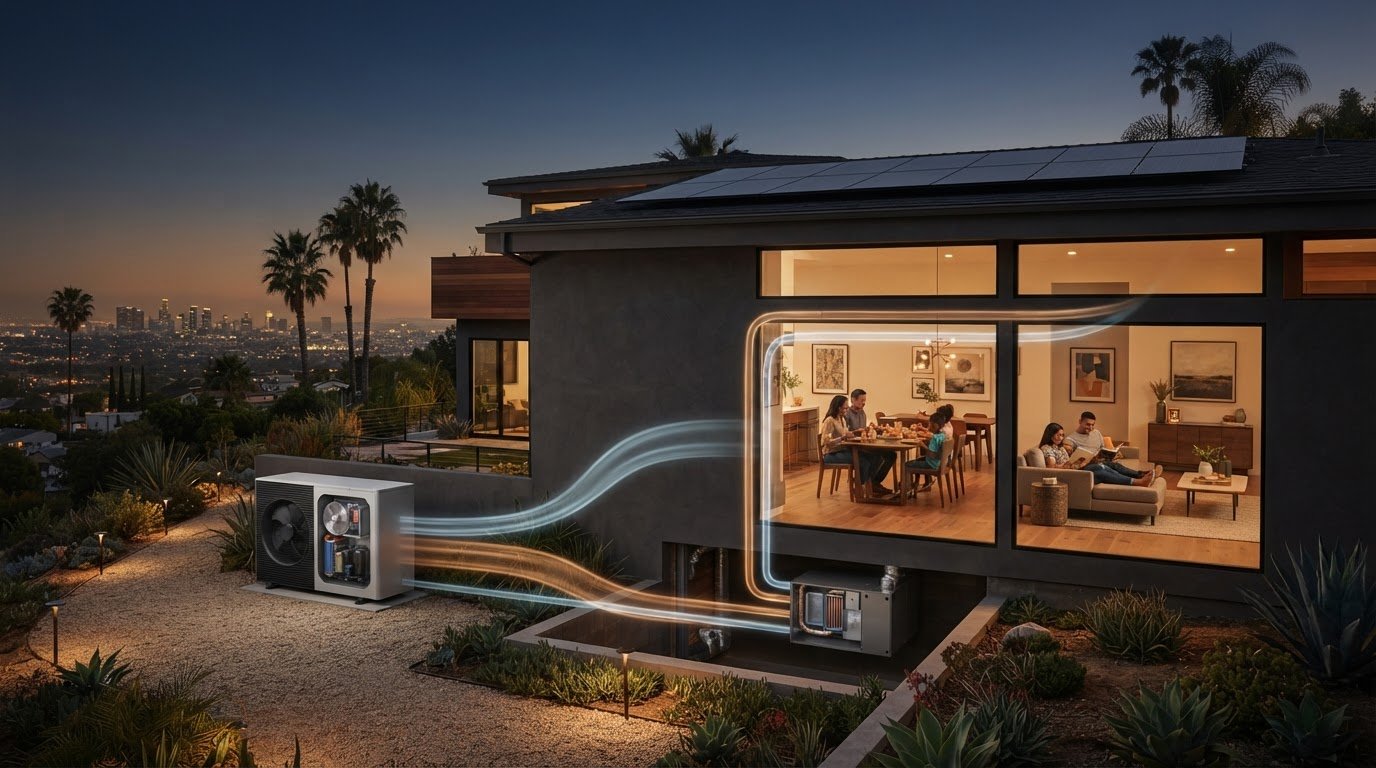
A heat pump doesn’t create heat; it moves it. Understanding how a heat pump works starts with that simple idea: in winter, it transfers heat from outdoor air into your home, then reverses the process to cool your home in summer. A typical heat pump lifespan is 10-15 years.
It’s reasonable to ask whether one system can heat and cool your home comfortably and make sense to operate. The answer depends on how it transfers heat, your home’s setup, and local conditions, not just the equipment’s rating.
This guide explains the main parts of a heat pump, what happens in heating and cooling modes, and how efficiency ratings relate to electricity use. You’ll also learn what affects system life and how ducted and ductless models distribute comfort around a home.
Key Takeaways
- Understand how a heat pump moves heat to provide both heating and cooling, and what that means for year-round home comfort.
- Learn how to read efficiency ratings and what they can tell you about a system’s electricity use.
- See which factors shape a heat pump’s typical 10-15-year lifespan and how steady operation fits into the picture.
- Explore how heat pumps perform in cold weather and how a hybrid setup can support home heating in regions with extreme cold.
- Get familiar with the main system components and how HelioCore Inc’s high-efficiency solar panels may fit into a home energy plan.
Table of Contents
How long do heat pumps last?
A heat pump typically lasts 10-15 years. Its lifespan depends on operating conditions, installation quality, maintenance, and how consistently it runs. Dirt, blocked airflow, and neglected repairs can place extra strain on components. Keeping the system clear and addressing performance changes helps it operate as intended throughout its service life.
Heat pumps use the same equipment to heat and cool a home. In winter, the system moves heat from outdoor air indoors. In summer, it reverses direction, carrying heat from inside the home outdoors. A reversing valve redirects the refrigerant, allowing the indoor and outdoor heat exchangers to switch roles.
This cooling cycle works like a central air conditioner. The indoor coil absorbs heat from the home’s air, and the outdoor coil releases it outside. The system also circulates air through the home, either using ducts or room-mounted indoor units. Some models can dehumidify while maintaining a temperature of 70 degrees.
Air-source heat pumps draw heat from outdoor air. Geothermal models use heat stored in the ground, where temperatures are more consistent. Ductless mini-splits describe a distribution style, typically with wall-mounted indoor heads serving rooms or areas without ducts. Each head can be set to a different temperature.
Regular maintenance helps protect airflow and support reliable heating and cooling. Follow the manufacturer’s maintenance schedule, check filters during periods of active use, and clean or replace them as directed. Keep leaves and other obstructions away from the outdoor unit. Arrange professional maintenance to inspect components and identify wear or operating issues.
Consistent operation matters, too. Heat pumps generally work best when maintaining an even temperature rather than being switched off and restarted repeatedly. If the system struggles to reach the set temperature, makes unusual sounds, or cycles frequently, it may need attention. These signs don’t identify a specific fault, but they can alert homeowners to a change in performance.
For everyday care, focus on a few practical habits:
- Keep supply and return vents clear in ducted homes.
- Check that ductless indoor heads have open space around them.
- Watch for reduced airflow, uneven room temperatures, or unexpected changes in operation.
- Use the equipment’s maintenance guidance for filter care and service timing.
These maintenance steps apply to systems that heat the whole home through ducts and to mini-splits serving selected rooms. Maintenance cannot prevent every component from wearing out, but it can help you spot problems and keep heating and cooling performance on track.
Efficiency ratings and operating costs
A heat pump’s efficiency describes how much heating or cooling it delivers relative to the electricity it uses. Unlike a furnace, it transfers existing heat rather than generating heat through fuel combustion. That’s why its heat output can exceed its electrical input.
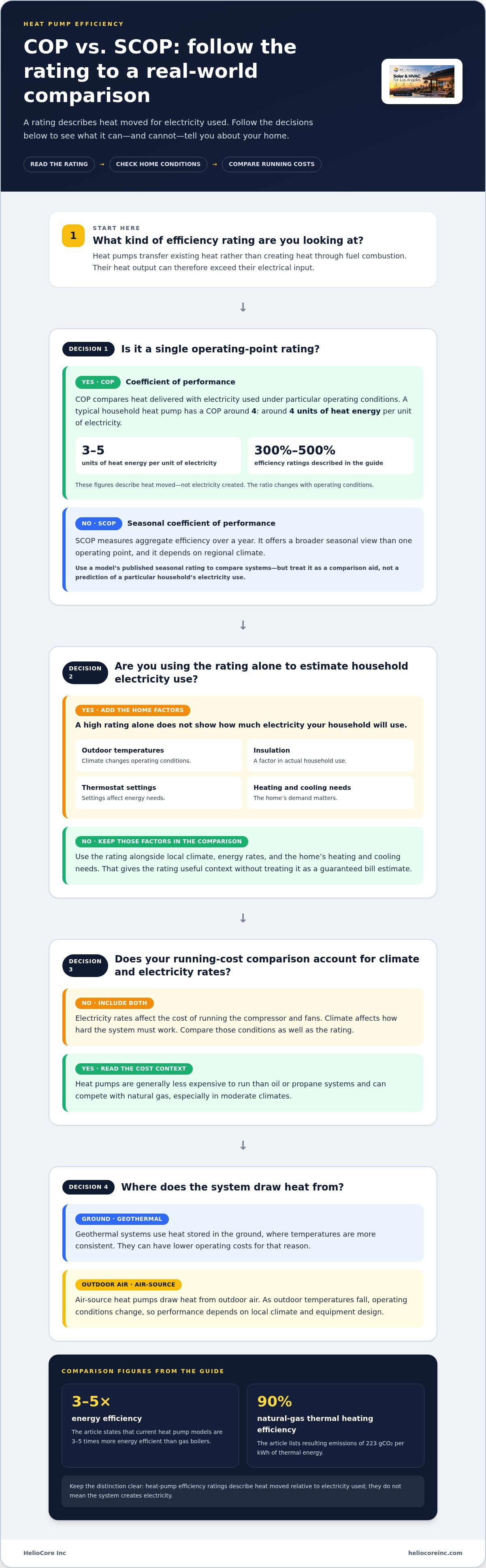
A typical household heat pump has a coefficient of performance, or COP, around four. In practical terms, it can deliver around four units of heat energy per unit of electricity used. The ratio varies with operating conditions, so COP describes performance under particular conditions, not a fixed result for every home.
Heat pumps can deliver three to five units of heat energy per unit of electricity, corresponding to efficiency ratings of 300% to 500%. These figures describe heat moved, not electricity created. A rating above 100% is possible because the system uses electricity to move heat from outdoor air or another source.
Seasonal performance offers a broader view than a single operating point. Seasonal coefficient of performance, or SCOP, measures aggregate efficiency over a year and depends on regional climate. A model’s published rating can help compare systems, but actual household electricity use also reflects outdoor temperatures, insulation, thermostat settings, and heating and cooling needs.
Those factors also affect operating costs. Electricity rates influence the cost of running the compressor and fans, while climate affects how hard the system must work. Heat pumps are generally less expensive to run than oil or propane systems and can compete with natural gas, especially in moderate climates. Geothermal systems can have lower operating costs because ground temperatures are more consistent.
For U.S. homeowners, available tax credits and rebates depend on active federal, state, local, or utility programs. In 2025, President Donald Trump reversed the decision to use the Defense Production Act and did not renew some tax credits used to subsidize heat pumps.
To make an efficiency rating useful, consider it alongside your home’s heating and cooling needs. A high rating alone doesn’t show how much electricity a particular household will use. Compare seasonal ratings, local climate, and energy source, then consider how well the equipment matches the home.
- Use COP to understand heat output relative to electricity input.
- Compare seasonal ratings when considering performance across a full year.
- Account for climate and energy rates when thinking about running costs.
Current heat pump models are 3‐5 times more energy efficient than gas boilers. Natural-gas thermal heating is listed at 90% efficiency, with resulting emissions of 223 gCO2 per kWh of thermal energy.
Heat pump heating in winter and cold climates
Even cold outdoor air contains heat a heat pump can move indoors. In heating mode, the outdoor coil absorbs heat, and the compressor raises the refrigerant’s temperature. The indoor coil then transfers heat into the home. As outdoor temperatures fall, operating conditions change, so performance depends on local climate and equipment design.
A useful example comes from an air-source heat pump operating with outdoor air at −20 °C. At a 35 °C output temperature, its listed coefficient of performance is 2.2. That rating describes heat output relative to electricity input under those conditions. It shows that cold-weather operation can still transfer heat, though performance varies with temperature.
Cold-climate models can keep homes warm in very cold weather while using less energy than other heating systems, as reported by Consumer Reports. However, not every model suits every home. Heating demand, system capacity, and local winter conditions all affect how comfortably the equipment can maintain the indoor temperature.
Common limitations include reduced heating performance in extreme cold, restricted airflow from dirty filters or blocked vents, and the need for supplemental heat in some regions. If a system cannot meet the home’s heating demand during the coldest conditions, indoor comfort may suffer. These practical limits make climate and system sizing important considerations.
In regions with extreme cold, a heat pump can operate alongside a gas furnace. The heat pump handles milder days, while the furnace provides heat during the coldest weather. This hybrid arrangement lets the systems share the heating load instead of requiring the heat pump to meet every condition on its own.
Heat pumps can also be combined with other heating systems in hybrid configurations. The changeover point depends on the equipment and local conditions. A household in a milder climate may rely on the heat pump for more of the season, while a colder location may need backup heat more often.
For steady winter comfort, pay attention to practical operating details:
- Keep filters clean and supply vents open to support airflow.
- Use an even thermostat setting instead of repeatedly changing it.
- Notice changes in room temperature or system operation during cold spells.
- Consider how local winter temperatures affect the home’s heating demand.
These steps help homeowners understand how a system performs as the weather changes. A heat pump’s cold-weather capability depends on the model, the home, and the outdoor conditions it must handle.
Heat transfer using electricity and refrigerant
A heat pump moves thermal energy with electricity, refrigerant, and two heat exchangers. Heat exists whenever a substance is above absolute zero, which is 0 Kelvin. The system does not make heat through combustion. Instead, a refrigerant carries heat between the outdoor source and the home, while electrical components keep that cycle moving.
In heating mode, the outdoor coil absorbs heat from air, ground, or nearby water. The refrigerant takes in that energy and changes from liquid to vapor. Even cold outdoor air contains thermal energy the system can collect. Geothermal systems use heat stored in the ground, while some heat pumps draw from water or factory waste heat.
Next, electricity powers the compressor. It squeezes the refrigerant vapor, raising its pressure and temperature. The hotter refrigerant travels to the indoor heat exchanger, where it releases heat into the home’s air or hydronic system. As it gives up energy, the refrigerant cools and changes back into liquid.
Before returning outdoors, the refrigerant passes through an expansion device that lowers its pressure and temperature, preparing it to absorb heat again. It then travels through the outdoor coil, and the cycle repeats. Electricity powers the compressor to move refrigerant, which carries heat between the system’s two sides.
In cooling mode, heat transfer reverses. A reversing valve redirects refrigerant flow so the indoor coil absorbs heat from the home. The refrigerant carries that heat outdoors, where the outdoor coil releases it. The compressor and expansion device still support the cycle, but the coils exchange roles compared with winter heating.
This cycle explains why a heat pump can deliver more heat energy than the electricity it consumes. Electricity runs the compressor and other components, while the system also gathers heat from its surroundings. The amount transferred varies with the heat source and operating conditions. Air-source, ground-source, and water-source systems use different sources but share this basic refrigerant cycle.
In a residential air-source system, the main sequence is:
- The outdoor coil absorbs heat and warms the refrigerant.
- The compressor uses electricity to raise refrigerant pressure and temperature.
- The indoor heat exchanger releases heat into the home.
- The expansion device cools the refrigerant before the cycle begins again.
During cooling, the reversing valve changes the direction of the cycle. Following the refrigerant’s path makes the process easier to understand: it collects heat, carries it, releases it, then returns to collect more.
What are the main parts of an air-source heat pump and what do they do?
An air-source heat pump uses an outdoor unit and indoor equipment to move heat between outside air and the home. Each component has a specific job. Together, the parts manage refrigerant, airflow, and temperature so the system can provide heating or cooling.
Outdoor coil: This heat exchanger sits inside the outdoor unit. In heating mode, it absorbs heat from outdoor air and transfers that energy to the refrigerant. In cooling mode, it releases heat outside. Keep the area around the unit clear so air can reach the coil.
Indoor coil: The indoor heat exchanger transfers heat between the refrigerant and household air. Its role changes with the operating mode. In heating mode, it releases heat into indoor air. In cooling mode, it absorbs heat from that air.
Compressor: This motor-driven component circulates refrigerant through the system. It raises refrigerant pressure, helping it reach the temperature needed to transfer heat at the indoor or outdoor coil. Because the compressor is central to the heat-transfer cycle, unusual noise or changed performance can signal a system issue.
Expansion device: Before the refrigerant reaches the coil that absorbs heat, this component reduces its pressure. The change prepares the refrigerant to collect heat. Working with the compressor, the device keeps refrigerant moving through the system under conditions suited to heat exchange.
Reversing valve: This valve redirects refrigerant flow when the system switches between heating and cooling. In winter, the indoor coil releases heat into the home. In summer, the valve changes the flow so the indoor coil removes heat instead.
Fans and indoor air handler: The outdoor fan moves air across the outdoor coil. Indoors, a blower moves household air across the indoor coil and into rooms. Ducted systems distribute conditioned air through ducts. Ductless systems deliver it through wall-mounted heads serving individual rooms or areas.
Thermostat and controls: These components tell the system when to heat or cool. The thermostat measures indoor conditions and signals the equipment to respond to its setting. Keeping vents and indoor heads clear helps conditioned air reach living spaces.
Understanding these parts helps homeowners describe what they notice: weak airflow, uneven temperatures, or a change in sound. Those observations can help focus a heat pump inspection on airflow, controls, or system components. For support with a home heating or cooling system, explore heat pump installation options.
HelioCore Inc: High-Efficiency Solar Panels
HelioCore Inc helps Los Angeles homeowners consider high-efficiency solar panels alongside the electricity needs of home heating and cooling. If you’re weighing a heat pump, solar can form part of a broader household energy plan. Battery storage can also be considered, while air conditioning supports comfort in warm weather.
The right combination depends on how your home uses energy and what you want to prioritize. Considering heating, cooling, solar generation, and storage together can show how these choices fit your home, rather than treating each upgrade as a separate decision.
Contact HelioCore Inc to discuss high-efficiency solar panels, battery storage, or air conditioning for your Los Angeles home.
Plan a more comfortable, connected home
Understanding how a heat pump works can help you make a more informed decision about home comfort. Consider how your household uses heating and cooling, what matters most in daily life, and whether energy upgrades belong in the same plan.
HelioCore helps Los Angeles homeowners consider HVAC needs alongside high-efficiency solar panels and battery storage. These decisions work best when they reflect how the home is used, not just the equipment in isolation. A conversation about your priorities can help shape a practical direction for your next upgrade.
If you’re ready to talk through heat pump options for your home, contact HelioCore Inc about heat pumps. A thoughtful next step can make a complex home improvement feel more manageable.
Frequently Asked Questions
What Is a Heat Pump And How Does a Heat Pump Work?
A heat pump is an electric home comfort system that transfers heat rather than producing it through fuel combustion. Understanding how a heat pump works can help you compare it with separate heating and cooling equipment. For example, when planning an HVAC replacement, consider whether one system suits both needs. The right fit depends on the home’s layout, existing air distribution, and heating and cooling demands.
How does a heat pump transfer heat in heating and cooling mode?
A heat pump moves heat in opposite directions depending on the selected mode. In heating mode, it brings outdoor heat indoors; in cooling mode, it carries indoor heat outside. For a Los Angeles home, the same equipment can support comfort through cooler winter days and warm summer weather. The thermostat signals the mode, and the system’s controls direct the process.
How does the refrigeration cycle in a heat pump work?
The refrigeration cycle repeatedly changes refrigerant pressure and state to carry heat. After absorbing heat, the refrigerant passes through the compressor, then releases heat through a heat exchanger. An expansion device lowers its pressure before the next pass. This cycle continues as the thermostat calls for heating or cooling. The reversing valve changes the refrigerant’s direction when the selected mode changes.
How efficient are heat pumps, and what do COP and HSPF2 mean?
Heat pump efficiency depends on the rating and operating conditions. COP compares useful heat output with electricity input at a particular operating point. HSPF2 is a seasonal heating efficiency rating used to compare heating performance across standardized conditions. A homeowner comparing equipment can review both the rating information and the system’s suitability for local weather. The home’s insulation, thermostat settings, and heating needs also affect real-world electricity use.
How well do heat pumps work in cold climates and below-freezing temperatures?
Heat pumps can continue extracting heat from outdoor air below freezing, but their performance changes as temperatures fall. Consider the home’s coldest winter conditions, heat loss, and equipment capacity together. In regions with extreme cold, a heat pump may be paired with a gas furnace: the heat pump serves milder days, while the furnace covers the coldest periods in a hybrid setup.
How much can a heat pump save on heating and cooling bills compared with a furnace or air conditioner?
Bill changes depend on the system being replaced, local electricity and fuel rates, household use, weather, and insulation. Replacing separate heating and cooling equipment with a heat pump may change energy use for both. Compare existing energy bills with the home’s heating and cooling patterns, not just equipment ratings. Operating hours and temperature settings also affect ongoing use.