
HVAC
How to Check California HVAC Rebates and Estimate Costs
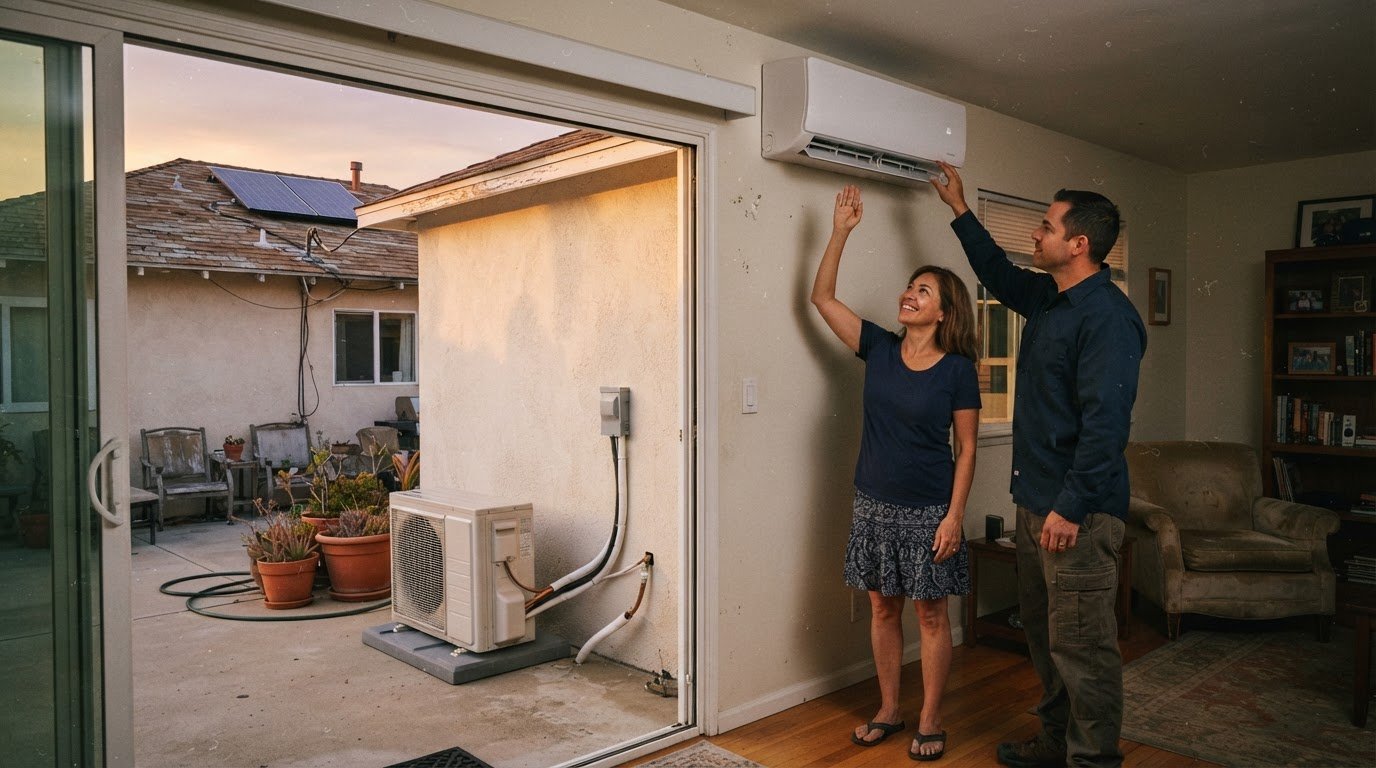
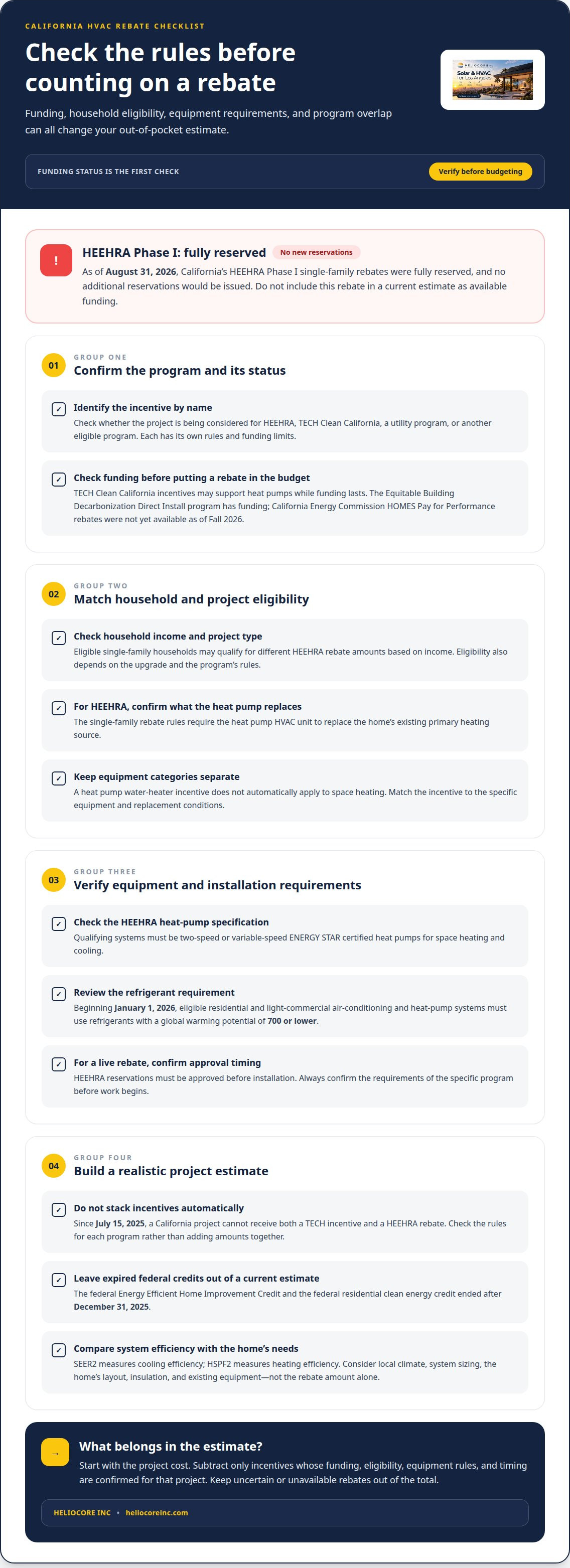
Could a rebate still be available even if a major California program is fully reserved? As of August 31, 2026, California’s HEEHRA Phase I rebates were fully reserved, and no additional reservations would be issued. For energy-efficient HVAC in California, that makes the first step clear: identify the specific incentive program and check its current funding status before building a rebate into your budget.
It’s understandable to want a reliable estimate before choosing a new system. This guide explains how to check rebate eligibility, review equipment requirements, and estimate your out-of-pocket cost without assuming every incentive is still available. It also covers how household income and the system being replaced can affect eligibility, helping you plan for a more comfortable, energy-efficient home in California.
Key Takeaways
- Check a program’s current funding status before counting a rebate toward your HVAC budget. California’s HEEHRA Phase I rebates were fully reserved as of August 31, 2026.
- Estimate potential HEEHRA support by checking household income and project type. Eligible single-family households may qualify for different rebate amounts based on income.
- Confirm the heat pump meets the program’s equipment requirements and that the rebate reservation is approved before installation.
- Look beyond statewide rebates: local incentives may have separate eligibility rules, funding limits, and payment methods.
- Compare the upfront project estimate with potential energy savings. Heat pumps can use up to 75% less electricity than electric resistance heating.
Table of Contents
California HEEHRA heat pump HVAC rebates
Before estimating a heat pump rebate, check the program’s current status, household eligibility, and equipment rules. California incentives have different requirements, and available funding can change.
-
Check California Standards and Building Requirements
Start by identifying the energy code requirements for the project. California’s primary energy codes for new buildings are the California Building Energy Efficiency Standards, also known as the CalEnergy Codes. CalGreen is a voluntary code that goes beyond those standards. For commercial electrification, CEDA identifies central heat pumps that provide hot and chilled water to a variable air volume system, along with ground-coupled heat pumps, as options.
For equipment comparisons, review both SEER2 and HSPF2: SEER2 measures cooling efficiency, while HSPF2 measures heating efficiency. These ratings help compare systems, but the right choice also depends on the home’s heating and cooling needs. California’s climate zones affect those needs, so match system sizing and selection to local conditions rather than assuming one unit fits every area. A qualified HVAC assessment can account for the home’s layout, insulation, and existing equipment.
When planning for cooling, consider heat gain through the roof. A reflective roof can reduce the solar heat absorbed by a home, which may ease air-conditioning demand. A roof change does not replace correctly sized HVAC equipment: both the building envelope and the system affect comfort.
-
Match System Selection to Climate Zones
Compare the home’s heating and cooling demands before choosing a heat pump. California’s climate zones vary, so equipment suited to a mild coastal setting may not suit a home with greater seasonal temperature swings. Correct sizing matters because an oversized or undersized system can make steady indoor comfort harder to maintain. Review the home’s layout, existing heating source, and insulation as you narrow your options.
For replacement projects, avoid choosing equipment on a rebate amount alone. Check the system’s SEER2 and HSPF2 ratings, then weigh them against the home’s heating and cooling needs. Reflective roofing can help reduce solar heat gain, but it does not determine the required HVAC capacity by itself. These factors help make an energy-efficient HVAC choice more practical for the specific property.
-
Review Heat Pump Requirements and Incentives
Check eligibility before installation. California HEEHRA single-family rebates require a heat pump HVAC unit to replace the home’s existing primary heating source. Qualifying systems must be two-speed or variable-speed ENERGY STAR certified heat pumps for space heating and cooling.
Check funding status early: as of August 31, 2026, HEEHRA Phase I single-family rebates were fully reserved, with no additional reservations issued. Reservations must be approved before installation. Beginning January 1, 2026, eligible residential and light commercial air-conditioning and heat-pump systems must use refrigerants with a global warming potential of 700 or lower. Confirm which program’s requirements fit the project, and avoid assuming incentives can be combined.
Local energy-efficiency and electrification rebates
California homeowners can explore state incentives, utility programs, and federal rebates for qualifying upgrades. Available support depends on the equipment, household or building eligibility, and current program funding.
For HVAC, TECH Clean California incentives may support heat pumps while funding lasts. Federal residential tax credits for qualifying home upgrades ended after December 31, 2025, so don’t include them in a current estimate.
-
Review California and Utility Rebates
First, identify whether the project is residential or commercial, then compare the upgrade with a program’s eligibility rules. TECH Clean California lists incentives for heat pump HVAC systems and heat pump water heaters, subject to funding limits. Don’t assume an incentive for water heating applies to space heating: the eligible equipment and replacement conditions differ.
For a business project, keep rebate research separate from electrification planning. CEDA identifies central heat pumps that provide hot and chilled water to a variable air volume system, as well as ground-coupled heat pumps, as commercial office electrification options. These are system approaches, not rebate amounts. Count a utility incentive only when its rules specifically cover the project and equipment.
-
Check Available Rebates and Tax Credits
Check each program’s status and eligible upgrade before estimating the rebate. California is rolling out two federal home energy rebate programs. The Equitable Building Decarbonization Direct Install program has funding, while the California Energy Commission’s HOMES Pay for Performance rebates are not yet available as of Fall, 2026. Keep program names distinct when reviewing eligibility.
Don’t add together incentives automatically. Since July 15, 2025, a California project cannot receive both a TECH incentive and a HEEHRA rebate.
The federal Energy Efficient Home Improvement Credit applied only to qualifying heat pumps placed into service by December 31, 2025. The federal residential clean energy credit also ended on that date. For a current estimate, leave those expired credits out and list only incentives open to the project.
- Keep California Solar Initiative rebates separate from HVAC support when organizing estimates. Match each incentive to its eligible upgrade, and note whether it applies to heating, heat pumps, water heating, or another improvement. This helps prevent solar-related support from being counted toward an HVAC project without a matching program rule.
Build the estimate in three parts: the equipment and installation quote, eligible state or utility incentives, and any federal rebates currently open to the project. A heat pump system estimate can help organize the HVAC portion alongside the incentives that fit the upgrade.
Eligible HVAC equipment and ENERGY STAR certification
Choose equipment by matching the home’s heating needs with program eligibility and installation requirements. For a qualifying single-family HEEHRA project, the heat pump must replace the existing primary heating source.
- Start with the equipment and the work it will do. California’s single-family HEEHRA rebates apply to qualifying two-speed or variable-speed ENERGY STAR certified heat pumps for space heating and cooling. Phase I requires ENERGY STAR certification unless no certification exists for that product type. Confirm that the proposed system meets the applicable equipment criteria before including an incentive in your estimate.
Next, map the installation steps: identify the existing primary heating source, confirm that the proposed heat pump will replace it, and obtain rebate reservation approval before installation. These checks connect equipment selection to project eligibility and help prevent an unrelated upgrade, such as insulation alone, from being mistaken for a qualifying heat pump HVAC replacement.
- For a multifamily property, first establish whether it meets HEEHRA’s building and income criteria. Eligible properties must have five or more residential units and house income-qualified customers.
Next, distinguish the property’s income tier. Low-income multifamily properties must have at least 66 percent of occupied units at or below 80 percent of area median income. Moderate-income properties must be in a Senate Bill 535 community, with at least 50 percent of occupied units at or below 150 percent of area median income. Low-income rebates can cover up to 100 percent of eligible project costs; moderate-income rebates can cover up to 50 percent.
- For a single-family home, include household income and unit count in the eligibility review. HEEHRA single-family eligibility covers buildings with four or fewer units, including duplexes and fourplexes. Separately, Southern California Edison’s Energy Savings Assistance program uses an income limit calculated as 250% of the Federal Poverty Guidelines. Its published 2023-2024 limit for a one-person household was $36,450 annually; each additional household member added $12,850 annually. Those figures applied from June 1, 2023, to May 31, 2024, so they describe that period, not a current income limit.
Use a clear sequence: document the existing system, identify an eligible heat pump, match the household or property to program rules, then obtain reservation approval before installation. This keeps equipment selection and rebate eligibility tied to the same project.
Energy-efficient building comfort and operating costs
Consider comfort and operating costs together. Heat pump performance, the home’s insulation, and household energy use all affect the result.
- Compare the heating method before estimating energy use. Heat pumps can use up to 75% less electricity than electric resistance heating. They’re also described as three times more efficient than gas furnaces, but that comparison doesn’t mean household bills will fall by the same proportion.
To plan costs, compare the home’s current energy use with the proposed system’s expected use and applicable utility rates. Separate electricity and gas charges in the estimate. This makes it easier to understand how switching from a gas furnace changes the household’s energy mix, rather than treating efficiency as an automatic discount on every bill.
- Assess the building envelope before choosing equipment. California Home Efficiency reports typical energy reduction of up to 60% after a full efficiency upgrade. That figure describes combined upgrades, not a heat pump alone. Insulation and other envelope improvements can reduce the heating and cooling load that appliances must meet.
Ask contractors to distinguish HVAC work from insulation, air sealing, or electrical panel upgrades in the project scope. For example, a poorly insulated home may need different heating and cooling capacity than a similar home with an improved building envelope. A clear scope helps homeowners see which upgrades affect comfort, energy use, or electrical needs.
- Track operating costs using the household’s own energy records. Note seasonal electricity and gas use, then compare those patterns with the proposed heat pump’s expected operation. Account for heating and cooling needs throughout the year, not just in the month the system is installed. This gives you a more useful baseline than a broad savings claim.
Keep household income and project incentives in separate estimate lines. A rebate or discount can reduce upfront expenses, but it doesn’t predict future utility bills. Federal tax credits for qualifying home upgrades were available only through December 31, 2025, so don’t treat them as a current operating-cost reduction.
- After installation, review comfort room by room. Compare temperatures in commonly used spaces and note whether the system maintains the desired conditions during heating and cooling. If a room remains uncomfortable, check airflow, thermostat settings, and insulation before assuming the equipment is the only cause.
Use a simple comparison: system performance, household energy use, and indoor comfort. Heat pumps can provide both heating and cooling, while building improvements can reduce the system’s load. Together, these considerations help California homeowners assess energy-efficient HVAC options beyond the equipment label.
What energy-efficient HVAC systems are best for California homes?
For energy-efficient HVAC in California, choose a system based on your home’s layout, comfort needs, and existing equipment. A heat pump, ducted system, or ductless mini-split may be suitable, depending on how each space is used.
- Start with the home’s heating and cooling setup. A heat pump can provide both functions, while a ducted system may suit a home with existing ducts. A ductless mini-split can serve an addition or a room without ductwork. Note which spaces feel uncomfortable and when; this information helps narrow system types before you compare models.
Energy-efficient HVAC in California does not mean choosing the same system for every home. A coastal home and one with different seasonal conditions can have different heating and cooling demands. Consider the building’s layout and how occupants use each room, rather than choosing equipment from a statewide ranking.
- Compare the equipment with the system being replaced. A gas furnace paired with air conditioning differs from a heat pump, which transfers heat rather than producing it through combustion. Heat pumps can reduce electricity use by up to 75% compared with electric resistance heating. That comparison concerns electricity use, not total household bills. Consider the home’s fuel source and comfort needs before treating efficiency as a savings estimate.
- Owner experience can inform your decision, but it should not decide it for you. Nine out of ten heat pump owners say they would recommend heat pumps to others. That finding does not show which system suits a particular home. For example, a household seeking one system for heating and cooling may assess a heat pump differently from one planning to retain existing equipment.
- Once you’ve narrowed the system type, compare the equipment’s heating and cooling ratings. Review models designed for the same purpose, then consider how well each suits the home’s conditions. If incentives affect the estimate, assess eligibility separately from system performance. A rebate may change project costs, but it does not make a poorly matched system the best choice for that property.
- Make the final choice by weighing home fit, year-round comfort, and expected energy use. Include the condition of existing equipment and any building improvements in the decision. A household considering solar can also evaluate high-efficiency solar panels as a separate upgrade alongside HVAC planning. Keep each project’s purpose clear, then select the combination that fits the home and its energy priorities.
HelioCore
HelioCore Inc. helps homeowners turn HVAC research into a practical home energy plan. When you’re weighing comfort, equipment choices, and possible rebates, a clear view of the whole project can make the next decision easier. HelioCore Inc. offers air conditioning, high-efficiency solar panels, and battery storage for residential energy needs. These options can be considered together when planning home upgrades, without treating any single system as the right fit for every household.
If you’re ready to discuss your home’s needs and possible next steps, contact HelioCore Inc..
Turn your HVAC research into a home plan
An HVAC decision can shape how your home feels and uses energy for years. Plan around your household’s comfort, future upgrades, and priorities instead of choosing equipment in isolation. A thoughtful energy-efficient HVAC plan for California starts with the home you have and how you want it to work.
HelioCore offers HVAC, high-efficiency solar panels, and battery storage. These options give homeowners a way to consider heating and cooling alongside other residential energy improvements, based on what fits their home and plans. Start with the HVAC questions that matter most, then decide whether broader upgrades belong in the picture.
For a practical conversation about your home and next steps, contact HelioCore to discuss your HVAC options. A clear plan can make the path forward feel more manageable.
Frequently Asked Questions
How do I know if rebates are still available?
Check the program’s current funding status and reservation rules before scheduling installation. California’s HEEHRA Phase I single-family rebates were fully reserved as of August 31, 2026, and its statewide multifamily rebates were fully reserved as of September 1, 2026. TECH Clean California incentives are offered while funding lasts, so confirm the current program status and eligible project details before including an incentive in your estimate.
Are there other incentives or financing available to cover my project costs?
Some California incentives may still apply, but incentives and financing are different. Federal residential energy credits described for qualifying upgrades ended after December 31, 2025. Build your estimate using programs currently open to your project, and treat any financing arrangement separately from rebate funds.
How much can California homeowners save by upgrading to a high-efficiency HVAC system?
There is no single bill-savings figure that fits every California home. To estimate yours, compare past utility bills with the proposed system’s expected energy use, accounting for heating habits, cooling needs, utility rates, insulation, and the equipment being replaced. For example, a home switching from gas heating has a different energy-use comparison from one replacing electric resistance heating. Keep projected bill changes separate from upfront rebates.
Are there utility-specific HVAC rebates from PG&E, SCE, SDG&E, or other California providers?
Utility incentives depend on the program and service territory, so don’t assume one provider’s offer applies statewide. The SCE Energy Savings Assistance income limits cited for June 1, 2023, to May 31, 2024, are historical and shouldn’t be used as current HVAC rebate terms. For a household in Los Angeles served by LADWP, distinguish local utility programs from statewide incentives when preparing an estimate.