
Solar
How to navigate the LADWP solar permit process and estimate approval time

The LADWP solar permit process includes local building permits and a separate utility interconnection review. Residential solar permitting in the United States typically takes three weeks to three months, depending on local and project factors. Use that range as general context, not as a promised schedule for a Los Angeles project.
It’s understandable to want a clear timeline before work begins. Permits, utility reviews, and inspections happen at different stages, and incomplete or inconsistent project details can complicate the process. This guide explains how to follow the sequence, prepare project records, and understand how local building reviews, inspections, and LADWP interconnection fit together, including what must happen before the system can operate.
Key Takeaways
- Map the building permit, utility review, installation, and inspection stages so you can see what needs to happen before the system operates.
- Prepare clear project plans and site photos to help reviewers understand the proposed system and property conditions.
- Identify your project’s system size and service type early, since they help determine which LADWP interconnection path applies.
- Keep approval records and inspection results together so the handoff between local inspections and utility review stays organized.
- Plan for LADWP’s interconnection sequence to end with a NEM Permission to Operate notice before the system is put into service.
Table of Contents
How long does the solar permit process typically take?
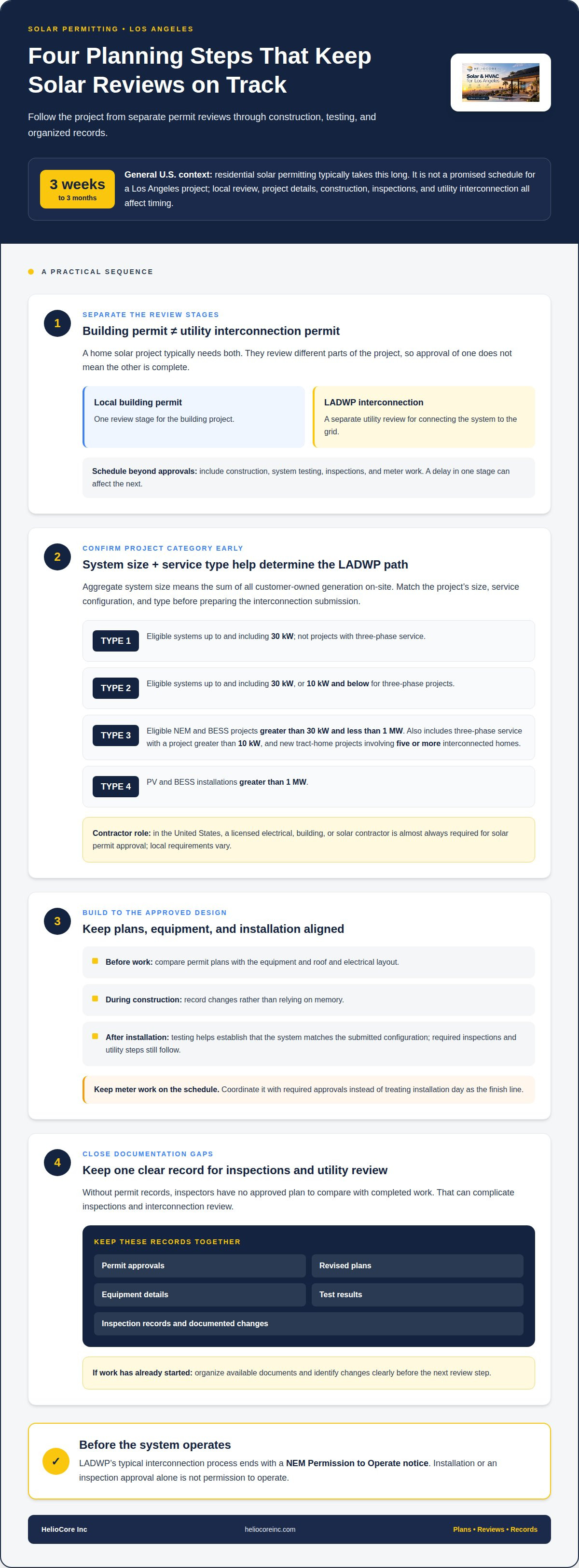
Residential solar permitting in the United States typically takes three weeks to three months. The schedule depends on local review, project details, construction, inspections, and utility interconnection.
For LADWP projects, interconnection eligibility depends on aggregate system size and service type. Type 1 applies to eligible systems up to and including 30 kW, but not projects with three-phase service; Type 2 covers eligible systems up to and including 30 kW, or 10 kW and below for three-phase projects. Document the inverter and equipment models in the application package, then match the installation to the submitted design.
- Separate the review stages before estimating a completion date. A home solar project typically needs two permits: a building permit and a utility interconnection permit. Those reviews address different parts of the project, so approval of one does not mean the other stage is finished. Add construction, system testing, inspections, and meter work to your schedule. A delay in one stage can affect the next, especially when reviewers need corrected plans or the installed work differs from the design.
- Confirm the project category and contractor role early. LADWP defines aggregate system size as the sum of all customer-owned generation on-site. That total, together with service configuration, helps determine the interconnection path. Type 3 applies to eligible NEM and BESS projects greater than 30 kW and less than 1 MW. A three-phase service with a project greater than 10 kW is also among the listed Type 3 conditions. In the United States, a licensed electrical, building, or solar contractor is almost always required for solar permit approval, though local requirements vary.
- Keep construction and testing aligned with the approved design. Before work begins, compare the permit plans with the equipment and layout planned for the roof and electrical system. During construction, record changes rather than relying on memory. After installation, testing helps establish that the system matches the submitted configuration. The applicable inspection and utility steps still follow. Meter work also belongs in the project schedule, so coordinate it with the required approvals instead of treating installation day as the finish line.
- Address permit gaps before they grow into approval delays. An installation without permit records leaves no approved plan for inspectors to compare with the completed work. That gap complicates later inspections and utility interconnection because reviewers need to understand what was built and how it matches the project documents. Keep permit approvals, revised plans, equipment details, test results, and inspection records together. If work has already started, organize the available documents and identify changes clearly before the next review step.
Inspections and interconnection agreements
Treat the local inspection and LADWP utility review as connected but separate checkpoints. LADWP’s typical interconnection process has five steps and ends with a NEM Permission to Operate notice.
-
Complete the Required Inspections
Arrange the required inspections after installation and keep the approved plans ready for comparison. The inspection checks whether the completed work matches the permitted project. If the equipment or layout differs from the plans, document the change and resolve the mismatch through the appropriate review before considering the inspection stage complete.
-
Arrange the Utility Interconnection Agreement
Submit an interconnection application with project details that match the installed system. The application records how the customer-owned system will connect to LADWP’s grid; it is separate from the building permit. Keep the application, approved project information, inspection results, and requested revisions together so the utility review follows a consistent record.
- Identify the correct LADWP review path. Match the project to its size, service configuration, and project type before preparing the interconnection submission. Type 3 covers eligible NEM and BESS projects greater than 30 kW and less than 1 MW in aggregate system size. It also applies to a three-phase service connected to a project above 10 kW. Type 4 applies to PV and BESS installations greater than 1 MW. A new tract-home project involving five or more interconnected homes falls under Type 3.
- Track the five utility steps through the final notice. Record each LADWP submission, review, and response as the application progresses. If LADWP requests a correction, update the affected project information and save the revised version with the original file. An inspection approval or completed installation is not permission to operate. LADWP’s typical interconnection process ends with the NEM Permission to Operate notice.
- Keep inspection and utility records aligned. Use consistent project details across permit plans, inspection records, and the interconnection application. If an equipment model or system layout changes during construction, update the project records so different documents don’t describe different installations. Clear records make the handoff between local inspection and LADWP review easier to follow.
For a more coordinated path from installation planning through utility review, explore residential solar project support.
LADWP preliminary review and approval to build
Submit a consistent project package and track LADWP’s utility review separately from the local building permit. The approvals serve different purposes, so keep each decision and revision with its own record.
-
Submit for Preliminary Review
Submit a complete interconnection application to LADWP, then compare its system details with the building permit plans. Check that the equipment, system size, and service configuration match. A different inverter or revised layout, for example, can create conflicting descriptions across documents. Keep copies of submitted versions so you can identify what LADWP reviewed and clearly update details if revisions are requested.
-
Receive Approval to Build
Distinguish LADWP’s utility review from the local building permit, and wait for the relevant approvals before scheduling construction. Approval in one process does not replace the other. Record the decision date, approved project description, and any conditions. If a reviewer requests a change, update the affected plans and application details before relying on the earlier version for installation.
- Build a timeline around review stages, not a single date. Residential solar permitting in the United States typically spans three weeks to three months. Your project sequence may include application review, corrections, local permit approval, construction, inspection, and interconnection. Estimate each stage based on the work required. Revisions can add a review loop, while consistent documents help avoid preventable back-and-forth.
- Track review status and revisions in one project log. Record when LADWP receives an application, when comments arrive, and when corrected files are resubmitted. Identify the exact document changed, such as the site plan or equipment schedule, rather than noting only “updated plans.” This makes it easier to confirm that the latest submission matches the building permit set. Keep the log with the approval records, not buried in an email thread.
- Keep construction plans tied to the approved scope. Before work begins, compare the installation plan with the project details reviewed by LADWP and the local authority. If the design changes, document the difference and determine which submissions need updating. For example, a revised equipment model should appear in the project records, not only in field notes while the application still lists the original. Consistent records support the inspection and utility review.
Required application documents and photos
Prepare clear, separate project files for LADWP’s interconnection review and the local building permit. Keep system details consistent across both submissions, photos, and any later revisions.
LADWP reviews the utility connection, while the Los Angeles Department of Building and Safety (LADBS) handles the local building permit. These are separate approvals. Residential solar projects typically require both a building permit and utility interconnection.
For a residential solar installation in Los Angeles, prepare a local building permit application and an LADWP interconnection application. Keep the project information consistent between them, including system size, equipment, and site layout.
To receive LADWP Permission to Operate, complete its interconnection process, which ends with a NEM Permission to Operate notice. Include meter coordination in the utility closeout sequence, and distinguish permission to operate from completion of installation.
-
Prepare Site Plans and Permit Applications
Organize the site plan, application details, and property photos in one project record. The plan should show the proposed system location and layout, and the written application should describe the same design. Keep the LADBS building review distinct from LADWP’s utility review. Avoid submitting files that show different equipment or system configurations.
- Build a consistent LADWP application package. Enter the project information in LADWP’s online interconnection application, then compare it with the site plan before submitting. LADWP defines aggregate system size as the sum of all customer-owned generation on-site, so include existing customer-owned generation when identifying the project total. Keep equipment descriptions and service details consistent across the application and supporting documents.
- Use photos to clarify the property and proposed work. Choose clear images that help reviewers understand the site plan, such as views of the relevant roof area and electrical equipment location. Make sure each image matches the property and layout shown in the application. Label files by subject, such as “roof layout” or “electrical panel,” so reviewers can connect each photo to the project details.
-
Request Permission to Operate and Install a Net Meter
Track LADWP’s interconnection steps through the final NEM Permission to Operate notice. Keep the application, review responses, and inspection records together, and use current approved project details in follow-up submissions. Treat meter coordination as part of utility closeout, not a substitute for interconnection review or permission to operate.
- Maintain a clean revision trail. Save each submitted site plan, photo set, and application version with its submission date. If a reviewer requests a correction, update the affected file and retain the earlier version for comparison. If the layout changes, for example, update both the plan and related photos so LADWP and LADBS are reviewing the same project description.
Post-installation inspections
After installation, handle the local inspection and utility closeout as separate steps. Use the approved project documents to track what was installed and what still needs review.
- Compare the finished work with the approved plans. Before inspection, gather the building permit plans and final equipment details. Check that the installed layout and equipment match the project documents. If the work changed during construction, record the changes and update relevant project records. This comparison helps the inspector assess the actual installation against the approved scope.
- Prepare the site and records for inspection. Keep the permit documents, equipment information, and available installation records together. Make it easy to review the completed solar work without searching through unrelated files. For example, keep the final layout with the permit plan instead of in a separate email thread. Organized records also help track any corrections identified during review.
- Record inspection findings and required corrections. Save the local inspection result with the project file. If the inspector identifies an issue, note the affected area and corrective action. After the work is corrected, compare it with the inspection notes before arranging the next review. Don’t rely on verbal reminders alone. A dated record connects the original inspection, corrective work, and follow-up.
- Keep local inspection and LADWP review distinct. A building inspection concerns the permitted installation; LADWP’s interconnection review concerns connecting the system to its grid. Keep each approval and response in its own record, even when project details appear in both. If a correction changes the installed configuration, update relevant documents so the local record and LADWP submission continue to describe the same system.
- Track the handoff after inspection. Once the inspection record is complete, keep it with the interconnection application and LADWP correspondence. Note which documents have been submitted and which responses remain outstanding. This creates a clear sequence from completed work to utility closeout without treating inspection as permission to operate. Keep the final project file accessible for future system questions or service work.
- Close the project file carefully. Store the permit, inspection outcome, approved plans, equipment information, and utility communications together. These records can help explain what was inspected and approved if the system needs service later. Keep updated documents alongside earlier versions rather than replacing the project history. Good recordkeeping makes the installation easier to understand over time.
For help planning the next solar project step, connect with the installation team.
HelioCore: High-Efficiency Solar Panels
HelioCore Inc helps Los Angeles homeowners move from permit planning to an installed solar system. Its residential solar installation process includes project planning, engineering, permitting, installation, inspections, and utility permission to operate. This coordinated support can help homeowners navigate local reviews and LADWP interconnection without managing every handoff alone.
Bring your project details, questions, and available property information to the conversation. HelioCore Inc can help you understand how solar panels fit your home and how permitting and utility steps fit into the installation. Battery storage is also available for homeowners considering a broader home energy plan.
Contact HelioCore Inc to discuss your residential solar project and its next steps.
Set Your Solar Project in Motion
Your next step is to turn the permit plan into a clear home energy decision. Consider how solar fits your household’s priorities and whether you want to include battery storage or HVAC in your broader plans. Keeping those goals in view can make project discussions more focused.
The LADWP solar permit process is easier to navigate when design, permitting, installation, and utility coordination are treated as connected parts of one project. HelioCore provides High-Efficiency Solar Panels, Battery Storage, and HVAC solutions for homeowners planning home upgrades.
Share your project goals and discuss the next step with HelioCore’s solar team. A thoughtful plan can make the path ahead feel more manageable, one clear decision at a time.
Frequently Asked Questions
What are the steps to apply for an LADWP solar interconnection permit?
Start with system design and project details, then submit LADWP’s online interconnection application. Keep equipment information and the site plan consistent with local building permit documents. Respond to review comments, complete the applicable inspection, and follow LADWP’s interconnection process through its NEM Permission to Operate notice. The LADWP solar permit process includes utility review as well as local building approval.
Where do I submit LADWP solar permit and interconnection applications?
Submit the utility interconnection application through LADWP’s online process and the building permit application to the Los Angeles Department of Building and Safety. These are separate submissions to separate offices. The distinction applies to residential projects across Los Angeles, including homes in Van Nuys, North Hollywood, Westchester, and San Pedro. Keep each submission confirmation and its related project documents in a separate file.
What documents and plans does LADWP require for a solar permit application?
Prepare project plans, equipment details, and clear property photos that describe the same proposed system. Include the site layout and equipment information used in the interconnection application. If the plan shows one equipment model, for example, the application should not describe another. The local building permit file and LADWP submission should reflect the same design so reviewers can follow the project without reconciling conflicting versions.
How long does LADWP solar permit approval and interconnection take?
Residential solar permitting in the United States typically takes three weeks to three months. This broad range reflects local variation and project factors, not a fixed LADWP service target. Review comments, corrections, and coordination between the building permit and utility application affect the sequence. Keep application status and revision dates together to see which review stage is active and what must happen next.
What are the LADWP solar permit, inspection, and interconnection fees?
That general timeline is not a specific LADWP fee quote. Keep permit and utility charges separate in your project records and distinguish them from installation costs. The amount depends on the project’s location and scope, so use the applicable application and permit documents to track charges for your home.
What inspections are required before LADWP approves a residential solar system?
The project must complete the applicable local inspection and the required LADWP interconnection steps. The local inspection concerns the permitted installation; LADWP reviews the grid connection and, at the end of its typical process, issues a NEM Permission to Operate notice. Keep the inspection record with the final system details. If the installed configuration changed, ensure the project records accurately describe the completed work.
What happens if a solar system is installed or activated before LADWP approval?
Installing before approval can leave the completed work out of step with the permit record, complicating inspection and utility review. Physical completion does not mean LADWP has granted permission to operate. If installation has already occurred, gather the actual equipment and layout details, compare them with the submitted documents, and address discrepancies through the relevant review steps. A functioning system is not proof that interconnection approval is complete.