
Solar
Powerwall Cost in Los Angeles: Installed Price and Equipment
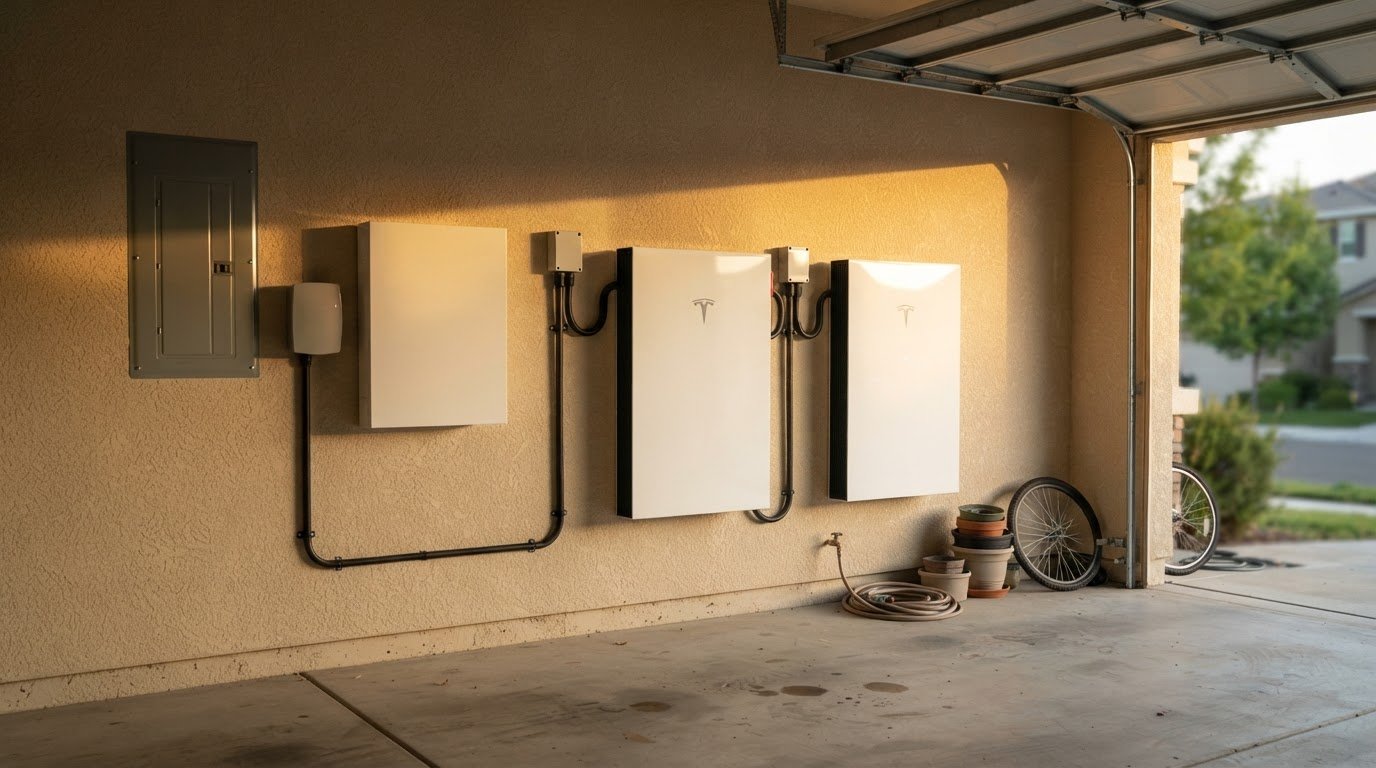
The lowest-looking Powerwall quote may not reflect the full scope of a two-unit installation. To understand Powerwall cost in Los Angeles, look beyond the battery hardware to the backup equipment and electrical work the system may require.
For two Powerwall 3 units, the installed price depends on the home’s electrical setup and backup plan. It’s provided after a quote request, with battery hardware, a Backup Gateway or Switch, labor, permits, and any needed panel work shaping the total.
A useful comparison shows what each installed system includes, why backup equipment or electrical-panel changes can affect a proposal, and whether quotes cover the same work. This helps you assess your home’s needs and understand the details before deciding.
Key Takeaways
- An installed estimate can include more than the battery: support equipment, labor, permits, and electrical work all shape the project scope.
- Backup goals affect system design. Decide whether you want to prioritize essential circuits or broader home coverage.
- Panel capacity and the home’s existing electrical setup can determine whether additional upgrades are needed.
- Compare proposals by checking that each describes the same equipment, backup coverage, installation work, and permit handling.
- Recent electricity bills and your solar setup help show how storage could fit your household’s energy use.
Table of Contents
How much is a Powerwall 3 installed in California in 2026?
An installed quote depends on the battery configuration, electrical work, and project paperwork. A solar-and-storage installation includes both solar and battery work, while a standalone system focuses on adding storage to the home’s electrical setup.
Solar-Paired and Standalone Installation Costs
A solar-and-storage installation combines battery work with solar panels; a standalone installation adds storage to an existing electrical system. The scope differs: a paired-system proposal should describe the solar work and battery interconnection, while a standalone quote should explain how the battery connects and which circuits it supports. The price depends on the project and is provided after a quote request.
Installed Retrofit Scope in Southern California
For a Southern California retrofit, the installer assesses the existing panels, electrical equipment, and proposed battery location. These conditions shape the work in the proposal. An older or unsuitable electrical panel may need an upgrade before installation. The proposal should list that work separately from the battery and other equipment, so the estimate reflects the home’s installation needs.
Electrical Panel Upgrades and Installation Work
Panel capacity can affect whether a Powerwall retrofit requires additional electrical work. The installer considers the panel, battery connection, and intended backup circuits together. For example, a proposal may include panel changes if the existing setup cannot support the planned connection. A clear scope helps explain why homes in Los Angeles County can receive different estimates for similar battery equipment.
Retrofit Permits and Utility Interconnection
A retrofit moves through local permitting, installation, inspection, and utility paperwork. California NEM 3.0 applies to systems interconnected after April 2023 with SCE, PG&E, or SDG&E, according to the California Public Utilities Commission. That policy matters for solar-connected projects because interconnection status affects how exported electricity is credited. Permit and utility documents should match the installed equipment and the home’s planned configuration.
Installation Timeline
A Powerwall retrofit in California typically takes a few weeks from assessment through permission to operate. One estimate places the timeline from quote to Permission to Operate at 6-12 weeks in 2026. These stages are different: site assessment and installation come before inspection and utility approval. A complete schedule should account for each step rather than treating the on-site work as the project’s finish.
Comparing Installer Quotes
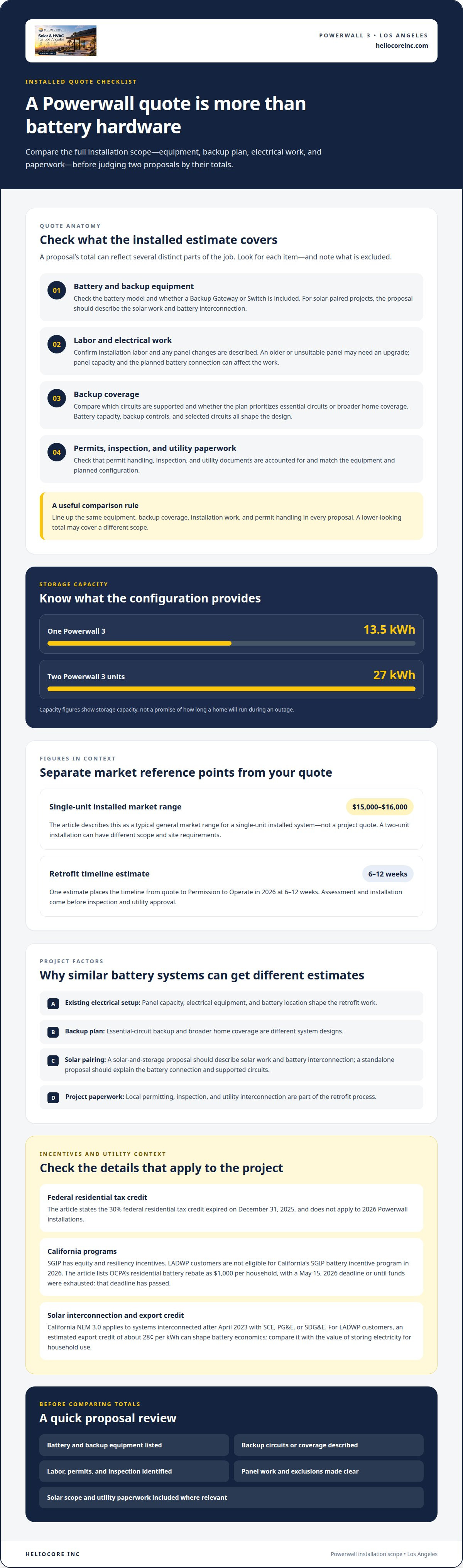
To compare Los Angeles County proposals, line up the project details, not just the total. Check whether each includes the battery, backup equipment, labor, permits, panel work, inspection, and utility paperwork. Compare the stated backup coverage and solar scope as well. This reveals exclusions that can make similar-looking quotes cover different work.
Battery hardware, gateway, labor, and permit costs
The installed total reflects equipment, electrical work, permitting, and the home’s utility connection. Incentives may affect the overall economics, but eligibility depends on the location and program.
Quoted Battery Models and Alternatives
Battery comparisons are useful when they match capacity, backup equipment, and installation scope. The Powerwall 3 is among the top quoted battery models in Los Angeles County, but an Enphase system or another brand should be compared by what the full proposal includes. A battery-only equipment figure does not show labor, gateway, permits, or electrical changes.
For a single-unit installed system, the market range is typically $15,000-$16,000. This is a general market range, not a project quote. Compare each proposal’s storage capacity, backup approach, and included work to understand the actual difference between systems.
Installation Costs and Electrical Upgrades
Installation costs may include battery hardware, a gateway, labor, permits, and required electrical upgrades. The home’s panel and backup configuration affect the work. A quote should separate these items, so an excluded panel upgrade or permit does not make the initial total misleading.
For a Los Angeles installation, the cost depends on the system and site conditions. Pricing is provided after a quote request.
According to the Internal Revenue Service, the 30% federal residential tax credit expired on December 31, 2025, and does not apply to 2026 Powerwall installations. California incentives are separate. The SGIP program has equity and resiliency incentives, while LADWP customers are not eligible for California’s SGIP battery incentive program in 2026.
OCPA’s residential battery rebate was listed at $1,000 per household, with a May 15, 2026 deadline or until funds were exhausted. That deadline has passed. For LADWP customers, an estimated export credit of about 28¢ per kWh can shape battery economics; compare it with the value of storing electricity for later household use.
Before comparing proposals, look for itemized hardware, gateway, labor, permits, inspection, and panel work. This breakdown shows what each estimate covers, without treating an incentive or market estimate as the installer’s price.
Backup equipment and outage protection
Backup design determines which parts of a home can keep running during an outage. Battery capacity, backup controls, and the selected circuits all shape the installation.
Backup Configurations and Household Needs
A backup configuration connects a battery to selected circuits or a broader portion of the home, depending on the system design. This choice matters because essential-circuit backup and whole-home backup serve different household needs. A single Powerwall 3 stores 13.5 kWh, while two units provide 27 kWh of storage capacity.
During an outage, a Backup Gateway or Backup Switch disconnects the home from the grid so the battery can supply circuits included in the backup design. The installer maps those circuits to household priorities, such as refrigeration, lighting, or other selected loads. The proposal should clearly state what the system is designed to support.
That market estimate reflects a larger system, but the home’s electrical setup and backup scope still affect the project total. A second unit adds storage capacity, but does not automatically mean every appliance can run at once.
Backup Power and Energy Independence
Backup power uses stored energy when grid service is interrupted, while energy independence means relying less on grid electricity. A battery can provide outage protection without disconnecting a home from its utility. A Tesla Powerwall can back up selected circuits without a solar installation, but backup requires a battery and compatible system.
With sufficient solar, a Powerwall 3 can provide up to 15.4 kW of continuous off-grid output. That figure is conditional on sufficient solar and describes output, not how long the battery can supply a home. Capacity and power output answer different questions: capacity describes stored energy, while output describes how much power the system can deliver at a time.
For example, a household prioritizing essential circuits may choose a different configuration from one seeking broader coverage. The design should match the selected backup loads to the system’s capacity and output. A proposal should identify the backup equipment, covered circuits, and electrical work needed.
Backup equipment also affects the installed cost. Compare the system configuration and included work, not just the number of batteries.
Estimate preparation and proposal comparisons
A useful estimate connects your household’s electricity use with the system design and installation scope. In Los Angeles, utility bills, electrical equipment, solar setup, and backup priorities give the installer a practical basis for a proposal.
Start with energy use. Twelve months of LADWP or SCE bills can reveal seasonal patterns that one recent bill may miss. The installer can use them to understand when the home draws power and how storage might fit with existing solar. Monthly totals matter, but daily usage patterns also help explain the proposed system size.
Next, define the project clearly. Adding a battery to existing solar differs from a project that also includes panels. The proposal should describe the battery, inverter arrangement, gateway or switch, backup circuits, labor, permits, inspection, and utility paperwork. If an electrical upgrade is included, the estimate should explain the work and why the existing equipment affects the design.
- Usage: Identify the LADWP or SCE billing period and how the installer uses it.
- Equipment: List the battery, inverter, gateway, and any other included components.
- Backup: State which circuits the system is designed to support.
- Project work: Separate installation, permits, inspection, and any electrical upgrade.
- Solar connection: Describe how the system connects with existing or new panels and handles export.
Compare proposals line by line, not just by headline total. One quote may include an electrical-panel upgrade while another excludes it. Permit or inspection costs may also fall outside the stated installation scope. These differences affect what you pay for and which work the proposal covers.
Ask the estimator to explain the assumed solar configuration and inverter connection in plain language. The proposal should show whether existing panels remain in the design, whether new solar work is included, and how the battery connects to the home’s electrical system. If it refers to certified equipment, it should identify the equipment and relevant documentation.
Export assumptions deserve attention too. LADWP and SCE are separate utilities, so a proposal should name the applicable utility and explain how its export assumptions inform the design. Review the equipment list, backup scope, upgrade items, and permit handling together. This makes estimates easier to compare without confusing different project scopes with different prices.
Tesla Powerwall price and support hardware
A Tesla Powerwall proposal includes more than the battery itself. Support hardware, electrical compatibility, and the chosen storage configuration affect what the complete system must cover. Looking at each component separately helps explain why two estimates for Powerwall 3 may describe different work, even when both name the same battery.
Powerwall 3 stores 13.5 kWh. Its support equipment helps connect the battery with the home and manage backup operation. A proposal should identify the gateway or switch, how the system connects to the electrical panel, and whether existing solar panels are part of the design. Those details show whether the quoted scope matches the intended use.
Expansion hardware changes storage capacity without adding another Powerwall 3 unit. Each Powerwall 3 Expansion adds 13.5 kWh, and the system can support up to three expansion units for a total capacity of 54 kWh. Expansion units add capacity, not power output. That distinction matters when comparing a plan for longer storage with one intended to support larger electrical loads.
The electrical panel is another part of the estimate. The installer assesses whether the existing setup can support the planned battery connection. If a panel upgrade is needed, it should appear as a separate line item with a clear description. That makes it easier to distinguish battery hardware from changes to the home’s electrical system.
Permits and inspection belong in the project scope too. Check whether the proposal identifies who handles permit paperwork, inspection coordination, and utility interconnection. These steps connect the equipment to the home’s electrical system and utility requirements. The proposal should clearly state the equipment and installation responsibilities, including any required support hardware.
Compare equipment lists before comparing totals. Look for the Powerwall 3 model, any Expansion units, backup hardware, panel work, and the stated inspection and interconnection scope. For example, one proposal may include additional storage while another covers only the base battery. A line-by-line review makes that difference visible and helps keep the comparison focused on equivalent systems.
Tesla describes the Powerwall equipment warranty as 10 years. Keep that equipment coverage distinct from installation workmanship and other project terms when reviewing a proposal. Warranty duration alone does not explain what equipment is included, how the system is configured, or what installation work the quote covers.
For a project-specific equipment and installation proposal, request a Powerwall installation quote that outlines the battery, support hardware, and electrical scope.
HelioCore: Tesla Powerwall & Battery Storage Installation
HelioCore helps Los Angeles homeowners plan and install Tesla Powerwall battery storage around household energy use and backup priorities. The team manages the process from consultation and custom engineering through permitting, installation, inspections, and utility permission to operate.
Whether you’re adding a battery to existing solar, pairing storage with new High-Efficiency Solar Panels, or deciding which circuits to back up, a project assessment can clarify the scope. Electrical equipment, solar configuration, and backup goals all shape the design and proposal.
Contact HelioCore to discuss your home’s Powerwall installation and next steps.
Make Your Home’s Energy Plan the Next Step
Choosing a battery is also an opportunity to consider how your home uses energy throughout the day. A suitable plan should reflect your priorities, whether you’re adding storage, pairing it with solar, or considering how HVAC affects household electricity use. HelioCore offers Battery Storage, High-Efficiency Solar Panels, and HVAC solutions for homeowners.
Powerwall cost in Los Angeles depends on the equipment, electrical work, backup configuration, and permitting involved. HelioCore provides project pricing after a quote request, based on your home’s needs and installation scope. A clear estimate can help you decide what to include now and how it fits your longer-term plans.
Contact HelioCore about your estimate and take the next step toward a home energy plan that feels right for you.
Frequently Asked Questions
How much do two Powerwall 3 units cost installed?
Powerwall cost in Los Angeles for two units depends on the equipment, backup coverage, electrical work, and site conditions. If you want broader backup, the proposal should explain which loads the system is designed to support and how your electrical setup affects installation. Pricing depends on the project and is provided after a quote request, with the scope itemized for review.
Does the federal tax credit apply to a Powerwall in 2026?
No. The Internal Revenue Service states that the 30% federal residential tax credit expired on December 31, 2025, and does not apply to 2026 Powerwall installations. Don’t subtract that credit when planning a 2026 project. Instead, assess the system’s value based on the household’s backup priorities, solar configuration, electricity use, and any separate local incentive programs that may apply.
Is a Powerwall 3 worth it in California without the tax credit?
A battery may suit a household that values backup power or wants to use stored solar electricity later, but the decision depends on the home’s needs. Consider when you use electricity, which circuits matter during outages, and whether existing solar can charge the battery. Weigh these priorities against the full project scope rather than relying on a tax credit to determine value.
What incentives should I review before installing Tesla Powerwall 3?
Review programs tied to your utility territory and eligibility, then distinguish rebates from federal tax credits and export credits. LADWP customers are not eligible for California’s SGIP battery incentive program in 2026. Pasadena Water and Power has a separate battery rebate program, but it applies to its service area, not automatically to every Los Angeles address. Utility territory and program rules determine which options are relevant.
What is the installed cost of a Tesla Powerwall in Los Angeles?
Powerwall cost in Los Angeles depends on the battery configuration, backup equipment, electrical panel, permits, and installation scope. A home with existing solar may need different integration work from one adding solar and storage together. For a useful estimate, the proposal should separate equipment from installation tasks and identify panel work. This shows what the project includes without assuming a standard total.
How much does a Powerwall 3 cost before installation?
Battery-only pricing is not the same as a complete installed estimate. A full project may also include support hardware, electrical integration, labor, permits, and inspection. When reviewing an equipment-only figure, identify what it covers and whether backup controls are included. This helps prevent a hardware price from being mistaken for the cost of a complete home energy storage installation.
Does the Los Angeles Department of Water and Power offer battery rebates or incentives?
LADWP customers are not eligible for California’s SGIP battery incentive program in 2026. An export credit is different from a battery rebate: it relates to electricity sent to the utility, rather than a direct payment toward battery equipment. For a home served by LADWP, separate those two concepts when evaluating the project’s economics, and consider how much solar electricity the household uses at home.
How much can a Powerwall save on Los Angeles electricity bills under LADWP or SCE rates?
There is no single bill-savings amount for every LADWP or SCE household. Results depend on electricity use, solar production, the utility rate plan, and when stored energy is used. A household using more power after solar production may value storage differently from one that uses most electricity during sunny hours. Compare the expected battery use with actual household patterns and the applicable utility plan.