
Solar
Residential Battery Storage for LADWP Homes: A 2026 Guide

What makes a home battery useful depends not only on how much electricity it stores, but also on when your household uses power and what you want the system to do. For LADWP homeowners, residential battery storage can work alongside rooftop solar or the grid. The setup determines how stored electricity is used and what happens during an outage. Backup requires a battery and compatible system configuration, and may not keep every circuit running.
Before adding equipment, separate the potential uses from the expected bill outcome. A battery doesn’t automatically eliminate your utility bill or guarantee a particular amount of savings. Billing and project requirements can also depend on current LADWP rules and your account details.
This guide explains how a home battery stores and supplies electricity, how it can pair with solar and LADWP service, and what backup can and can’t cover. Use the practical steps below to weigh your household’s energy use, outage priorities, and equipment compatibility before deciding whether solar and storage suit your home.
Key Takeaways
- Understand how residential battery storage LADWP households use can store electricity and supply selected home loads later.
- Separate battery use from utility-bill credits, export rules, and rate-plan effects when considering potential value.
- Distinguish everyday energy use from outage backup. Backup requires a compatible battery setup and may not power every circuit.
- Assess your household’s priorities, energy use, solar system, and equipment compatibility to decide whether storage fits.
- Learn how HelioCore coordinates residential Tesla Powerwall projects, including permitting, electrical integration, and utility coordination.
Table of Contents
- What Residential Battery Storage Means for an LADWP Home
- How Residential Battery Storage Can Interact With LADWP Billing
- Battery Storage for LADWP Homes: Daily Use Versus Outage Backup
- How to Assess Whether Battery Storage Fits Your LADWP Household
- What to Expect From Residential Battery Storage Planning With HelioCore
What Residential Battery Storage Means for an LADWP Home
A home battery stores electricity for later household use. Electricity charges the battery, remains stored until the system calls for it, and can then supply connected home loads. In short: Home battery storage holds electricity for later use; it doesn’t generate electricity or determine on its own which circuits receive power.
For a residential battery storage LADWP setup, separate the roles of each component. Solar panels generate electricity when sunlight is available. An inverter converts and manages electricity for household use and coordinates with the system. The battery stores energy. LADWP remains the utility connection for a grid-connected home. Each component has a different job. The Home Energy Storage overview provides additional background on how household storage fits into broader energy systems.
How a Home Battery Stores and Supplies Electricity
When a battery charges, available electricity goes into storage rather than being used or exported at that moment. Later, when the home needs electricity and the system is set to discharge, stored energy can serve connected household loads. These may include selected lights, appliances, or other circuits, depending on the equipment and electrical design.
System controls coordinate electricity flow between solar panels, the battery, household use, and the grid. Their operation depends on the installed equipment and its settings. A battery doesn’t independently power every appliance, and installing one doesn’t automatically provide outage backup. The system configuration determines how it operates and what it can supply.
How Solar Panels, a Battery, and LADWP Fit Together
During the day, solar electricity can serve the home as it is generated. If the system is configured to charge the battery with available solar energy, that electricity can be stored for later. Depending on the system settings and household demand, electricity may instead come from the grid or flow to it. The sequence varies by system.
Think of the equipment as coordinated pathways, not one fixed route. Panels produce electricity, the inverter helps manage it, and system controls direct it according to the design. The battery holds energy for later use. A grid-connected home can also draw electricity from LADWP.
This distinction matters when planning. Solar panels generate electricity but don’t store it for later. A battery stores electricity, but doesn’t promise a particular bill outcome or keep the whole home running during an outage. Those results depend on system configuration, settings, and connected loads. Understanding the basic flow is a useful starting point for discussing residential storage with LADWP service.
How Residential Battery Storage Can Interact With LADWP Billing
A battery can change how electricity is used in your home. It doesn’t automatically change how LADWP bills you or guarantee a lower bill. Keep three things separate: electricity stored and used later, any credits for solar electricity sent to the grid, and the rates or charges on your utility account.
For LADWP customers, battery-related bill effects depend on system design, household electricity use, battery settings, and current utility rules. Storage may shift when a home draws electricity from LADWP, but the result varies with solar production, household demand, and system settings.
What Battery Storage May Change on an LADWP Bill
Imagine a home that generates solar electricity during the day, stores some of it, and uses it later. If the battery supplies household loads at a time when the home might otherwise draw electricity from LADWP, grid purchases may change. The amount and value of that change depend on actual usage, solar production, settings, and the applicable rate plan. It isn’t a promised savings amount.
Using stored electricity at home is different from exporting solar power. Stored energy serves the home later; exported energy flows to the grid. Any utility credit for exported solar depends on the applicable billing arrangement and current rules, not simply on whether a battery is installed. The U.S. Department of Energy on Energy Storage offers broader context on storage’s role in the energy system.
Rate plans also matter. LADWP residential customers may have a standard tiered rate or an optional time-of-use plan, where the price of grid electricity varies by time. Depending on the plan and battery settings, storage could shift some grid use between periods. That shift doesn’t guarantee a lower total bill, and fixed charges or other account items may remain.
Which LADWP Rules and Account Details to Verify
Before estimating the effect of residential battery storage, LADWP customers should review current utility information and their own account details. LADWP has its own solar and battery interconnection process, so don’t assume that requirements or billing rules from another California utility apply.
- Review your current rate plan, usage pattern, and charges on your LADWP account.
- Check current LADWP guidance on solar exports, battery interconnection, and billing.
- Review official program information for any incentive’s eligibility, application timing, and funding status.
These steps help distinguish possible changes in grid purchases from export credits and program benefits. A residential solar and battery assessment can connect your usage patterns, equipment design, and LADWP coordination needs without treating a bill outcome as guaranteed.
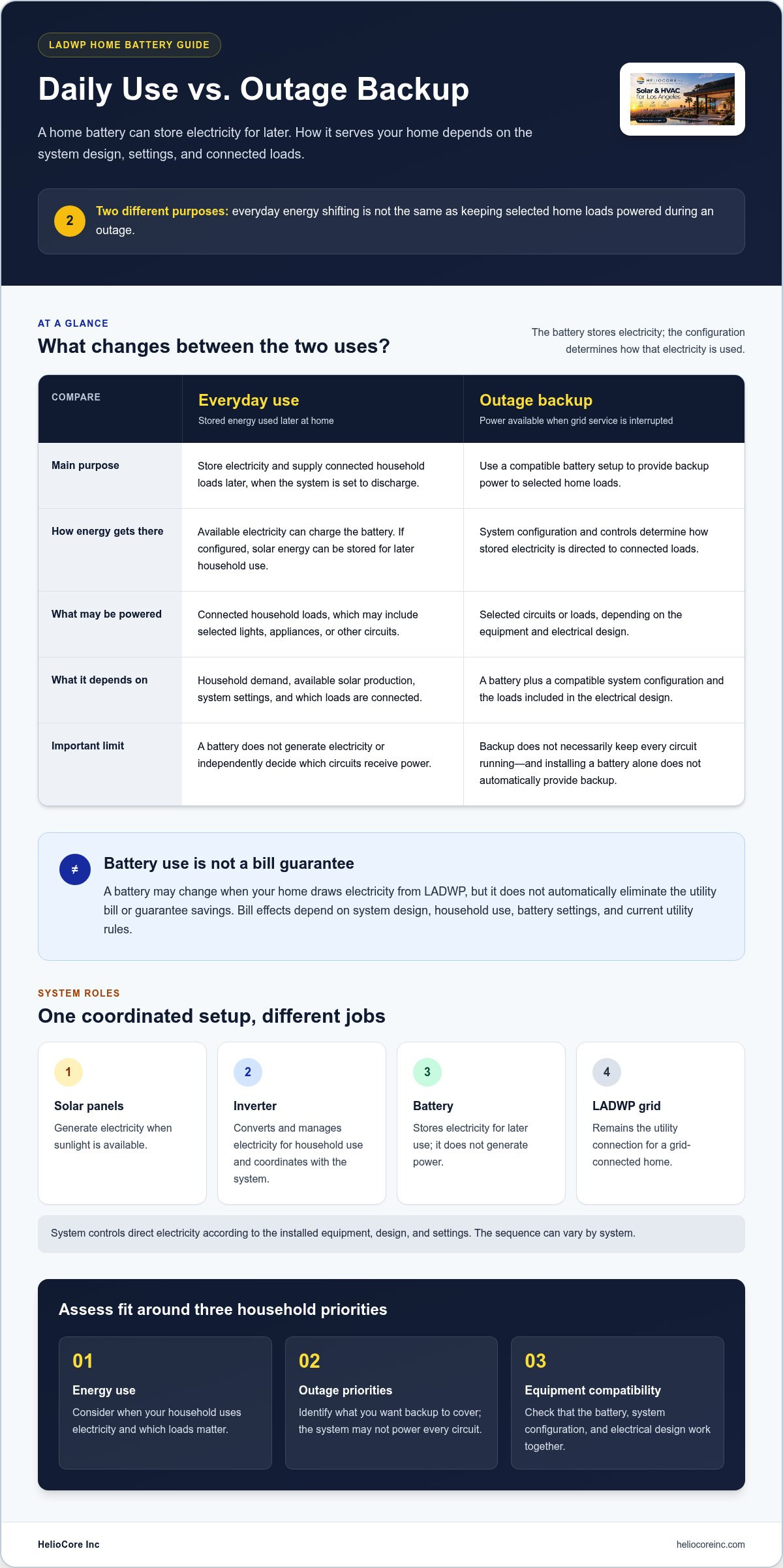
Battery Storage for LADWP Homes: Daily Use Versus Outage Backup
A battery can support two different household goals: making stored electricity available during normal operation, or keeping selected home circuits running when grid service is interrupted. These uses can overlap, but they aren’t the same. The right setup depends on your priorities and how the battery is integrated with the home’s electrical system.
For residential battery storage LADWP homeowners, decide whether the priority is everyday energy use, outage resilience, or a combination. A battery alone doesn’t guarantee backup. The system must include a compatible backup configuration.
Using Stored Electricity During Normal Home Operation
During normal service, stored energy may supply household loads when solar generation isn’t available, such as after sunset. System controls and settings determine when the battery charges and discharges. Some households may prioritize using stored solar energy later in the day; others may have different operating goals. The right schedule depends on the system and household.
This everyday use takes place while LADWP service is available. It can change when the home draws electricity from the grid, but it doesn’t determine what happens during an outage.
What a Battery Can and Cannot Do During an Outage
Outage backup requires a battery and a compatible system configuration. When grid service is interrupted, a properly configured system can supply selected loads. It won’t necessarily keep every circuit or appliance powered. What stays on depends on the system design, the loads selected, and how much electricity they require.
For example, a household may prioritize essential lighting, refrigeration, or communications equipment instead of trying to run the entire home. Large or energy-intensive loads affect how much backup is available. Whole-home backup requires careful planning around household loads and system design, so set expectations before choosing a configuration.
To plan, list the functions you’d want to maintain during an outage, then separate essential circuits from those you can temporarily do without. This makes backup needs concrete and helps avoid assuming that everyday battery settings automatically determine outage operation.
- Daily use: Stored electricity may serve home loads when solar production is unavailable.
- Outage backup: A compatible backup configuration is required, and only selected loads may be powered.
- Planning: Household priorities and electrical design shape what the system can support.
For a closer look at household load planning and whole-home backup considerations, see the Tesla Powerwall whole-home backup guide. Separating everyday use from outage needs is a practical first step toward choosing a setup that matches your household.
How to Assess Whether Battery Storage Fits Your LADWP Household
A useful battery decision starts with your household, not a guessed system size. For residential battery storage LADWP homeowners considering it, connect what you want storage to do with how your home uses electricity and how its equipment is set up.
Work through these four steps:
- Define your priority. Decide whether you’re focused on outage resilience, using more daytime solar later, managing when you draw grid electricity, or combining goals.
- Review energy use. Look at LADWP bills and usage patterns. Note when the home is busy, when larger appliances run, and which circuits or routines matter most during an outage.
- Assess solar. Identify whether solar is already installed or planned, and consider how its production lines up with household use.
- Verify compatibility and requirements. Review the home’s electrical setup, equipment compatibility, and current LADWP project guidance.
Match Storage Decisions to Household Priorities
Start with a practical question: what would make a battery useful in your home? If outages are the main concern, list the essential circuits and routines you’d want to support. If your focus is solar self-use, consider when solar power is produced and when household demand rises. If bill management is the priority, remember that battery operation may shift grid use but doesn’t promise a particular bill reduction.
These goals can overlap, but may call for different settings and planning choices. Be specific about what you want to support, and don’t assume a battery will provide whole-home backup or power your home for a set length of time. Those outcomes depend on system design and household loads.
Review Solar, Electrical, and LADWP Project Details
Gather details about existing or planned solar equipment and the home’s electrical system. Battery and inverter compatibility depends on the installed equipment, so don’t assume a battery can simply connect to any solar setup. If solar is part of your plan, a residential solar installation guide can help you understand the broader project considerations.
Then review current LADWP guidance for solar and battery interconnection, billing, and applicable programs. Requirements and eligibility can change, so rely on current official information rather than an older estimate or assumptions based on another utility. Keep your account details handy, including your rate information and recent usage, so the discussion reflects your home.
Once you’ve identified your priorities, usage patterns, solar plans, and electrical details, you’ll have a clearer basis for a tailored assessment. Explore a residential solar-and-storage assessment to connect those household needs with equipment compatibility and LADWP project coordination.
What to Expect From Residential Battery Storage Planning With HelioCore
Adding a home battery involves more than choosing equipment. The system must suit your household’s goals, existing or planned solar, and electrical setup. For a homeowner weighing residential battery storage LADWP options, project coordination connects those details with the applicable utility steps.
HelioCore installs Tesla Powerwall battery storage for residential homeowners in Los Angeles and nearby LADWP-area communities. Planning starts with the home and the outcome you’re looking for. Backup priorities, solar use, and equipment compatibility all shape the project.
How HelioCore Coordinates a Residential Battery Project
Project planning brings your household’s priorities together with existing or planned solar equipment. HelioCore coordinates permitting, electrical integration, and utility requirements for the storage project, so the home’s electrical setup and project steps are considered before installation.
Project details depend on the property and system. Existing equipment, planned solar, and the loads you want to support inform the design. A battery should be planned around the specific electrical integration and utility coordination the project requires.
Gather information about your current or planned solar equipment, electrical setup, and the circuits or household routines that matter most. These details make it easier to discuss how a battery could fit without assuming a particular bill outcome or backup result.
A Practical Next Step for LADWP Homeowners
Before discussing a project, write down your main goal and what equipment is already installed or planned. Note whether you’re considering storage for outage resilience, solar use after sunset, or both. These details help make an assessment more relevant to your home.
For additional context on the installer role and project considerations, read this Tesla Powerwall certified installer guide. It can help you understand the coordination involved in a residential battery project, alongside the planning needs of a home connected to LADWP.
HelioCore can help you review your household priorities, solar plans, and electrical integration as part of a tailored residential battery project. Explore a residential battery assessment with HelioCore to understand how storage may fit your home and its LADWP requirements.
Make Your Next Battery Decision With Confidence
Turn broad goals into a picture of daily life at home. Which routines matter during an outage? When does your household use the most electricity? Is solar already part of the plan? Your answers can shape a practical conversation about residential battery storage LADWP homeowners are considering, without assuming a particular bill change or backup result.
HelioCore installs Tesla Powerwall battery storage and coordinates permitting, electrical integration, and utility steps for residential projects. That support connects household priorities with the details of your home and its LADWP service.
You don’t need every technical answer before exploring your options. Bring your questions, priorities, and what you know about your current or planned system. Explore residential battery storage with HelioCore and take a clear next step toward understanding what may fit your home.
Frequently Asked Questions
Is residential battery storage worth considering for LADWP customers?
It can be worth considering if backup power or using more of your solar electricity later matters to your household. The value of residential battery storage LADWP homeowners consider depends on their priorities, equipment, and usage, not a guaranteed bill reduction. In Los Angeles, including Inglewood, South Los Angeles, Crenshaw, Leimert Park, Baldwin Hills, Westchester, Van Nuys, North Hollywood, Reseda, Northridge, Woodland Hills, and San Pedro, start by deciding what you want storage to do.
Can a home battery power my house during an LADWP outage?
It can power selected home loads during an outage if the battery is installed with a compatible backup configuration. Backup doesn’t necessarily keep every circuit running. For example, a system may prioritize refrigeration, lighting, or internet equipment while other appliances remain off. The circuits supported depend on the home’s electrical design and system setup, so don’t assume a standard solar installation provides outage power on its own.
Does LADWP offer residential battery storage incentives in 2026?
As of 2026, the Self-Generation Incentive Program is limited to LADWP customers who qualify for the Residential Solar and Storage Equity program. The general-market SGIP rebate isn’t available in LADWP territory, and RSSE applications may face a waitlist, with funding not guaranteed. The federal residential clean energy tax credit expired for systems installed after December 31, 2025. Check official LADWP and program information for current eligibility and application status.
Can I install a home battery without rooftop solar?
Yes. LADWP permits standalone home batteries, so rooftop solar isn’t required. Depending on the system and settings, a battery may charge from the grid and supply stored electricity later. Whether that approach makes sense depends on your rate plan, household use, equipment, and project requirements. Review current LADWP interconnection guidance before planning a standalone installation, and don’t assume grid charging will lead to bill savings.
How long can residential battery storage power a home?
There isn’t one runtime that applies to every home. Duration depends on the battery system, the stored energy available, and which appliances or circuits are drawing power. A home using selected essential loads may use stored energy differently from one trying to run more equipment. For a practical estimate, identify the circuits you’d prioritize and review their expected use as part of system planning.
Will a home battery eliminate my LADWP electric bill?
No. A battery doesn’t automatically eliminate an LADWP bill. Your account may still reflect electricity drawn from the grid, applicable charges, and how solar exports are credited under current utility rules. Solar production, household consumption, battery settings, and your rate plan all affect the bill. Treat storage as equipment that can change how and when electricity is used, not as a promise of a zero balance.