
HVAC
Solar and HVAC Bundles in Los Angeles: Costs and Savings
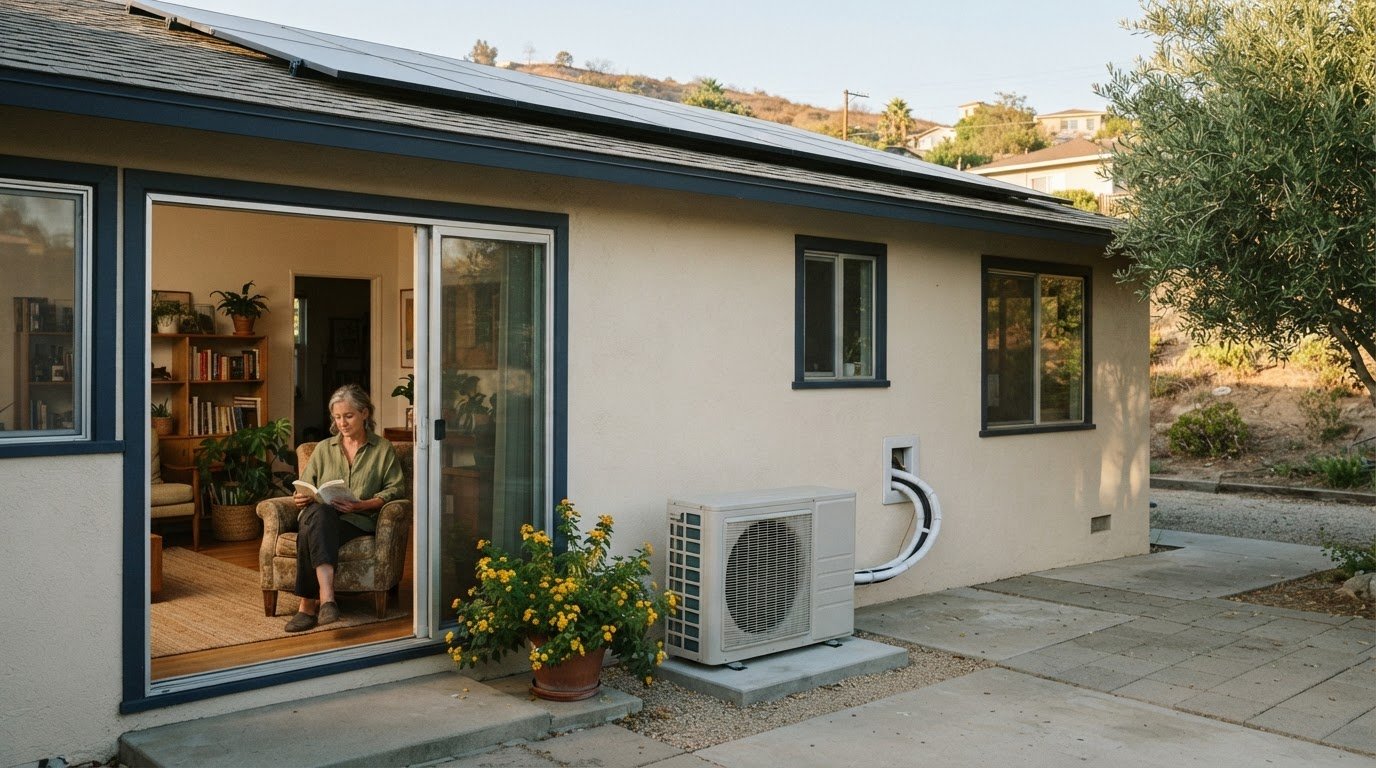
The right solar and HVAC plan depends on the home, not a one-size-fits-all price. The cost of a solar and HVAC bundle in Los Angeles varies with the solar system design, heating or cooling equipment, electrical setup, and whether the solar system is purchased or leased. Solar can supply electricity for household use, including cooling, while an efficient HVAC system can help manage how much power the home uses.
It’s reasonable to want to manage utility costs without taking on a confusing project. This guide explains how solar and HVAC work together, what shapes a project, and how financing, warranties, and maintenance factor into the decision. It also covers practical ways to plan for your home and evaluate potential savings without assuming the same result for every household.
Key Takeaways
- Start with your utility territory: the way solar credits work can affect how much value you get from the electricity your home sends to the grid.
- Use household energy use and cooling needs to guide system sizing, rather than relying on a standard package.
- Solar can power air conditioning or a heat pump, while a battery can store electricity for later use; system design shapes how those pieces work together.
- Compare ownership and leasing options, then weigh warranty coverage and ongoing maintenance as part of the full project decision.
- A coordinated solar and HVAC plan can bring the equipment and installation steps into one conversation, with the home’s needs guiding the design.
Table of Contents
Fixing a portion of an electric bill against rising utility costs
A solar system can offset some electricity purchased from a utility, but the details depend on the home’s service territory. In Los Angeles, identify your utility first, then understand its rules for exported power and interconnection.
Potential Utility-Bill Offsets
Solar panels can reduce the electricity a household buys from its utility by supplying power at home. The offset depends on when the system generates electricity, how much the household uses, and the utility’s rules for exported power. For example, running cooling during sunny hours can use solar electricity directly. Electricity sent to the grid may receive a different credit from electricity used at home.
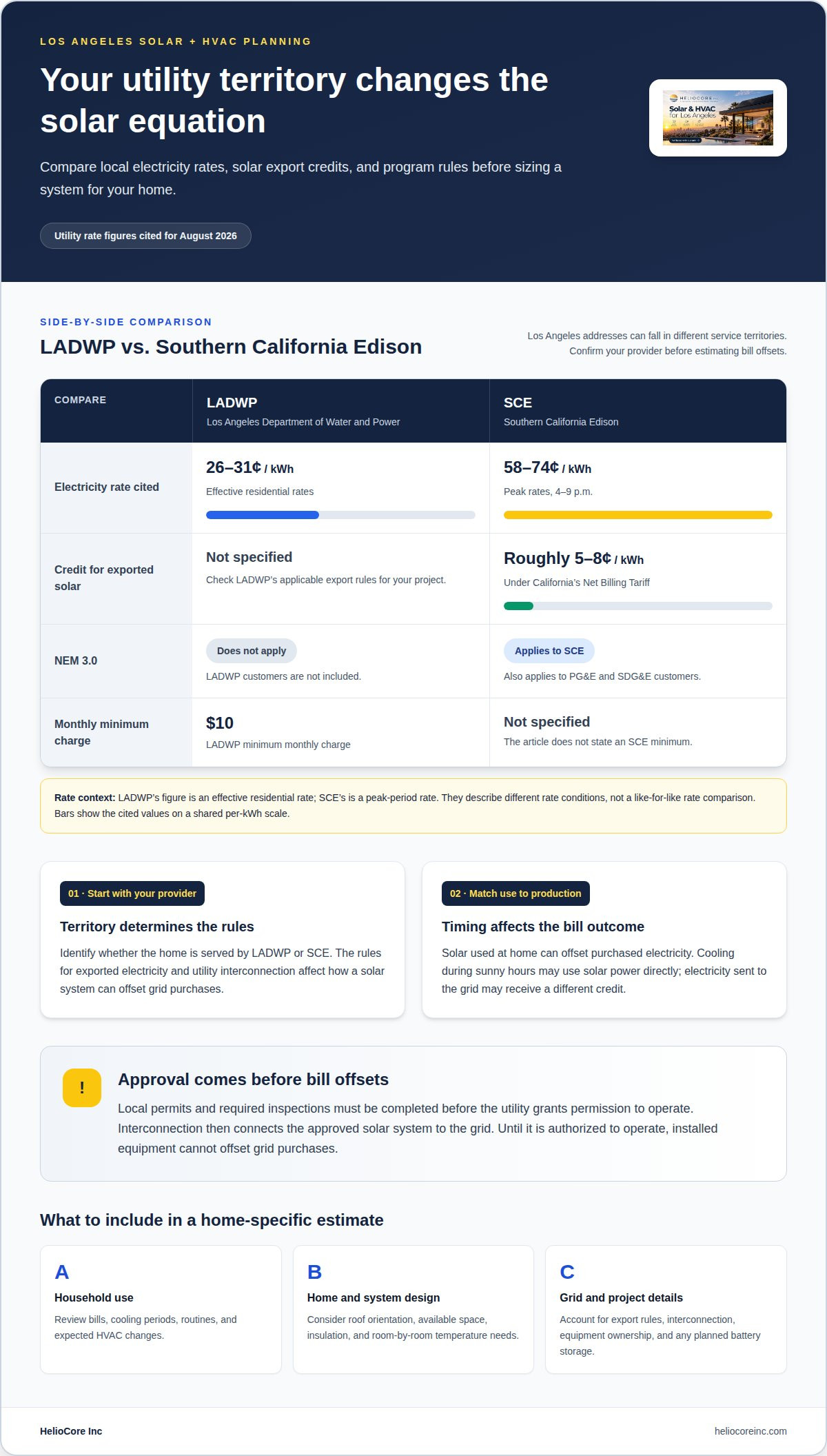
Los Angeles homes may receive service from the Los Angeles Department of Water and Power (LADWP) or Southern California Edison (SCE). LADWP residential customers had effective electricity rates of 26 to 31 cents per kWh in August 2026. SCE customers can face peak rates of 58 to 74 cents per kWh from 4 to 9 p.m. in August 2026, so timing household use matters.
SCE customers receive roughly 5 to 8 cents per kWh for exported solar electricity under California’s Net Billing Tariff in August 2026. NEM 3.0 applies to customers of SCE, PG&E, and SDG&E, not LADWP customers. LADWP customers have a $10 minimum monthly charge in August 2026. These differences mean a solar estimate should reflect the home’s actual utility territory, not just its Los Angeles address.
Permitting and utility interconnection are separate steps. Local permits and required inspections must be completed before the utility grants permission to operate. Interconnection connects the approved solar system to the utility grid. Include these steps when planning a solar and HVAC bundle in Los Angeles: installed equipment cannot offset grid purchases until it is authorized to operate.
Rebates and Incentives
Solar projects may qualify for a 30% federal tax credit. That potential federal incentive is separate from a rebate for HVAC equipment, and eligibility depends on the project and applicable tax rules. LADWP’s solar incentive program ran out of funds in 2018, so it should not be treated as a current source of bill savings.
When comparing financing, keep any incentive separate from the project’s effect on utility bills. A credit or rebate may affect upfront costs, while export rules and household energy use shape ongoing bill offsets. Evaluate each item separately.
Potential energy-bill savings and home value
There’s no single bill-reduction figure for every Los Angeles home. Savings depend on household electricity use, solar production, utility rules, and how efficiently the HVAC system runs.
Start by reviewing your electric bills. Monthly usage can show when demand rises, especially during cooling periods. An energy assessment can also identify drafts around vents and windows, weak insulation, or older, inefficient appliances. These details matter because reducing wasted energy can change how much electricity a solar system needs to supply.
Next, match the plan to the home. Roof orientation, available space, household routines, and room-by-room temperature needs all affect energy production and use. A system designed around past bills may need a different approach if you plan an HVAC upgrade or expect to use more cooling. The goal is to consider the combined energy load, not solar needs in isolation.
For LADWP customers, the Shared Solar program offers a distinct option for residential customers in multifamily dwellings. It lets them fix a portion of their electric bill against rising utility costs for 10 years. That is different from selling rooftop solar output to LADWP. Treat the program and rooftop exports as separate arrangements when estimating household savings.
Battery storage changes when solar-generated electricity is used. A compatible battery can store solar power for later household use, while surplus electricity may flow to the grid when generation exceeds demand. The usefulness of storage depends on your home’s schedule: evening cooling, daytime occupancy, and other electric loads all matter. A battery also affects project financing, so consider its role alongside your expected energy use. Backup power during an outage requires a compatible battery and system.
Energy management can help without adding equipment. Set a smart thermostat around your household’s routine rather than cooling an empty home as if everyone were there. After installation, monitor energy use and compare it with earlier bills. This can help you see whether a schedule change or HVAC adjustment is reducing grid purchases.
A solar system’s contribution to home value is less straightforward than its effect on utility bills. It depends on the home, system condition, ownership arrangement, and available records. Keep installation and maintenance documents together; they give future buyers useful information about the solar equipment and the home’s energy setup.
For context, solar-only systems in LADWP territory have an estimated payback period of 8 to 12 years as of August 2026. That estimate does not establish the payback for a combined solar and HVAC project. Household consumption, HVAC efficiency, financing, and stored or exported electricity all affect the calculation.
Solar panels powering an air conditioner or heat pump
Solar panels can supply electricity for an air conditioner or heat pump. System design affects how much power is available during cooling hours and how much the home still draws from the utility. An existing solar system may already account for the HVAC equipment’s energy use. If you change that equipment, reassess the home’s expected energy load.
Solar production and cooling demand often overlap during sunny daytime hours. A solar-powered HVAC setup directs electricity from its panels to the associated equipment first. Extra generation can then serve other household loads. If generation exceeds household use, the remaining electricity can go to the grid. This order helps explain why panel output, cooling schedules, and other electric loads matter together.
A battery can store solar electricity for use after production falls, including during evening cooling. It also changes the system’s backup plan, but battery capacity and HVAC demand must be considered together. A single 10 kWh battery will not power a central AC system for more than a few hours. Owners who want extended cooling during an outage need a design based on the equipment’s draw and the household’s priorities.
Electrical condition affects what the project can support. The required work depends on the existing panel and planned equipment. Panel condition can therefore affect both installation planning and the project budget.
Roof condition is another early planning point. Los Angeles roofs with under 5-7 years of remaining life should often be replaced before solar installation. Roof repairs or preparation come before panels when the roof needs work. Because roof scope differs from home to home, include its condition and required work in the project plan rather than treating it as part of a standard solar price.
Panel condition is one part of ongoing solar system care. Dust, leaves, or other buildup can shade the array and affect production. A maintenance plan can consider panel care alongside HVAC upkeep. Cleaning needs depend on the roof, nearby trees, and visible soiling rather than a universal schedule. Optional panel cleaning may cost extra.
For a Los Angeles solar and HVAC plan, compare the cost and expected use of dedicated solar-powered HVAC with a complete PV array. Consider the home’s cooling needs, roof condition, electrical panel, and desired battery backup before settling on system design. Each choice affects how solar power supports comfort at home.
Financing, warranties, and maintenance
Before choosing a Los Angeles contractor, compare the written project scope, financing terms, warranty coverage, workmanship terms, and maintenance plan. A federal tax credit applies to qualifying solar projects, but homeowners shouldn’t assume it covers HVAC equipment.
Financing Options
Financing affects how equipment is paid for and who owns it. With a purchase, the homeowner buys the system; with a solar lease, payments and ownership follow the lease agreement. Compare the payment structure, ownership, and responsibilities for service or removal. For a combined project, make sure the proposal separates solar and HVAC equipment, installation, and ongoing obligations.
Solar projects may qualify for a 30% federal tax credit. The credit concerns qualifying solar projects; it doesn’t establish that HVAC equipment qualifies. Tax treatment depends on the project and the homeowner’s circumstances. Don’t build a financing decision around an assumed credit for the entire solar and HVAC project. Treat any potential credit separately from monthly payments, utility savings, and equipment ownership.
Review financing documents alongside the installation scope. Check which equipment each agreement covers, when payments begin, and what it says about maintenance. If solar and HVAC financing are in separate agreements, compare their terms side by side. This makes the full commitment clearer and helps distinguish solar payments from the cost of heating or cooling equipment.
Warranties and Maintenance
Separate panel performance coverage from workmanship terms and HVAC equipment warranties. A 25-year panel performance warranty is described as standard, while solar panels are designed to last 25 or more years. Read what each warranty covers, who handles a service claim, and whether coverage applies to equipment, installation, or both. The distinction matters if a future issue involves more than one part of the system.
A clear maintenance schedule helps you care for both solar and HVAC equipment. Inspections can identify service needs before they disrupt normal use. For example, a maintenance review can consider panel condition alongside HVAC operation rather than treating each system separately. Keep service notes, warranty documents, and installation records together for future repairs or a home sale.
For HVAC maintenance, review which tasks and repairs the agreement covers. For solar, understand how performance concerns are documented and handled under the applicable agreement and manufacturer warranty. A written plan should identify the systems covered and explain the service process in plain language. Check exclusions too: HVAC coverage does not include every home repair or upgrade.
Compare financing, warranty, and maintenance terms as parts of one long-term decision. A lower payment alone does not show the full cost. Equipment coverage, workmanship terms, and future service responsibilities also shape the value of a residential solar and HVAC project.
Which Los Angeles companies offer solar and HVAC bundles?
Los Angeles homeowners can coordinate solar installation and HVAC planning through one provider or separate specialists. The key difference is project coordination: an integrated plan connects electricity production with the home’s heating and cooling needs, while separate contracts can divide design, schedules, and service responsibilities.
Start by defining what “bundle” means in the proposal. It might pair solar panels with air conditioning, a heat pump, or battery storage. Review the equipment list and ask for distinct descriptions of the solar system, HVAC equipment, electrical work, permitting, inspections, and utility interconnection. This makes the scope clearer than treating every task as one unexplained package.
The home’s utility also shapes solar planning in Los Angeles. LADWP and Southern California Edison have different rules for solar customers, so the proposal should reflect the home’s actual utility. It should also explain who manages permitting and utility interconnection, since those responsibilities affect the project’s path from design to permission to operate.
For a coordinated project, look for clear handoffs between solar and HVAC work. The system design should consider the home’s cooling demand before solar sizing is finalized, and the installation plan should explain how HVAC equipment connects to the home’s electrical setup. If separate teams do the work, the schedule and coordination points should be clear in writing.
Compare proposals by scope, not just by the word “bundle.” A practical review can cover:
- Which solar and HVAC equipment the plan includes.
- How the proposed system matches the home’s energy use and comfort needs.
- Who manages permits, inspections, and utility interconnection.
- How financing, warranties, workmanship, and maintenance are documented.
- Who handles service if an issue affects connected equipment.
These details distinguish a coordinated project from separate installations presented under one headline. They also clarify whether solar is purchased or leased and which agreement covers each responsibility. Keep the project scope, payment terms, and service obligations together when comparing options.
For Los Angeles homeowners, the right arrangement depends on the home, utility, equipment, and desired level of coordination. A clear proposal should connect the solar design to real HVAC needs, explain the project sequence, and identify who manages each step before installation begins.
Homeowners considering solar-powered HVAC should compare its costs and savings with installing a complete PV solar array, including an aging SEER 9 air-conditioning unit and a modern SEER2 15+ system.
HelioCore Inc
HelioCore helps Los Angeles homeowners plan solar and home comfort together. Its residential services include high-efficiency solar panels, HVAC, air conditioning, and battery storage. This can be a useful starting point if you’re considering how cooling demand, solar production, and backup needs fit your home.
HelioCore Inc manages the residential solar adoption process, from consultation and custom engineering through permitting, installation, inspections, and utility permission to operate. Homeowners can choose direct solar ownership or solar leasing. The right plan depends on the home’s energy use, equipment needs, utility territory, and financing preferences.
To discuss a solar and HVAC plan for your Los Angeles home, contact HelioCore and start with your energy use, comfort needs, and project priorities.
Turn your priorities into a clear plan
Decide what matters most in your home: daytime cooling, reducing grid electricity use, backup power, or balancing these priorities. Those choices shape a solar and HVAC bundle in Los Angeles. Start by noting when your household needs the most comfort and which parts of the project you want to understand better.
Bring those priorities to a project discussion. They can help connect household routines with system design, financing preferences, and future maintenance. You don’t need every technical detail settled before starting; the goal is to shape a plan around how you live at home.
Discuss your home’s solar and HVAC plans with HelioCore Inc and take the next step at a pace that feels right. A thoughtful plan starts with your needs.
Frequently Asked Questions
What does a solar and HVAC bundle in Los Angeles include?
A solar and HVAC bundle in Los Angeles coordinates rooftop solar with home heating or cooling equipment. It might pair panels with central air conditioning, a heat pump, or ductless mini-splits; battery storage can also be included. HelioCore serves homeowners in Los Angeles, Inglewood, South Los Angeles, Crenshaw, Leimert Park, Baldwin Hills, Westchester, Van Nuys, North Hollywood, Reseda, Northridge, Woodland Hills, and San Pedro.
Which HVAC systems pair best with rooftop solar in Southern California?
Heat pumps, central air conditioning, and ductless mini-splits can all use electricity generated by rooftop solar. The right choice depends on the home’s layout, room-by-room comfort needs, and existing equipment. For example, ductless mini-splits allow separate temperature settings in different rooms, which can suit homes where occupants use rooms at different times. Include expected heating and cooling use when planning solar capacity alongside HVAC equipment.
What permits and utility approvals are required for solar and HVAC installation in Los Angeles?
Solar projects require local permits and inspections, followed by utility interconnection approval before the system operates. The process depends on whether the home is served by LADWP or Southern California Edison. HVAC work may also require project-specific permits. HelioCore coordinates solar permitting, installation, inspections, and utility permission to operate, helping homeowners understand how the steps fit together.
How do solar and HVAC bundle warranties and financing options compare?
Solar equipment warranties come from manufacturers, while workmanship coverage is set out in the service agreement; review each document for what it covers. Financing may involve direct equipment ownership or a solar lease. Qualification uses a soft credit check that doesn’t affect the homeowner’s credit score.