
Solar
Solar self-consumption optimization for household energy use
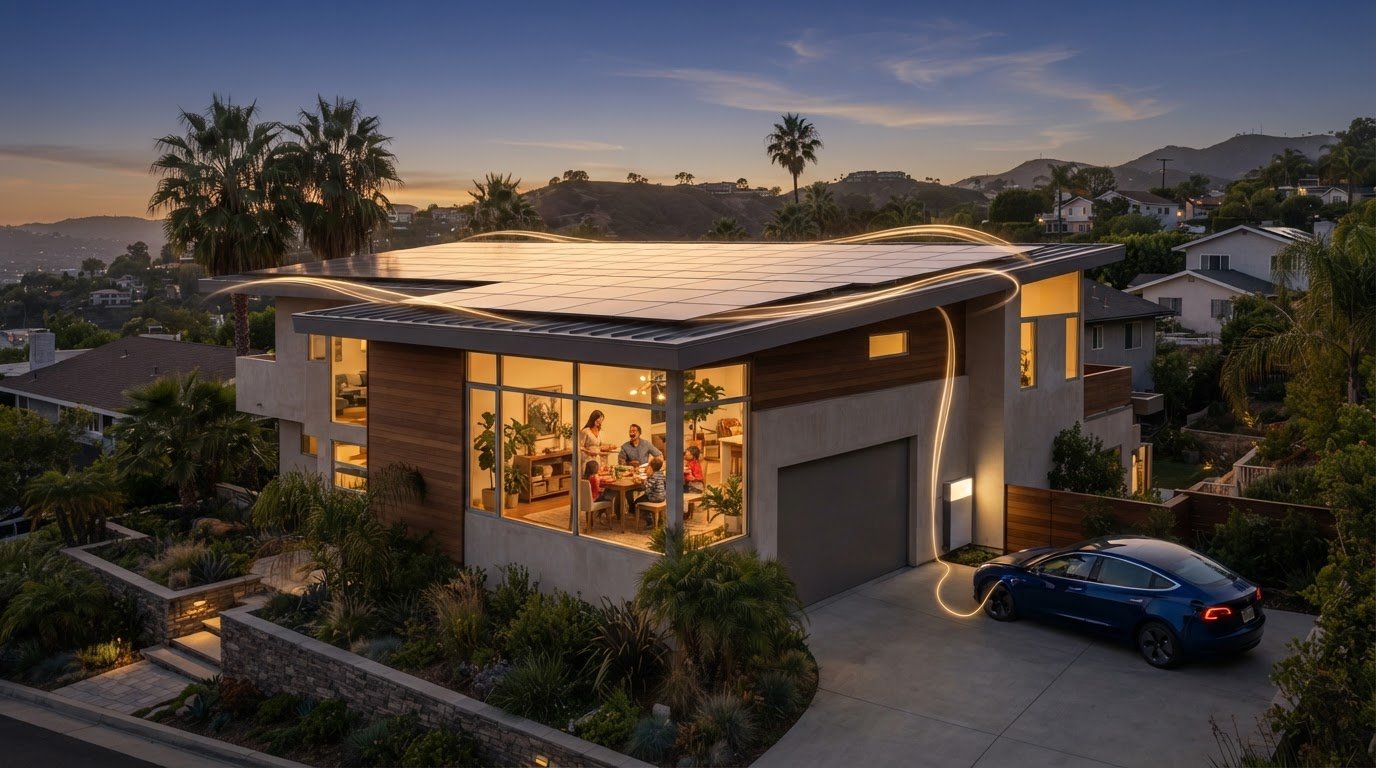
Use more of the electricity your solar panels generate in your home instead of sending it to the grid. That is the goal of solar self-consumption optimization: increasing the share of solar power used directly by household appliances and systems.
Solar production and household needs do not always line up. Panels often generate most during the day, while electricity use may rise at other times. Shifting flexible tasks, such as heating water, to sunny afternoon hours can help you use more of that energy at home.
This guide explains what self-consumption means, how timing and battery storage affect it, and how household energy use can align more closely with solar production. It also covers practical everyday adjustments, smart energy management, and what to consider when planning a home solar system.
Key Takeaways
- Self-consumption measures how much of your home’s solar electricity you use yourself, rather than sending it to the grid.
- Align flexible household activities with solar production to use more of your panels’ electricity as it is generated.
- Battery storage can shift some daytime solar energy for use at night or on cloudy days.
- Smart EV charging can move more charging into solar-producing hours; reported strategies increased midday charging loads by 34%.
- Energy management tools can help you see production and household use, making it easier to spot when schedules or system choices could work better.
Table of Contents
What is self-consumption?
Solar self-consumption is the share of electricity from your panels that your household uses. Electricity sent to the grid is not self-consumed. For example, when panels supply a running appliance, that appliance uses solar power instead of drawing the same electricity from the grid. Solar self-consumption optimization means adjusting energy use or storage so more of your solar generation serves your home.
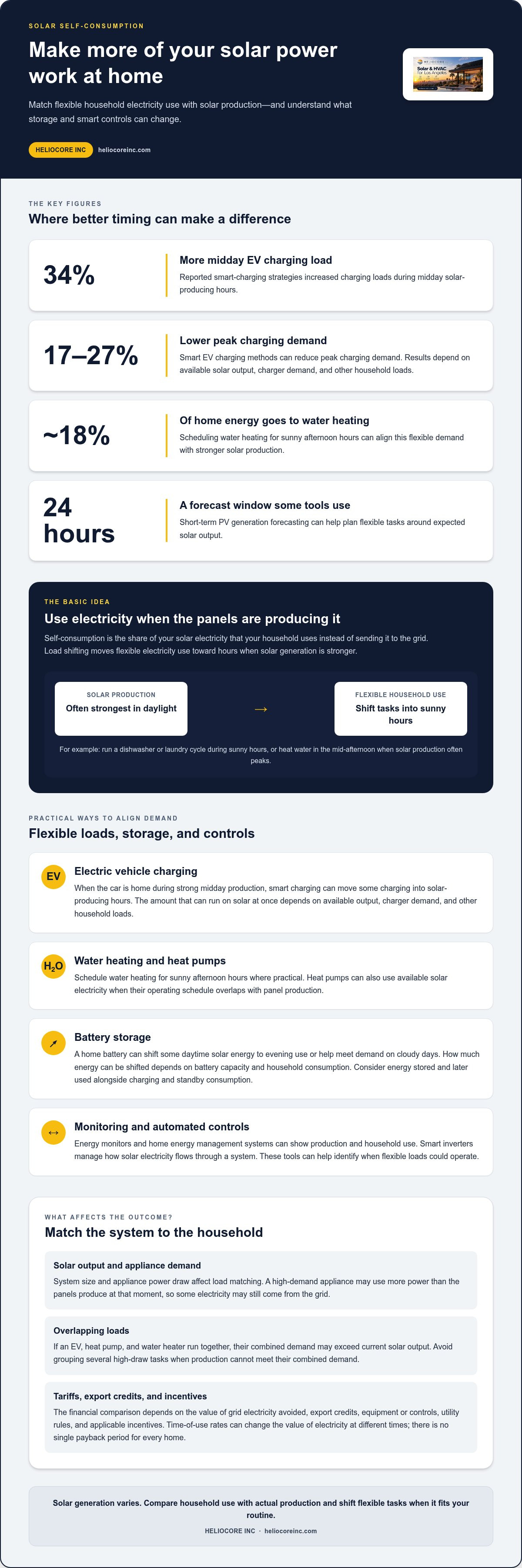
Electric vehicle charging can be a flexible household load. If the car is home during strong midday production, charging then can use solar electricity that might otherwise flow to the grid. Smart charging methods can reduce peak charging demand by 17% to 27% and increase midday charging loads by 34%. The available solar output, charger demand, and other household loads affect how much charging can run on solar power at once.
Heat pumps and water heaters can also shift some electricity use. A household can schedule water heating for sunny afternoon hours, when solar production is often higher. Water heating accounts for about 18% of overall home energy consumption. A heat pump can use available solar power while heating or cooling the home, provided its operating schedule and the panels’ production overlap. If the car, heat pump, and water heater run together, their combined demand may exceed current solar output.
Battery float-charge consumption is the electricity used to keep a fully charged battery ready. A battery may draw a small amount of power while its controls monitor the charge and maintain operation. This standby use is separate from the energy later delivered to household appliances. A battery can shift stored solar electricity to evening use, but its operation also affects the energy balance. Compare the solar energy stored and later used with the energy consumed during charging and standby.
There is no single payback period for using more solar at home instead of exporting excess electricity. The financial outcome depends on the value of grid electricity avoided, the credit for exports, and any equipment or controls needed to shift or store energy.
Utility rules and tariffs shape export credits and determine which battery incentives may apply. Net metering can credit exported electricity against grid use, while time-of-use rates change the value of electricity at different times. If evening rates are higher than midday export credits, using or storing solar power for evening demand may improve the economics. The applicable tariff, export rules, and incentives determine how the options compare.
Running a home's water heater in the mid-afternoon, when solar production often peaks, can increase solar self-consumption by aligning household demand with available solar electricity.
Solar PV generation and household energy use
Solar production changes throughout the day, while household demand follows daily routines. Matching the two helps more generated electricity serve the home directly.
Matching PV Generation to Household Loads
Load matching means aligning household electricity use with the timing and amount of solar generation. It matters because panels may produce power while appliances are idle, then produce less as demand rises later. A home, for example, may have excess electricity around midday while its largest flexible loads are off. Comparing production with household use reveals where a change in timing could help.
System size and appliance power draw both affect how well demand matches production. Running one appliance at a time may help it use solar-generated electricity, depending on those factors. A high-demand appliance may draw more power than the panels produce at that moment, so some electricity may still come from the grid. Load matching means coordinating demand with available production, not assuming every appliance will run entirely on solar.
Shifting Household Electricity Use
Load-shifting means moving flexible electricity use to hours when solar production is stronger. A task that can wait until midday may use generated electricity instead of relying on grid power later. For example, run a dishwasher or laundry cycle during sunny hours rather than after sunset. Choose timing based on actual production and household needs.
Keep the schedule manageable. Choose a task that can move without disrupting household routines, then compare its timing with solar production. A water heater can run in the mid-afternoon, when generation often peaks. Avoid starting several high-draw appliances together if their combined demand exceeds current output. This simple approach helps you use available electricity without constant adjustments.
Automated Load Controls and Energy Systems
Automated controls use production and consumption information to coordinate household loads. Smart inverters manage how solar electricity flows through a system, while energy monitors and home energy management systems show real-time production and use. These tools can help identify available solar power and when flexible loads could operate.
Some monitoring and management systems use short-term PV generation forecasting on a 24-hour basis. That view can help plan a flexible task around expected production rather than relying only on the current moment. For example, a household could schedule water heating when stronger solar output is expected. Controls still need to account for system size, appliance power draw, and household priorities.
For a clearer picture of how solar production can fit daily household demand, explore solar planning information.
Battery storage for nighttime and cloudy-day use
A home battery stores some solar electricity for use after production falls. It can shift daytime energy to evening appliances or help meet household demand during cloudy weather. Pairing solar panels with storage changes when solar power is used, but the battery’s capacity and household consumption pattern determine how much energy can be shifted.
Capacity should be considered alongside the solar system’s output and the home’s energy needs. A battery that fills early may leave later production unused, while a larger unit may not fill during periods of lower generation. A review of building PV self-consumption reported an increase of 13-24 percentage points with storage capacity of 0.5-1 kWh per installed kW of PV power, compared with the original rate. These figures describe a reviewed range, not a guaranteed result for every household.
Think about the energy balance across the day. Solar production first meets active household demand; surplus electricity can charge storage, and stored energy can supply appliances later. For example, a home with daytime production and evening cooking can use storage to shift some solar power into the evening. Cloud cover affects how much energy is available to charge the battery, while appliance use affects how quickly stored energy runs out.
Battery type and capacity also matter. Lead-acid storage is one option to assess alongside the household’s expected charging and use patterns. Compare usable capacity with the energy the home needs after solar production falls, and consider how the system manages charging and discharge. A Belgian study used measurement data from seven households to investigate storage-package sizing for grid-connected solar installations. It highlights the importance of sizing storage around actual household use rather than choosing capacity in isolation.
There are limits to maximizing self-consumption. Frequent cycling can contribute to battery degradation over time, and storing every available unit of solar power may not suit the household’s needs. A battery does not automatically provide backup during an outage. Backup depends on system design and which household circuits can receive power.
For a practical comparison, consider a cloudy day after a sunny charging period. The battery may supply selected appliances, but its available energy depends on what it stored and how much the home uses. Matching capacity to evening demand, solar production, and priority appliances helps set realistic expectations. Storage can shift energy, but it cannot create additional solar production when generation is low.
Solar self-consumption is the share of self-generated solar energy used in the household, excluding energy fed back to the grid, so a battery is only one way to raise it. Using solar energy for water heating can reduce heating bills by 50% to 80%, offering another use for daytime surplus when the battery is full.
Connected solar PV capacity in the 27 EU member states increased by 47% in 2022 compared with 2021, and the 27 EU member states had 41.4 GW of solar PV capacity connected to their grids in 2022. Germany installed 7.9 GW of solar capacity in 2022, the highest among the listed EU solar markets. The German government’s described household subsidy offered up to €10,200 for a solution combining an EV charging station, solar system, and battery storage, subject to an electric car being present or bindingly ordered.
Active demand-side management
Active demand-side management coordinates household electricity use with solar production. Rather than running every flexible appliance whenever convenient, a household can shift selected loads to periods when solar power is available. For example, a dishwasher can wait until the panels are producing, while essential evening use stays unchanged. The aim is to use generated electricity thoughtfully without disrupting daily routines.
A review of building PV self-consumption reported that demand-side management could increase relative self-consumption by 2-15 percentage points compared with the original rate. That range reflects different systems and approaches, rather than one outcome for every home. Scheduling a water heater, adjusting an EV charging window, or coordinating laundry can change when demand occurs. The effect depends on the household’s load pattern and the solar energy available at those times.
Electric vehicles offer a flexible load because charging can often be scheduled. A residential-neighborhood microgrid study reported that PV self-consumption rose from 49% to 62-87% with smart EV charging strategies. The same study reported demand peaks falling by 27-67%. These findings show how charging schedules can shape neighborhood demand, but a household’s result depends on its own production, travel needs, and charging pattern.
Energy management tools and apps can show real-time solar production beside household consumption. That information helps identify moments when flexible loads could run on available solar power. For example, a homeowner might notice strong midday production and schedule a charging session or water heating then. Short-term forecasts can add another planning layer by showing expected PV generation across a 24-hour period.
Automation can coordinate selected loads using production and consumption information. A home energy management system might prioritize one flexible task when solar output rises, then delay another if demand already exceeds available generation. The value depends on how well the controls match household priorities. A charging session, for instance, may be flexible, while cooking or heating may not be.
To decide whether active control could help, compare a typical day's production pattern with the household’s main electricity uses. Note when an EV is parked, when water heating runs, and when appliances operate. Then identify a flexible task that can move to a sunnier period. This practical approach can help increase direct solar use without treating every appliance as shiftable or expecting automation to replace household judgment.
Definition of solar self-consumption
Solar self-consumption is the portion of electricity generated by a home’s panels that the household uses instead of exporting to the grid. Picture panels producing power while a refrigerator, computer, or air conditioner is running. The electricity serving those devices counts as self-consumed solar energy. Any surplus sent to the grid does not count toward that share.
The self-consumption rate compares the solar electricity used at home with the total solar electricity generated. The denominator is panel production, not the household’s total electricity demand. A separate measure, often called self-sufficiency, shows how much of the home’s demand solar power supplies. Keeping these measures distinct helps homeowners understand whether they are using more of their own production or relying less on grid electricity.
To understand the flow, follow the energy through a typical sunny day. Panels generate electricity; active household devices use some of it; and excess production may flow to the grid. If a battery stores surplus and later supplies household appliances, it shifts when generated energy is used. The key question is whether solar electricity serves the home or goes to the grid.
This distinction explains why a high production total alone does not show how much energy the household used directly. A home might generate strongly while residents are away, then draw electricity from the grid after sunset. Another home with similar production might use more solar during daylight because appliances are running. Comparing production with household consumption makes these different patterns visible.
Self-consumption can help frame potential savings, but it is not the same as a reduced bill. The financial effect depends on how much grid electricity solar replaces and how the household’s utility arrangement credits exported electricity. Using generated power to run an appliance may avoid buying electricity at that moment, while exporting surplus receives the applicable credit. Those values may differ.
For homeowners considering solar self-consumption optimization, the practical takeaway is to measure what the panels generate, what the household uses, and what goes to the grid. Then look for a mismatch, such as daytime surplus alongside evening demand. This can clarify whether shifting use, storing energy, or revisiting the system plan may better suit the household’s routine.
Ready to connect those patterns to a home solar plan? Plan a solar panel installation around your household’s energy use.
HelioCore: High-Efficiency Solar Panels
HelioCore Inc helps homeowners plan for solar self-consumption with high-efficiency solar panels and battery storage considered alongside household electricity use and timing. This is especially relevant when daytime production, evening demand, and export credits affect how solar energy is used.
For homeowners considering solar in Los Angeles, HelioCore Inc manages the adoption process, from consultation and custom engineering through permitting, installation, inspections, and utility permission to operate. Battery storage can also be considered when shifting solar energy for later household use is a priority. The right approach depends on the home’s needs and system plan.
Contact HelioCore Inc to discuss solar panels and battery storage for your household in Los Angeles.
Make your next energy decision with confidence
The next step is to connect your household’s energy goals with a system designed around how you live. Solar self-consumption optimization is most useful when the plan considers both electricity production and the home’s wider energy needs. HelioCore Inc offers high-efficiency solar panels, battery storage, and HVAC solutions for homeowners planning connected home energy improvements in Los Angeles.
Bring your priorities to the conversation: how your household uses electricity, whether storage fits your plans, and how heating or cooling factors in. HelioCore Inc can guide the solar adoption process, from consultation and custom engineering through permitting, installation, inspections, and utility permission to operate. A clear plan helps you understand the project before moving ahead.
Take the next step at a pace that feels right. Contact HelioCore Inc about solar self-consumption and start a conversation about your home’s energy plans. Thoughtful decisions today can make your next upgrade feel more manageable.
Frequently Asked Questions
What is solar self-consumption and how is it calculated?
Solar self-consumption is the portion of your panels’ electricity that your home uses. Calculate the rate by dividing solar electricity used on-site by total solar electricity generated, then multiplying by 100. Electricity exported to the grid isn’t part of the amount used at home. For example, compare your inverter’s production records with monitoring data showing how much solar power your household consumed directly.
How can U.S. homeowners increase solar self-consumption without a battery?
Shift flexible electricity use to periods when your panels are producing. You might run a dishwasher during a sunny production window, then schedule laundry for another period of available output. An energy monitor or app can help identify these windows. Avoid stacking several high-demand devices if their combined draw exceeds current solar production. This approach changes timing rather than storing energy.
Which home battery sizes and solar-to-battery ratios are recommended for self-consumption?
There is no single battery size or solar-to-battery ratio that suits every home. Compare the solar surplus available for charging with expected evening use and the appliances the battery should support. Distinguish battery energy capacity, which describes stored energy, from power output, which determines how much load it can serve at once. These measures help assess daily use and backup needs.
What smart inverters, energy monitors, and home energy management systems support solar self-consumption?
Smart inverters manage how solar electricity flows through the system. Energy monitors and home energy management systems show real-time production and household use. Some also provide short-term generation forecasts to help schedule flexible loads.