
Solar
Tesla Powerwall installation costs and rebates in Los Angeles
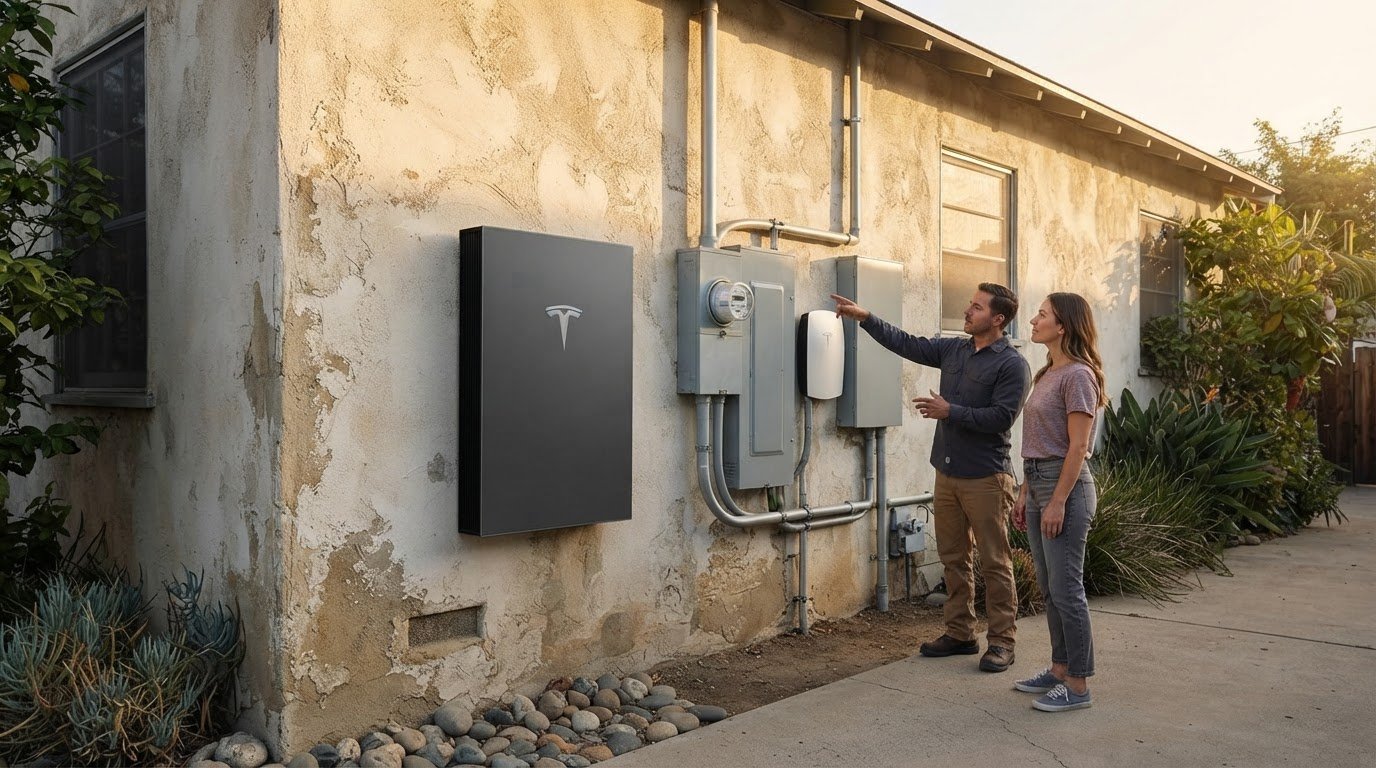
The cost of Tesla Powerwall installation in Los Angeles depends on your home, electrical work, and backup needs, so there is no single price for every project. A Powerwall may be worth considering if backup power or using more of your stored solar energy matters to your household. Rebates may also affect the total, depending on eligibility and available programs.
It makes sense to understand the project before committing to a home upgrade. The battery is only part of the decision: electrical panel work may be needed, and the appliances you want to keep running determine how much backup power to plan for.
This guide explains what shapes an installation quote, how rebate eligibility factors into the decision, and what to clarify about backup runtime. For LADWP customers, household energy use and priorities matter as much as battery capacity when deciding whether a Powerwall fits.
Key Takeaways
- Expect a quote to reflect the battery setup, any electrical work, the loads you want backed up, and local permitting and utility approval.
- Backup runtime depends on which appliances you prioritize and how long you want them to run during an outage.
- Los Angeles County has 88 cities plus unincorporated territory, so permitting steps can vary by location.
- Rebate eligibility depends on current program rules; the federal residential clean energy credit expired on December 31, 2025.
- A detailed installation plan can clarify the equipment, electrical changes, permit process, and utility steps before work begins.
Table of Contents
- How much does Tesla Powerwall installation cost in Los Angeles?
- Questions to clarify in backup runtime estimates and installation quotes
- Electrical panel, gateway, and protected-loads subpanel
- Federal tax credit and SGIP rebate eligibility
- Powerwall installation cost and pricing factors
- HelioCore: Tesla Powerwall & Battery Storage Installation
How much does Tesla Powerwall installation cost in Los Angeles?
The installation price depends on the home, electrical work, and backup design, so a project-specific quote follows a quote request. In Los Angeles, permitting, city inspection, and utility approval also shape the process and its schedule.
Permit and Inspection Coordination
Los Angeles County includes 88 cities plus unincorporated territory, so the local permitting path depends on the property’s jurisdiction. A battery installation requires a city permit and a separate utility storage approval after the city’s final inspection. Battery permits typically clear in days, while the complete process can take a few weeks from design through utility approval.
City approval and utility interconnection are separate steps, not a single sign-off. LADWP reviews battery storage separately alongside solar interconnection. The city’s final inspection comes before storage approval, so the project plan needs to account for both the building department and the utility.
Installation and Commissioning
The process typically moves from site design to permitting, installation, inspection, and utility approval. During design, the system layout and intended backup use guide equipment selection and electrical planning. After installation, the local inspection checks the permitted work. Commissioning puts the system into operation, and utility permission to operate completes the approval sequence.
The key distinction is between equipment being installed and the system receiving utility approval. A completed installation does not replace the city inspection or LADWP’s separate storage review. Planning for both steps helps set realistic expectations about when the system can operate as intended.
How does Tesla Powerwall compare with Enphase or FranklinWH batteries? Compare systems based on your existing solar equipment, backup priorities, and the household loads each design can support. The right fit depends on the whole-home setup, not just the battery brand.
Which Los Angeles installers are certified to install Tesla Powerwall? Authorization depends on the installer and the work involved. Look for documented Tesla authorization for Powerwall installation and commissioning, rather than relying on general battery experience alone.
Can a Powerwall be installed without solar panels in Los Angeles? Yes. A Powerwall can be installed without solar panels, but the design needs to account for how the battery will charge and which household loads it will support.
What are the risks, warranty terms, and maintenance needs for Powerwall installation? The Powerwall 3 has a 10-year warranty. Backup performance depends on system design and household use, while installation planning must account for permitting, inspection, and utility approval. Ongoing care includes following the manufacturer’s guidance and monitoring the system for alerts or changes in operation.
A detailed quote should separate equipment and installation from electrical changes, permits, inspections, and utility coordination. These line items clarify what the proposed system includes and which conditions at the home shape the project.
Questions to clarify in backup runtime estimates and installation quotes
Start a useful backup estimate by listing the appliances you want powered and how long you need them to run. In Los Angeles, consider routine outages separately from possible Public Safety Power Shutoffs.
Backup During Outages and PSPS Events
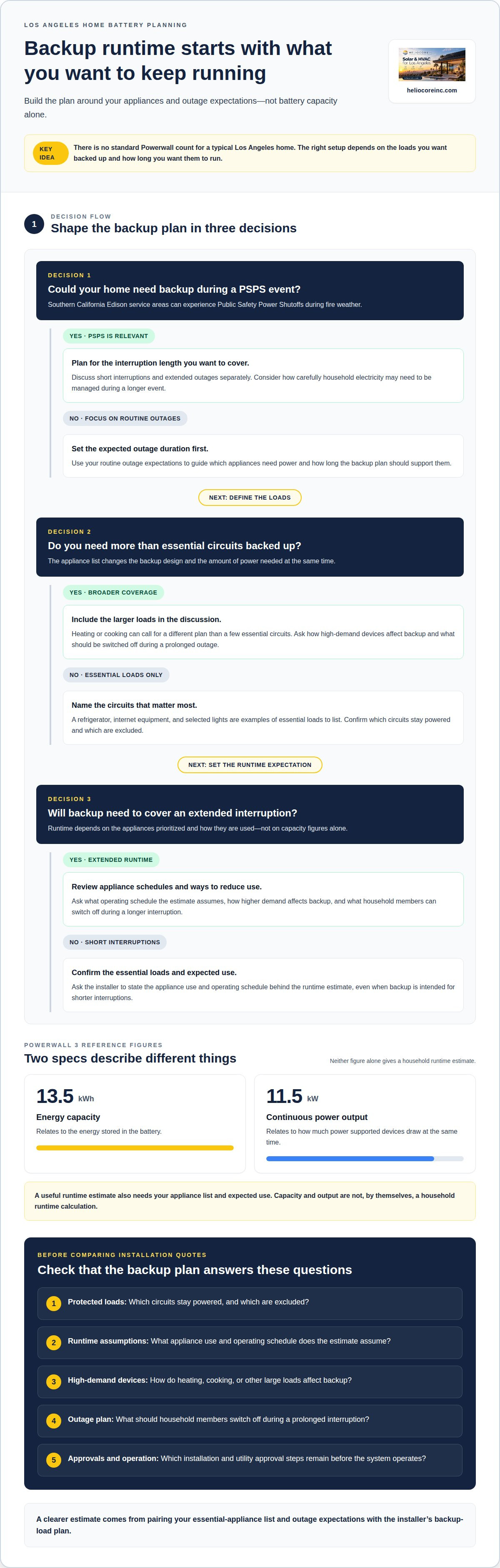
Southern California Edison service areas can experience Public Safety Power Shutoffs during fire weather. If your home is in one of these areas, discuss whether backup should cover short interruptions, extended outages, or both. That choice shapes which loads the system supports and how carefully you may need to manage electricity during an outage.
Ask how the design prioritizes essential appliances when utility power fails. A refrigerator, internet equipment, and selected lights call for a different backup plan than one that also includes heating or cooking. Clarify how the system responds to higher demand and what steps can reduce consumption during a longer interruption.
Powerwall Quantity for Home Backup
There is no standard Powerwall count for a typical Los Angeles home. The right system size depends on the loads you want backed up and how long you want backup power to last. Protecting a few essential circuits requires a different setup from seeking broader coverage.
For context, a Powerwall 3 has 13.5 kilowatt-hours of energy capacity and 11.5 kilowatts of continuous power output. Capacity relates to stored energy; output relates to how much power supported devices draw at the same time. Neither figure alone gives a household runtime estimate. The appliance list and expected use matter.
Before approving a quote, clarify how the estimate handles these points:
- Protected loads: Which circuits stay powered, and which are excluded?
- Runtime assumptions: What appliance use and operating schedule does the estimate assume?
- High-demand devices: How do heating, cooking, or other large loads affect backup?
- Outage planning: What should household members switch off during a prolonged interruption?
- Approval and operation: Which installation and utility approval steps remain before the system operates?
These answers make the proposed backup plan easier to understand and compare with your household priorities. For a clearer estimate, bring the installer’s backup-load planning into the conversation alongside your essential appliance list and outage expectations.
Electrical panel, gateway, and protected-loads subpanel
The electrical panel, backup gateway, and protected-loads subpanel all affect how a battery works with the home. In California, the existing panel and the circuits you choose to protect guide the design.
What the panel and gateway do
The main electrical panel distributes utility power throughout the home. A backup gateway manages the connection between the battery, utility, and selected household circuits. During an outage, the system can separate backed-up circuits from the grid. A protected-loads subpanel groups those circuits, defining which parts of the home receive battery power.
This distinction affects everyday use. Protecting a refrigerator, internet equipment, and selected lights calls for a different plan than including more circuits. The gateway and subpanel layout should reflect the backup loads you want, not simply the number of rooms in the home.
When an older home may need an upgrade
Some older Los Angeles homes have 100-amp electrical panels, which may need an upgrade to add a Powerwall. A main-panel replacement isn’t automatic: a Powerwall can be installed without replacing the existing panel, and the site determines whether changes are needed. The electrical assessment should identify panel capacity, available space, and how the proposed battery connects.
Keep the inspection sequence in mind. Electrical work must match the permitted design, and local building inspection follows installation. If an upgrade is included, the plan should explain how it affects the panel, gateway, and circuits before work begins. During wildfire-related shutoffs, clearly defined protected loads help households focus backup power on essential equipment.
Time-of-use rates and home charging
LADWP’s R-1B Time-of-Use schedule lists High Peak hours from 1-5 PM. Its Low Peak periods are 10 AM-1 PM and 5-8 PM. Those time blocks matter when a household considers using stored solar energy later, instead of exporting it during the day. Rate schedules and household routines both affect the value of that shift.
These figures illustrate how electricity use adds up, but they do not determine battery savings on their own.
For a practical design review, connect the electrical layout to your household’s priorities: which circuits matter during an outage, whether the existing panel needs changes, and when major electricity use occurs. This gives you a clearer basis for discussing the gateway, protected-loads subpanel, and any potential upgrade.
Federal tax credit and SGIP rebate eligibility
In 2026, Los Angeles homeowners should separate federal tax credits from California’s SGIP programs. The federal residential clean energy credit under IRC §25D expired on December 31, 2025. California’s available pathway for new solar with storage is limited to the income-qualified SGIP tier.
Federal residential clean energy credit
The expiration date matters when estimating the net cost of a current installation. A new project in 2026 should not rely on the expired residential credit to reduce its expected cost. Keep the project timeline and purchase records clear, especially if comparing an earlier installation with a new estimate.
Distinguish tax credits from rebates, which are handled through different programs. An estimate should not combine them as if qualifying for one automatically means qualifying for the other. The expired federal credit does not determine whether a homeowner can apply through California’s SGIP or its Residential Solar and Storage Equity pathway.
California SGIP and the RSSE pathway
California SGIP applications in 2026 for new solar with storage are available only in the income-qualified tier. LADWP customers may qualify for the Residential Solar and Storage Equity pathway if they meet current program requirements. Participation is limited, so eligibility and program access are separate considerations.
Start by identifying your utility service area, determining whether the project includes new solar with storage, and reviewing the program’s income-qualified criteria. LADWP service matters because the RSSE pathway applies to eligible LADWP customers. A battery-only project is not equivalent to new solar paired with storage.
System details also matter to the project estimate. A Powerwall 3 includes a built-in solar inverter, while the proposed design must still match the home’s solar equipment and intended use. Storing daytime solar for evening household use describes an energy strategy, not proof of rebate eligibility. The program’s own requirements govern that decision.
How to read incentive estimates
Review the estimate for separate lines covering the equipment, installation, and any assumed incentive. The federal credit should not appear as an available 2026 residential benefit. Any SGIP or RSSE amount should be presented as dependent on the applicable income-qualified pathway and program participation, not as an automatic discount.
Keep program timing separate from installation timing. Permits, inspection, and utility approval form one project sequence, while rebate eligibility depends on program criteria. Clear records help you understand which assumptions affect the net cost and whether the estimate depends on a program award. This makes budgeting more realistic without counting an expired tax credit or assuming every battery project qualifies.
Powerwall installation cost and pricing factors
The quote for a Los Angeles home depends on its equipment, electrical scope, and installation design. A project-specific estimate should explain how these factors shape the work, rather than treating every home in Southern California as the same installation.
System size is a major cost factor. A single battery and a multi-unit design involve different equipment and installation requirements. Powerwall 3 systems can be stacked up to four units, providing 54 kWh of storage. That capacity may suit a different backup plan than a household protecting only selected circuits. The estimate should connect the proposed system size to the loads and backup duration the household wants.
Electrical work can also change the project scope. The existing panel, available equipment space, and connection design determine whether adjustments are needed. A Powerwall may not require replacing the main panel, though some older homes may need an upgrade. The proposal should distinguish battery installation from panel changes, gateway work, and protected-circuit planning.
Permitting and approvals add coordination to the installation process, even when they don’t appear as equipment. Los Angeles County includes 88 cities plus unincorporated territory, and local requirements can vary by jurisdiction. The estimate should identify permit coordination, inspection steps, and utility approval as parts of the project schedule. That makes the expected scope easier to understand.
Rebates can affect a household’s net project calculation, but eligibility isn’t the same as a guaranteed reduction. California’s SGIP pathway for new solar with storage in 2026 is limited to the income-qualified tier. Keep any assumed incentive separate from the installation total, so the estimate remains clear if program participation or eligibility differs.
To understand the proposal, review these items together:
- Equipment: Which Powerwall configuration and related components are included?
- Electrical scope: Does the design include panel changes or protected-load work?
- Project steps: Are permitting, inspection, and utility coordination described?
- Incentive assumptions: Is any SGIP estimate shown separately from the project total?
In the San Fernando Valley or elsewhere in Southern California, those details help explain why two homes may receive different estimates. Ask for a project-specific breakdown that connects equipment and labor to the site conditions and planned backup. Request a Powerwall project quote to begin mapping those factors to your home.
HelioCore: Tesla Powerwall & Battery Storage Installation
HelioCore installs Tesla Powerwall and battery storage for homeowners planning for backup or pairing storage with solar. Its team manages the process from initial consultation and custom engineering through permitting, installation, inspections, and utility permission to operate.
Turn to HelioCore when you want help connecting project details, from your backup priorities to your home’s solar setup. HelioCore also installs high-efficiency solar panels, which you can consider alongside battery storage as part of a residential energy plan.
To get started, share which appliances you want powered during outages and whether your home already has solar. HelioCore can use those details to plan a project around your household’s needs. Contact HelioCore to discuss Tesla Powerwall installation.
Make the next step fit your home
Choosing a battery is also a chance to decide what dependable power means in your daily routine. Start with the moments you most want to protect, then consider how your household’s energy needs may change. A thoughtful plan connects those priorities to a system suited to your home, rather than treating the equipment as a one-size-fits-all purchase.
For Tesla Powerwall installation in Los Angeles, a focused conversation can turn your priorities into a practical project plan. Bring your key questions: which appliances you want covered, how you expect to use stored energy, and what concerns you have about installation. Clear answers make it easier to decide whether the proposed setup suits your household.
When you’re ready to discuss your home and next steps, contact HelioCore about your installation. A considered decision begins with a conversation grounded in how you live, and can lead to a home energy setup that feels more prepared for what comes next.
Frequently Asked Questions
Is a Powerwall worth it in Los Angeles on LADWP?
A Powerwall may be worthwhile if backup power or using more of your own solar energy matters to your household. Weigh those benefits alongside your electricity habits, solar setup, and system estimate. For example, a household that wants stored solar available after sunset may value a battery differently from one focused only on lowering its bill. The decision depends on the outcomes that matter most to you.
Can I add a Powerwall to existing solar in Los Angeles?
Yes, a Powerwall can be added to an existing solar system if the equipment and electrical design are compatible. The installer needs to account for the current inverter, wiring, panel capacity, and how the system will charge the battery. Share your solar equipment details and existing layout during design to help determine how storage can be integrated and which project steps apply.
Can a Powerwall be added to the solar I already have?
Yes. Existing rooftop solar can be paired with battery storage, but the connection design depends on the installed equipment and the home’s electrical layout. For example, an existing inverter may affect how the battery connects and operates. A site assessment can map the solar equipment, identify the backup circuits you want, and inform a compatible design. Adding a battery is different from simply adding more solar panels to an existing inverter.
Can a Powerwall keep my LA home powered during a PSPS or fire-season outage?
A properly designed battery system can supply its supported household loads during an outage, including a Public Safety Power Shutoff. Runtime depends on which loads are in use and how long they operate. A home prioritizing a refrigerator and internet equipment will use stored energy differently from one also running heating or cooking appliances. Decide which circuits matter most during an interruption, then plan backup around them.
How does Powerwall permitting work with LADBS, EPIC-LA, and LA County cities?
The permit authority depends on the property’s jurisdiction. Los Angeles County has 88 cities plus unincorporated territory, so LADBS, EPIC-LA, or another local building department may be relevant depending on the address. The project requires a city permit and local inspection. After the city’s final inspection, the utility handles separate storage approval. Identifying the correct jurisdiction early helps organize the permit and approval sequence.
Is the 30% federal tax credit or SGIP rebate available for a Powerwall in Los Angeles in 2026?
No, the federal residential clean energy credit under IRC §25D expired on December 31, 2025, so it isn’t available for a 2026 installation. California SGIP applications in 2026 for new solar with storage are available only in the income-qualified tier. LADWP customers may qualify for its Residential Solar and Storage Equity pathway if they meet current program requirements. Participation is limited, and eligibility is not automatic.
What is the installed price of a Tesla Powerwall 3 in Los Angeles?
The installed price depends on the home and project scope. The estimate reflects system design, electrical work, backup configuration, and any required panel changes. A project with existing solar may have different integration needs from a battery installation designed alongside new solar. Ask for a breakdown separating equipment and installation from any assumed incentive.
What permits are required for Powerwall installation in Los Angeles?
A Powerwall installation requires a city permit and separate utility storage approval after the city’s final inspection. The relevant building department depends on the property’s jurisdiction, whether it is within Los Angeles city limits or another city or unincorporated area. The process can therefore vary across Los Angeles, Inglewood, South Los Angeles, Crenshaw, Leimert Park, Baldwin Hills, Westchester, Van Nuys, North Hollywood, Reseda, Northridge, Woodland Hills, and San Pedro.